California, May 2025
In May of 2025, I made a trip out to California. First, I explored
around the Anza-Borrego area. Then I made my way north, eventually
winding up in Ridgecrest, where I visited my mom.
The word borrego is Spanish for lamb. It is well integrated into the
place names of the San Diego County desert, with Borrego Valley,
Borrego Springs, and Anza-Borrego Desert State Park representing.
The Bighorn Sheep have always been always been a thing is this region.
The form occurring here is the Peninsular Desert Bighorn Sheep, which is
a variant of the Desert Bighorn Sheep (Ovis canadensis nelsoni).
They occur in the Peninsular Ranges of Baja California and the
U.S. (Imperial, Riverside, and San Diego Counties of CA).
As I was hiking down a canyon, I spotted a herd of Bighorns coming down from
the opposite side to get a drink. So they basically came to me. I stood
and watched, took pictures, just moving around a little bit to get
camera angles around bushes. They watched me from time to time, but did
not seem overly concerned. They must be somewhat habituated to being
around people. Anyway, this is by far the best look I have had of
Bighorn Sheep. There were about a dozen of them.
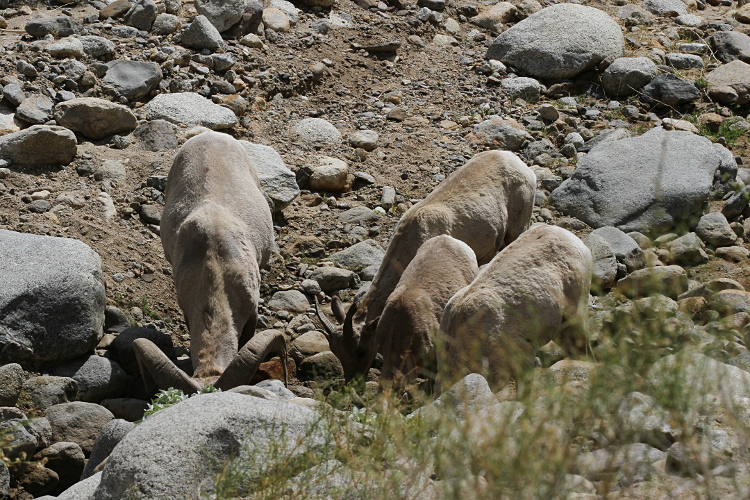
Getting a drink.
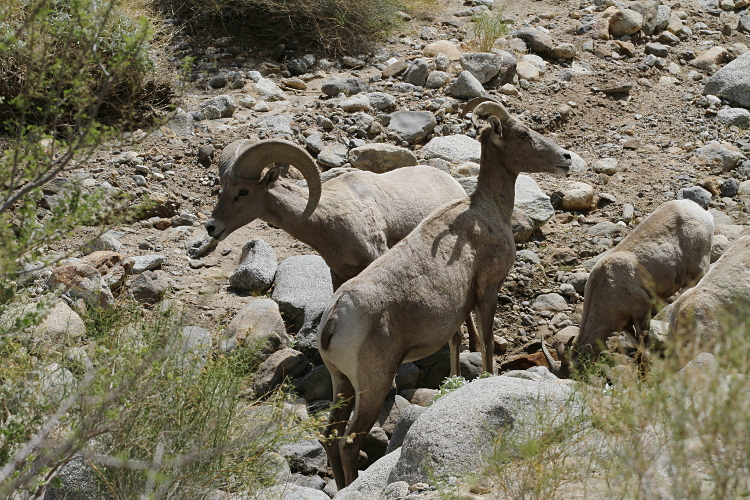
Finishing up.
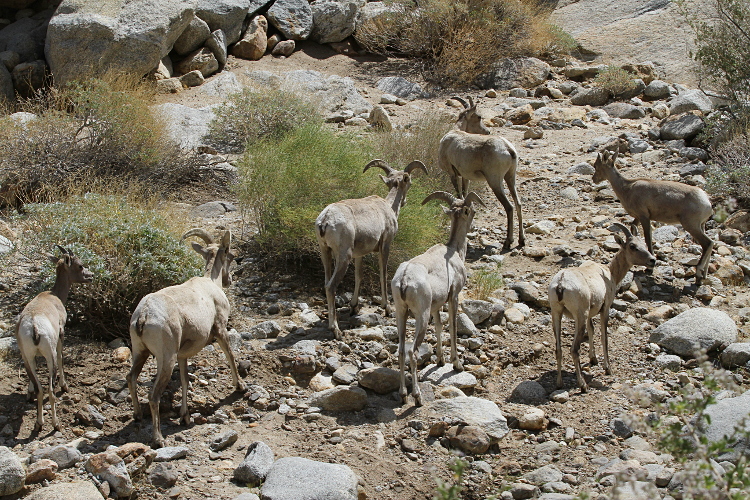
All done and heading out. They were browsing on vegetation as they went.
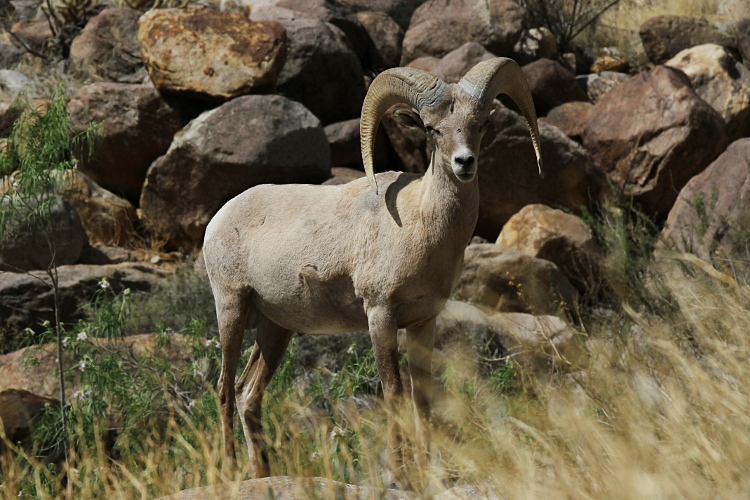
The big guy.
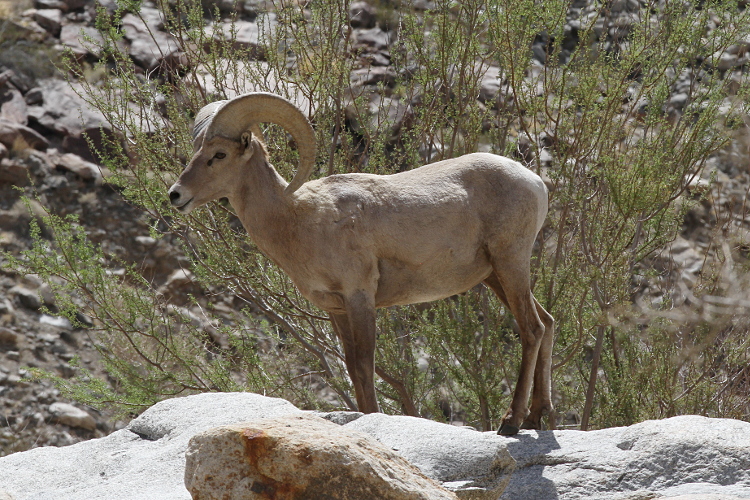
Another look at the big guy. He seemed to like to hang out on vantage points
and keep an eye on everything.
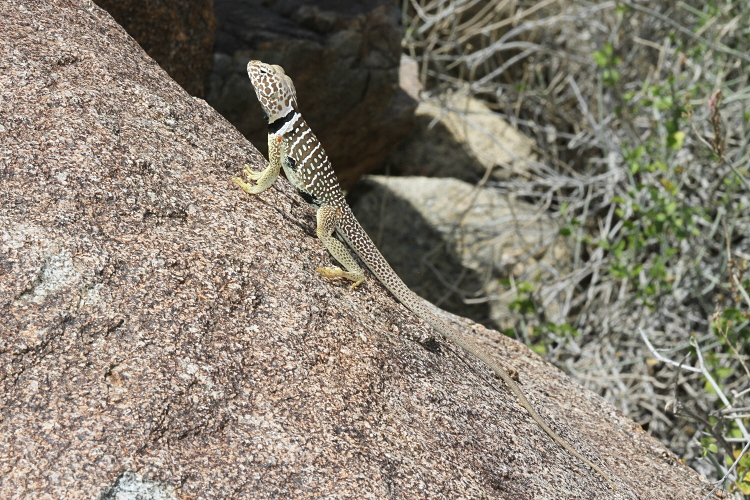
A male Baja California Collared Lizard (Crotaphytus vestigium).
I was pleased to finally get a photo of this species.
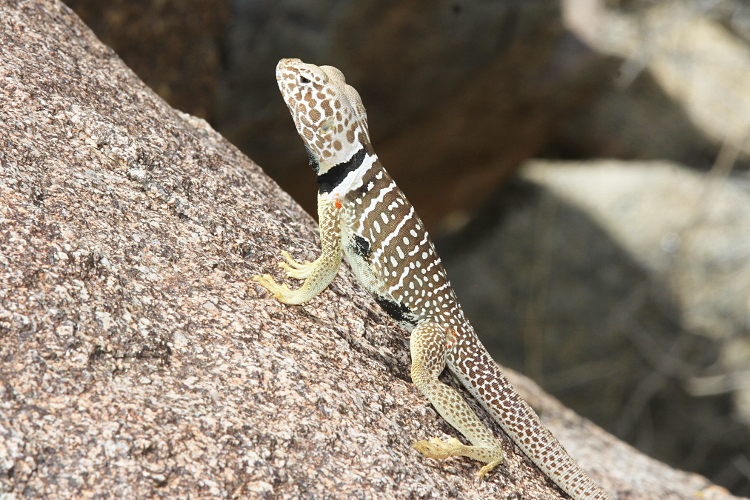
A closer look.
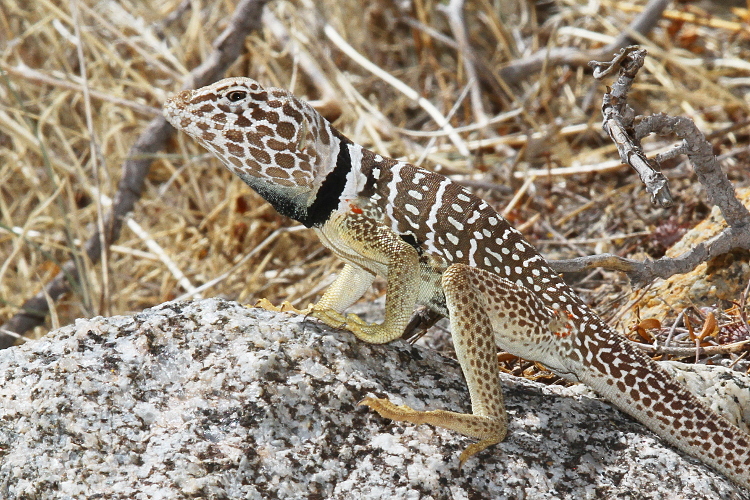
One more photo of the same lizard. He was showing off a bit.
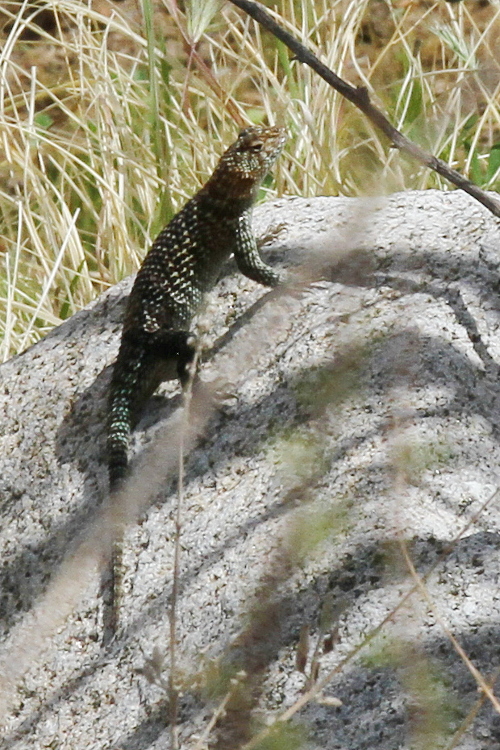
A Granite Spiny Lizard (Sceloporus orcutti). I did not have much
luck getting close to these on this trip.
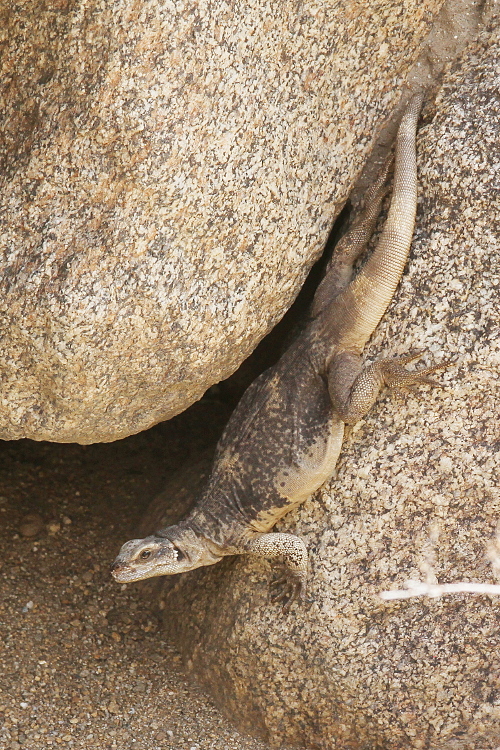
A female Chuckwalla (Sauromalus ater).
I could not resist taking some photos of the cool metal sculptures scattered
around the Borrego Valley when I was down that way. There are over 100 of them.
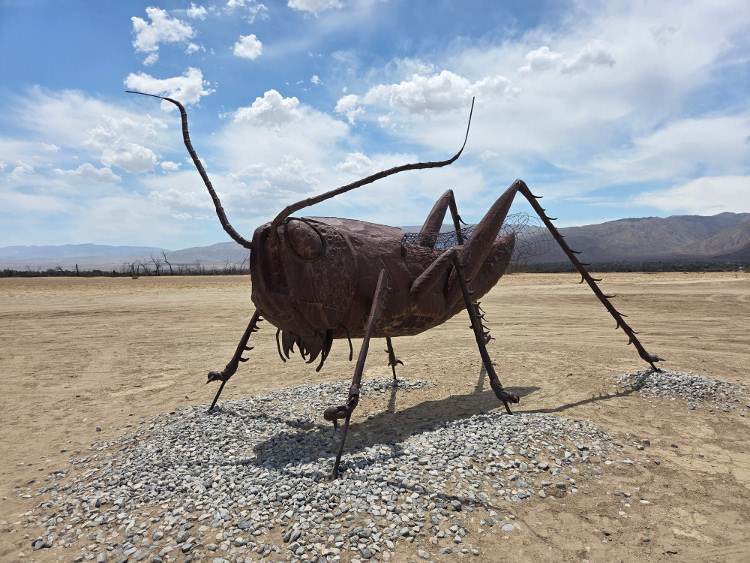
Grasshopper.
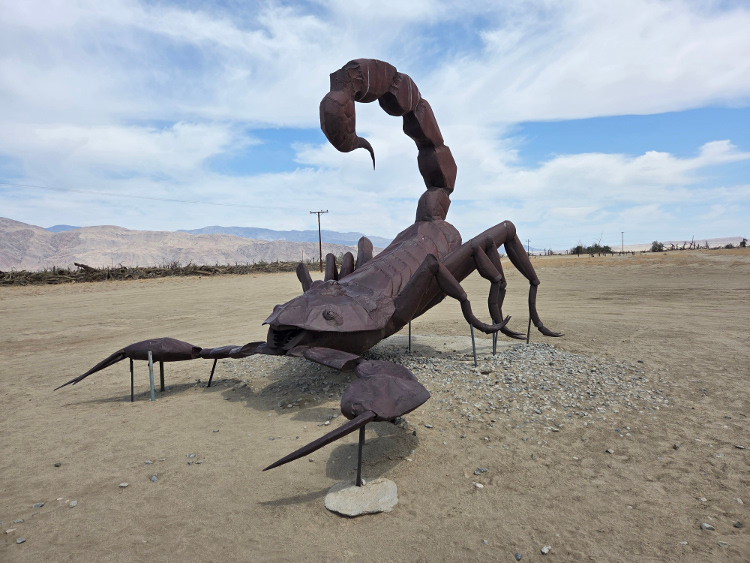
Scorpion.
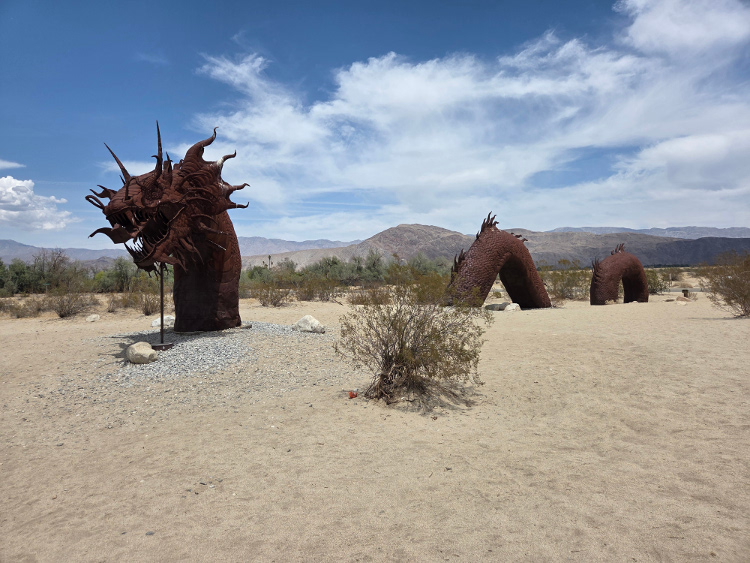
Sea monster.
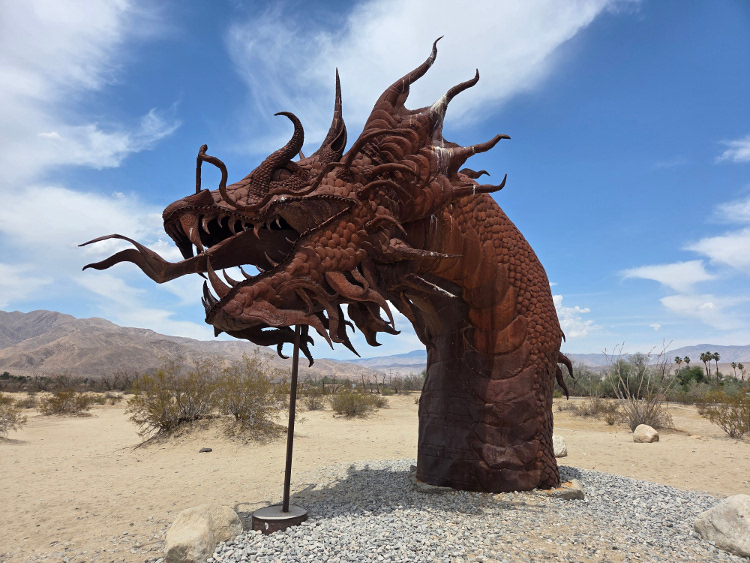
The head of the sea monster.
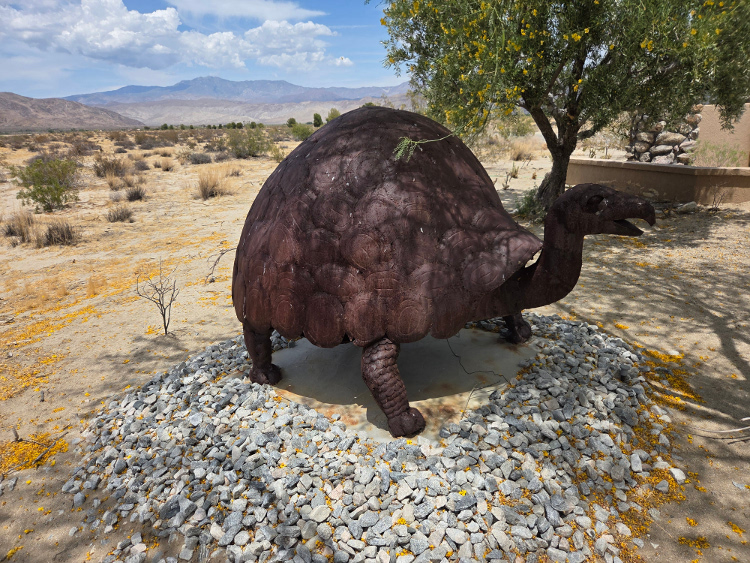
Tortoise.
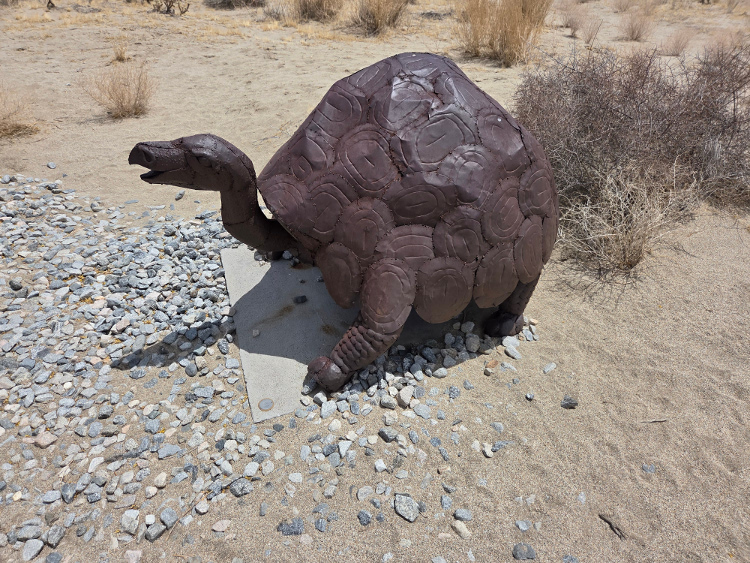
Tortoise.
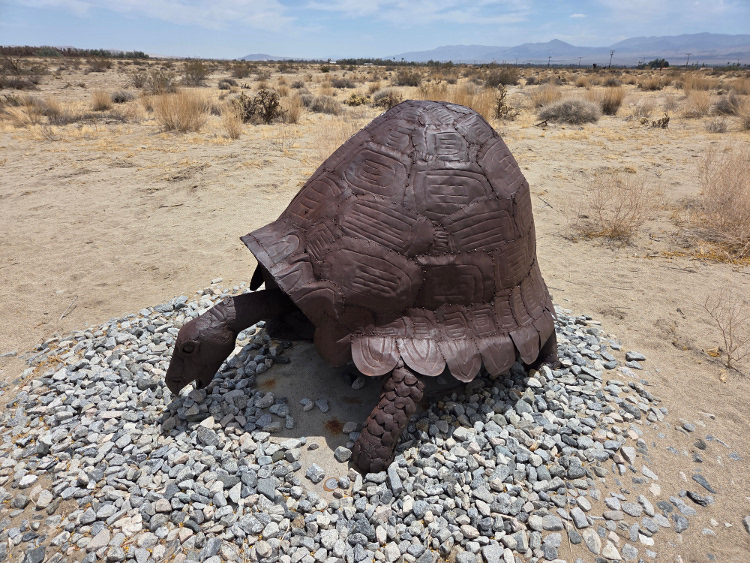
Tortoise feeding on gravel?
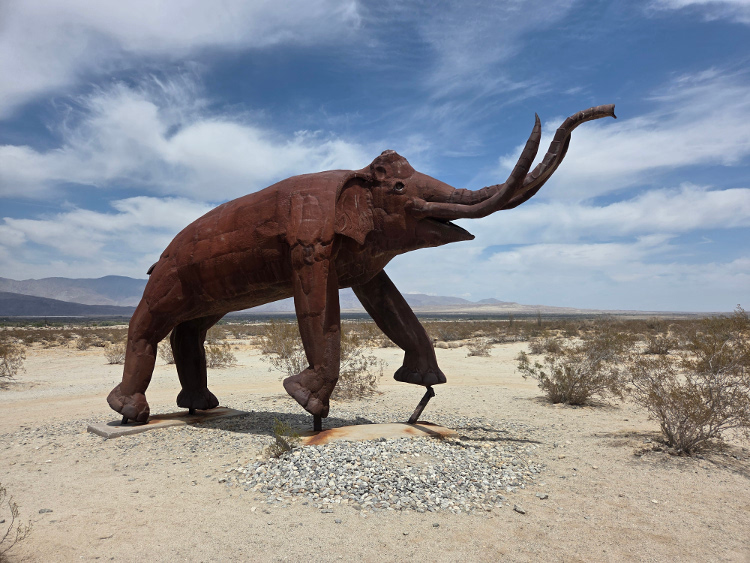
Mastodon or Mammoth? I am not sure...
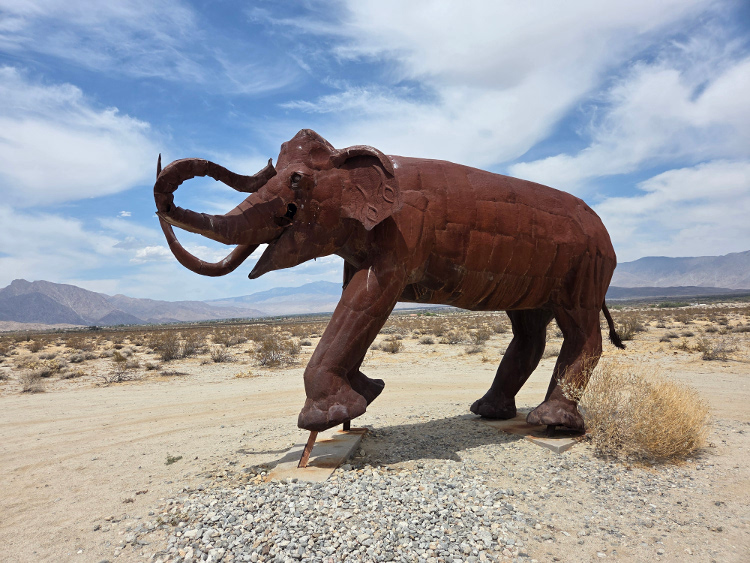
Another one.
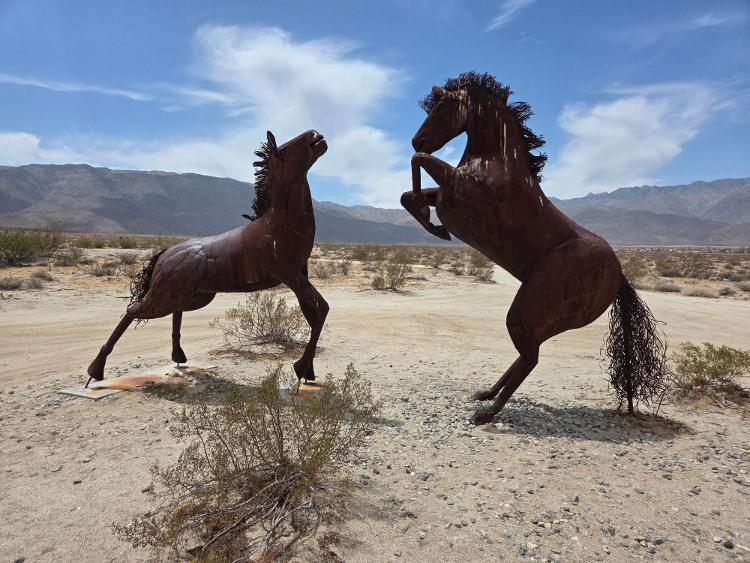
Horses.
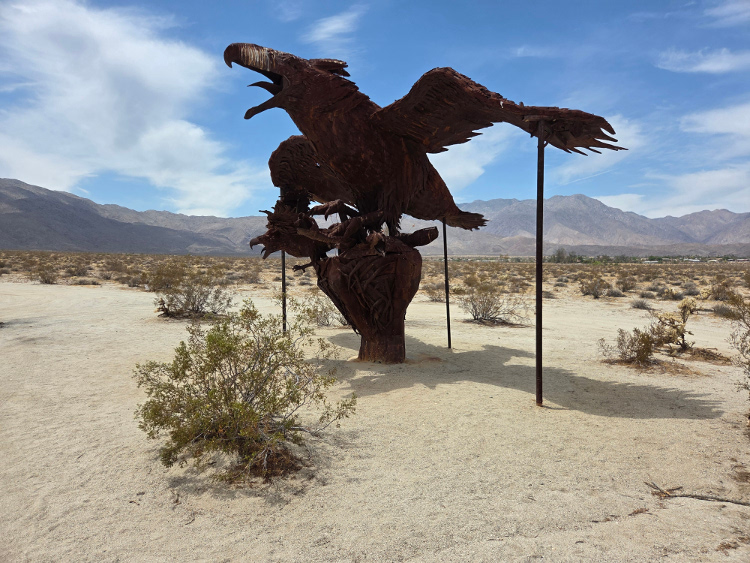
Bird of prey.
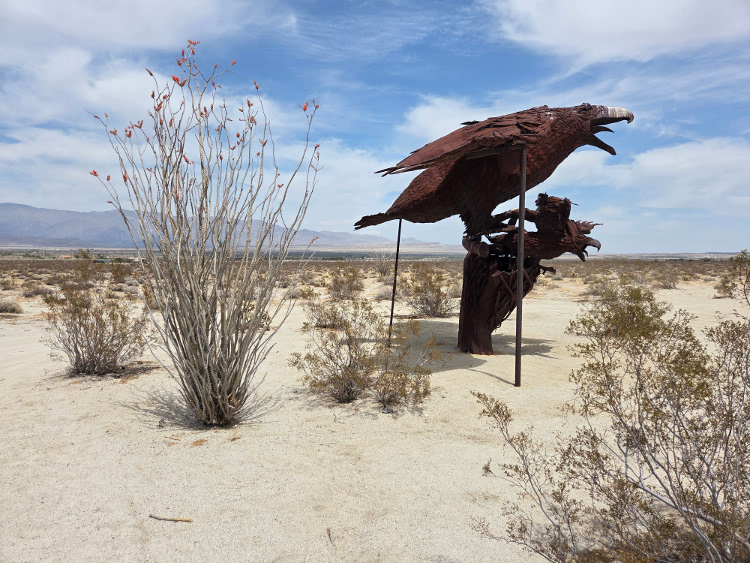
Another look.
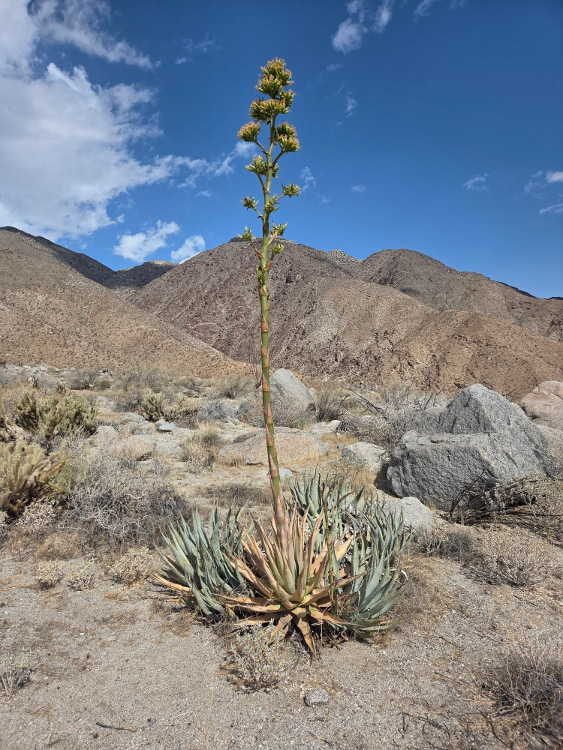
Desert Agave (Agave deserti). This species and its kin are also known
as Century Plants because they only bloom once in their liftime, which
typically around 20 years. The stalk on this one is about 20 feet tall.
You will notice that the agave plant that is blooming is a different color
than its non-blooming neighbors. This is probably because it has put all of
its energy into the bloom and will die soon.
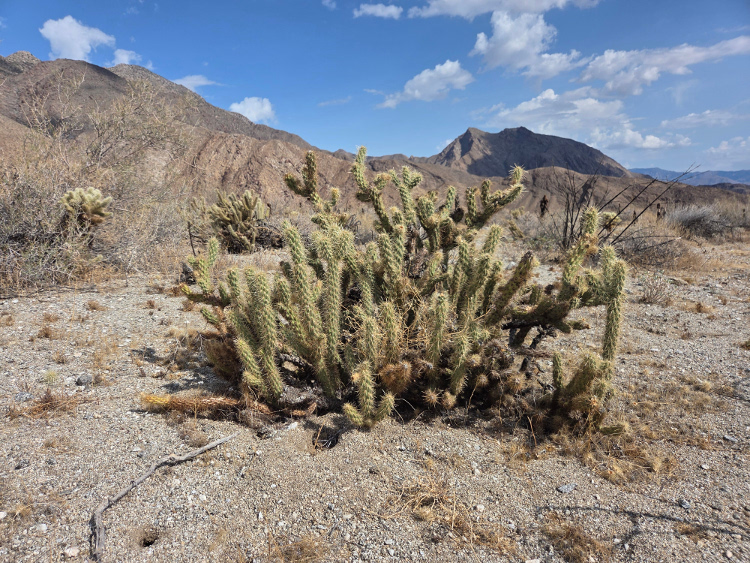
A cholla cactus of some sort, perhaps Gander's Cholla (Cylindropuntia ganderi).
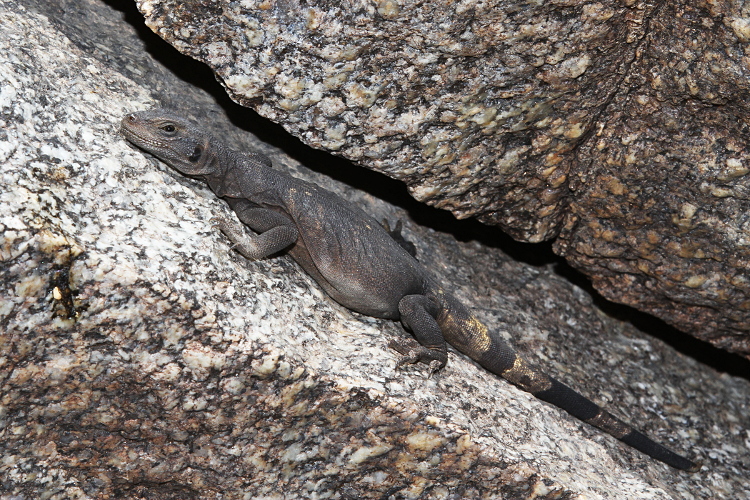
A baby Chuckwalla (Sauromalus ater), as spotted. It looks a little thin.
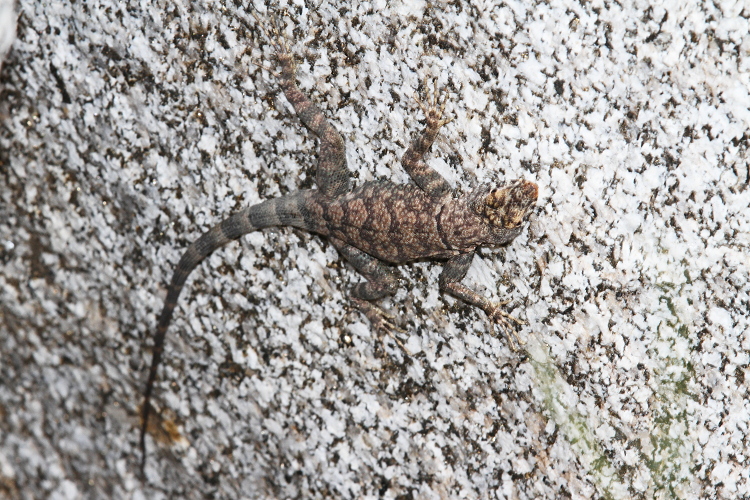
A Banded Rock Lizard (Petrosaurus mearnsi), on a past-vertical surface.
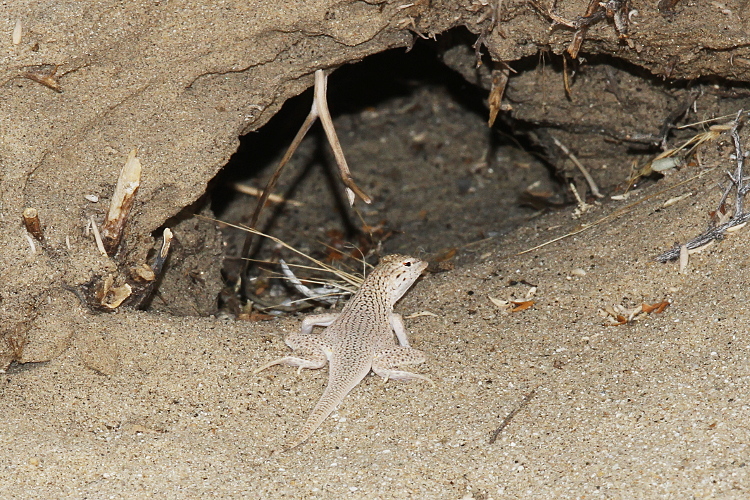
A sub-adult Colorado Desert Fringe-toed Lizard (Uma notata), on its
way down a hole. I was a bit disappointed that this was the best photo
that I got of this species. But I do like the fact that it shows how the
pattern (ocelli) is arranged in longitudinal rows, a characteristic this
species shares with other U.S. Uma, with the exception of the
Mojave Fringe-toed Lizard (Uma scoparia) which has the ocelli
arranged more randomly.
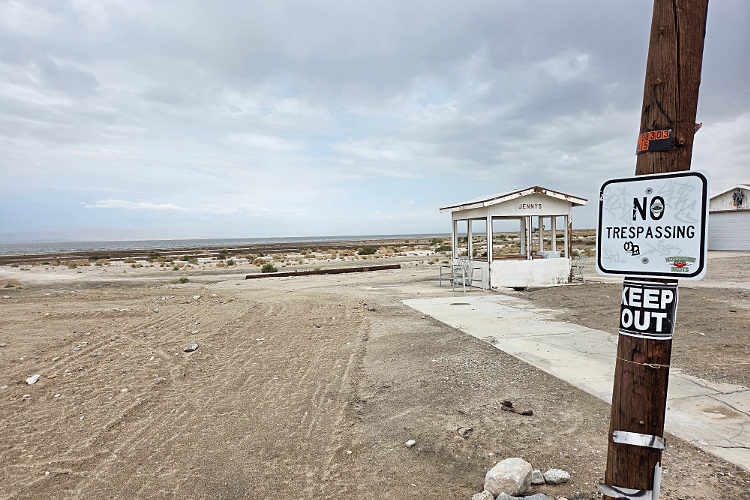
On my way north, I drove past the Salton Sea, a place I'd never been before.
The “Sea” has been shrinking and has become stinky (literally).
There are tons of abandoned stuff now. I suspect this structure --
”Jennys“ -- was an ice cream stand on a lovely beach, once upon
a time... You can see the “Sea” in the distance.
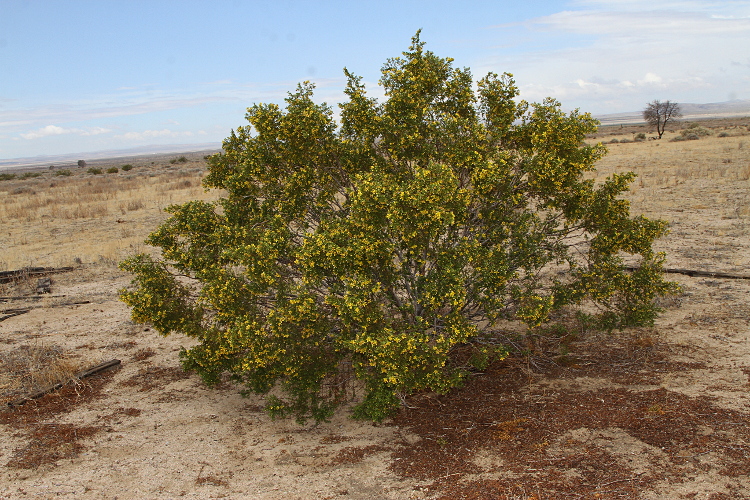
An impressive blooming Creosote Bush (Larrea tridentata).
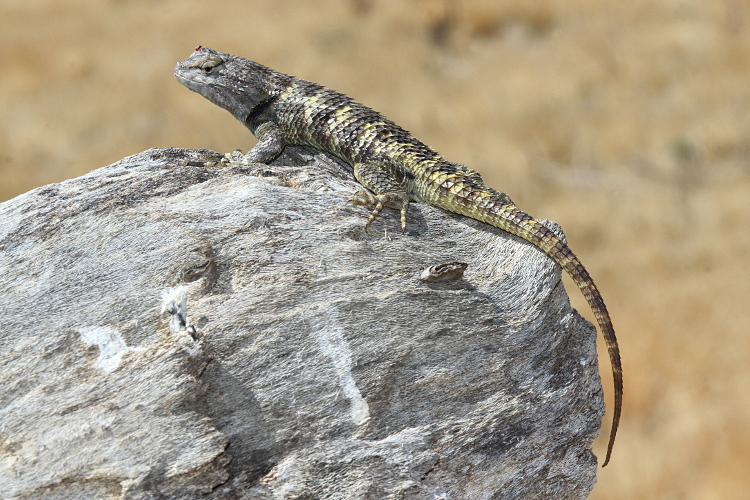
A Desert Spiny Lizard (Sceloporus magister).
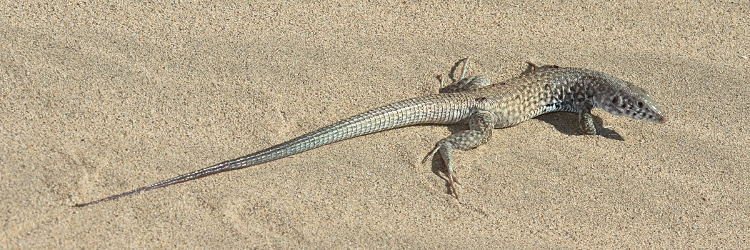
A Great Basin Whiptail (Aspidoscelis tigris tigris), basking on a
sand dune.
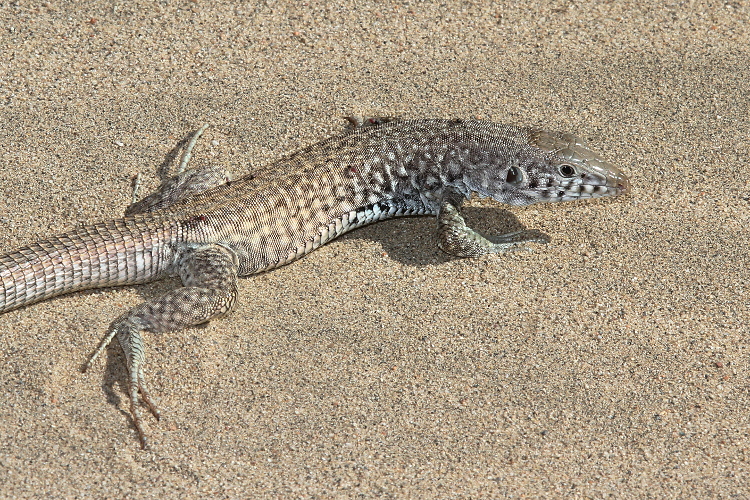
A closer look.
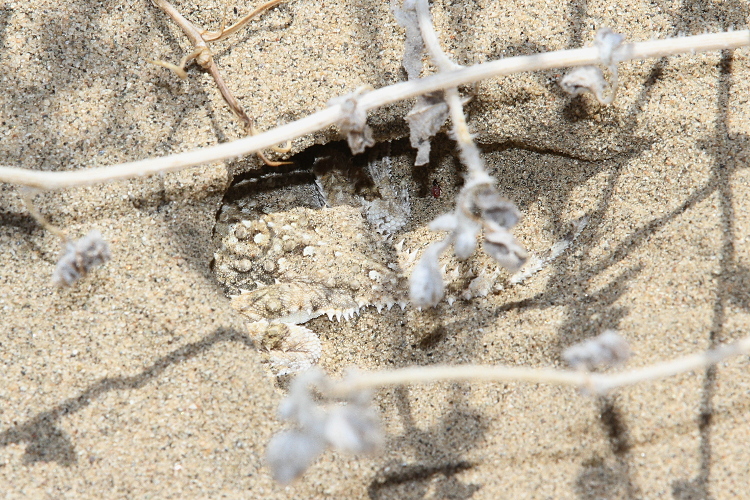
At one point while hiking around in sand dunes, I spotted this.
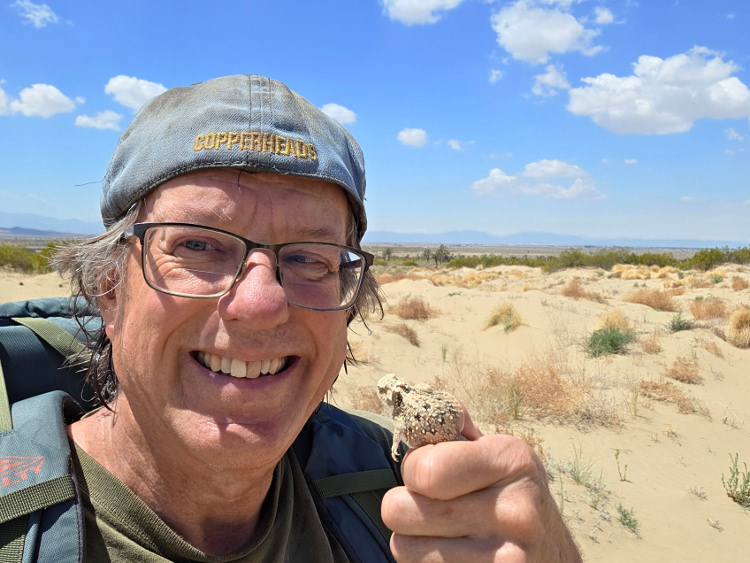
I pulled out the Desert Horned Lizard (Phrynosoma platyrhinos)
and said hello.
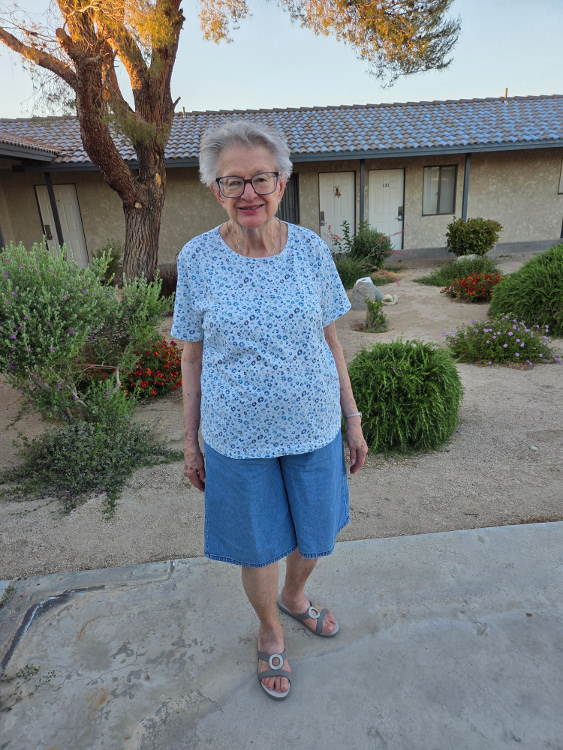
My mom.
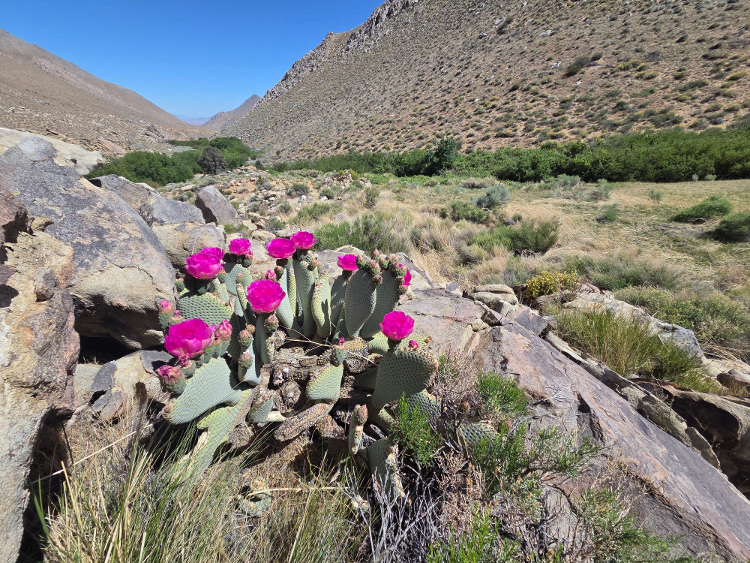
Beavertail Cactus (Opuntia basilaris).
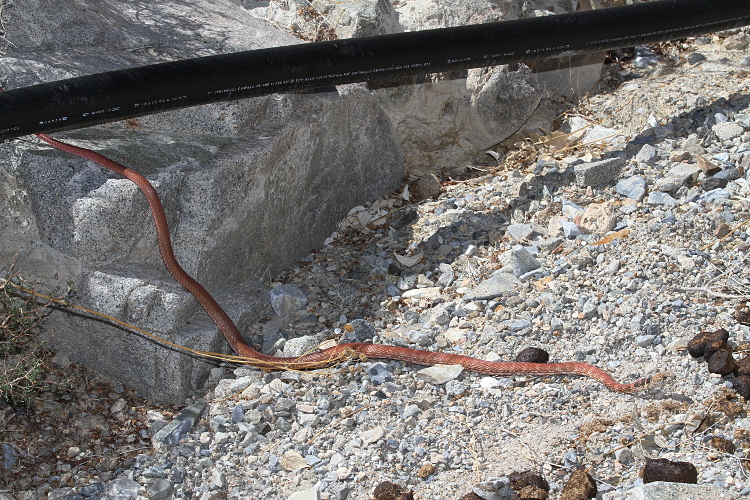
A Red Racer (Masticophis flagellum piceus), as spotted.
This was a very nice one for the northern Mojave desert. It was a deep
brick red over its entire length. Usually the red turns to tan on the
rear half of the snake.
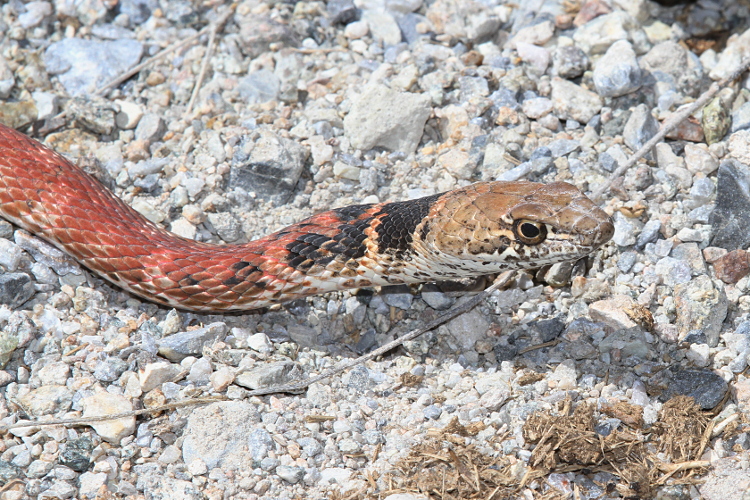
A closer look.
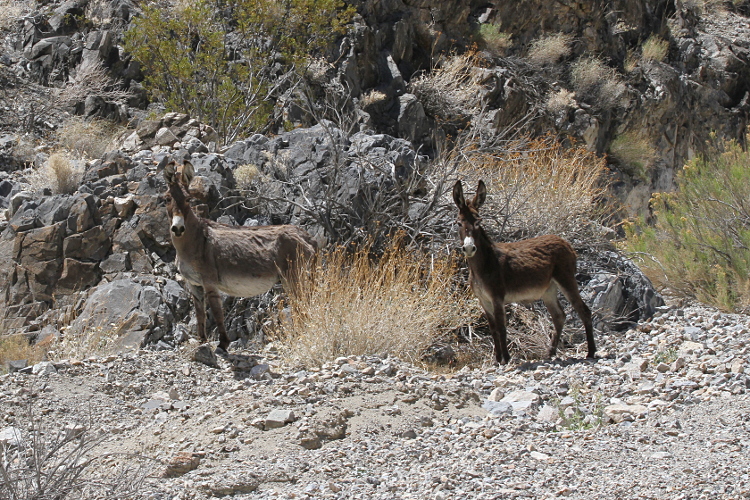
A couple of burros I saw farther up the canyon where I saw the Red Racer.
You might have noticed the burro droppings in one of those photos.
That's all for this trip. It was great seeing my mom and the California desert.