
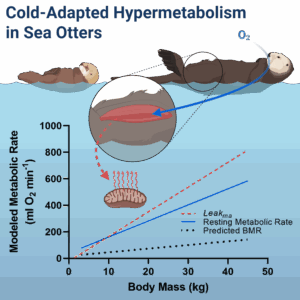
 Basal metabolic rate generally scales with body mass in mammals, and variation from predicted levels indicates adaptive metabolic remodeling. As a thermogenic adaptation for living in cool water, sea otters have a basal metabolic rate approximately three times that of the predicted rate; however, the tissue-level source of this hypermetabolism is unknown. Because skeletal muscle is a major determinant of whole-body metabolism, we characterized respiratory capacity and thermogenic leak in sea otter muscle. Compared with that of previously sampled mammals, thermogenic muscle leak capacity was elevated and could account for sea otter hypermetabolism. Muscle respiratory capacity was modestly elevated and reached adult levels in neonates. Premature metabolic development and high leak rate indicate that sea otter muscle metabolism is regulated by thermogenic demand and is the source of basal hypermetabolism.
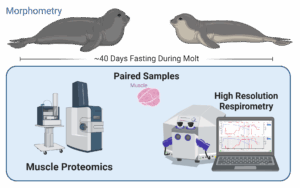 Northern elephant seals (NES, Mirounga angustirostris) undergo an annual molt during which they spend ∼40 days fasting on land with reduced activity and lose approximately one-quarter of their body mass. Reduced activity and muscle load in stereotypic terrestrial mammalian models results in decreased muscle mass and capacity for force production and aerobic metabolism. However, the majority of lost mass in fasting female NES is from fat while muscle mass is largely preserved. Although muscle mass is preserved, potential changes to the metabolic and contractile capacity are unknown. To assess potential changes in NES skeletal muscle during molt, we collected muscle biopsies from 6 adult female NES before the molt and after ∼30 days at the end of the molt. Skeletal muscle was assessed for respiratory capacity using high resolution respirometry, and RNA was extracted to assess changes in gene expression. Despite a month of reduced activity, fasting, and weight loss, skeletal muscle respiratory capacity was preserved with no change in OXPHOS respiratory capacity. Molt was associated with 162 upregulated genes including those favoring lipid metabolism. We identified 172 downregulated genes including those coding for ribosomal proteins and genes associated with skeletal muscle force transduction and glucose metabolism. Following ∼30 days of molt, NES skeletal muscle metabolic capacity is preserved although mechanotransduction may be compromised. In the absence of exercise stimulus, fasting-induced shifts in muscle metabolism may stimulate pathways associated with preserving the mass and metabolic capacity of slow oxidative muscle.
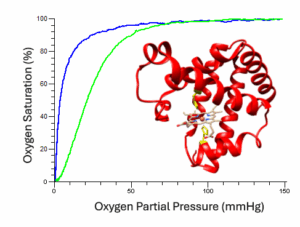 Myoglobin (Mb) is an oxygen binding protein found in vertebrate skeletal muscle where it facilitates intracellular transport and storage of oxygen. This protein has evolved to suit unique physiological needs in the muscle of diving vertebrates that express Mb at much greater concentrations than their terrestrial counterparts. In this study, we characterized Mb oxygen affinity (P50) from 25 species of aquatic and terrestrial birds and mammals. Among diving species we tested for correlations between Mb P50 and routine dive duration. Across all species examined, Mb P50 ranged from 2.40-4.85 mmHg. The mean P50 of Mb from terrestrial ungulates was 3.72 ± 0.15 mmHg (range 3.70 – 3.74 mmHg). The P50 of cetaceans was similar to terrestrial ungulates ranging from 3.54-3.82 mmHg with the exception of the melon-headed whale that had a significantly higher P50 of 4.85 mmHg. Among pinnipeds, the P50 ranged from 3.23-3.81 mmHg and showed a trend for higher oxygen affinity in species with longer dive durations. Among diving birds, the P50 ranged from 2.40-3.36 mmHg and also showed a trend of higher affinities in species with longer dive durations. In pinnipeds and birds, low Mb P50 was associated with species whose muscles are metabolically active under hypoxic conditions associated with aerobic dives. Given the broad range of potential globin oxygen affinities, Mb P50 from diverse vertebrate species appears constrained within a relatively narrow range. High Mb oxygen affinity within this range may be adaptive for some vertebrates that make prolonged dives.
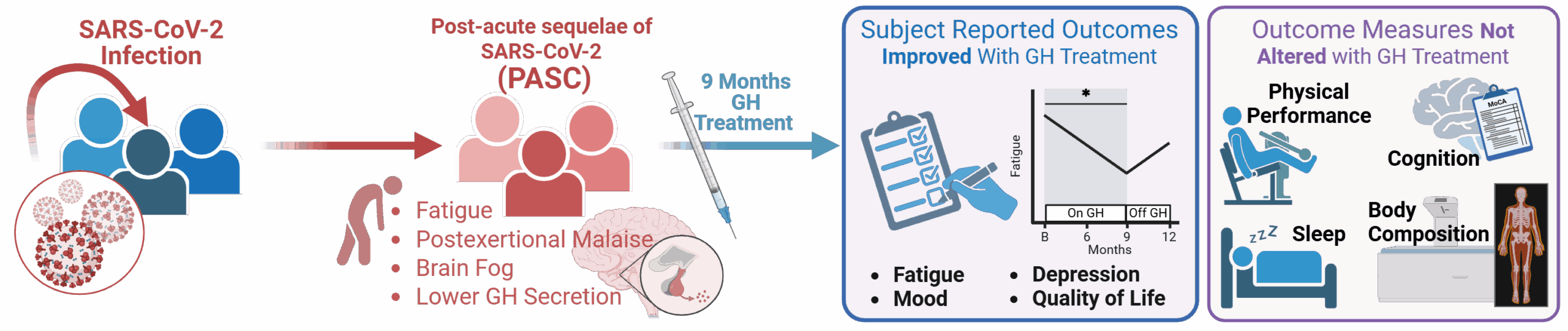 Following SARS-CoV-2 infection, some patients develop lingering neurologic symptoms of post-acute sequelae of COVID-19 (PASC) that commonly include fatigue and “brain fog.” PASC symptoms are also linked with reduced growth hormone (GH) secretion, but GH treatment has not been tested to relieve symptoms. We enrolled 13 adults with neurologic PASC symptoms and peak stimulated GH secretion less than 10 ng/mL (glucagon stimulation) in a pilot study to receive 9 months of daily GH injections and an additional 3 months of off-treatment assessment. We compared peak stimulated GH secretion at baseline and 12 months and assessed measures of cognition, metabolism, body composition, and physical performance over the first 6 months of treatment. Patient-reported outcomes of fatigue, quality of life, sleep, and mood were recorded at baseline and compared with timepoints at 6, 9, and 12 months. GH treatment was associated with significantly improved scores for Brief Fatigue Inventory, Multidimensional Fatigue Symptom Inventory, Quality of Life Assessment of Growth Hormone Deficiency in Adults, Profile of Mood States, and Beck Depression Inventory-II, with no significant change in Pittsburgh Sleep Quality Index. Six months of adjunct GH treatment was not associated with significant changes in cognition, body composition, resting energy expenditure, or physical performance. Peak stimulated GH secretion was not altered at 12 months following 9 months of GH treatment. GH treatment significantly improved neurologic symptoms in PASC patients but cognition, sleep, and physical performance were not significantly altered.
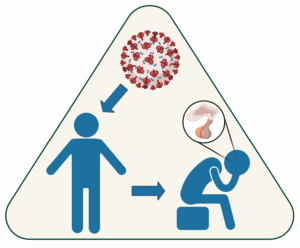 Objective: To determine if patients that develop lingering neurologic symptoms of fatigue and “brain fog” after initial recovery from coronavirus disease 2019 (COVID-19) have persistent low growth hormone (GH) secretion as seen in other conditions with similar symptom etiology.
Design: In this case-control observational pilot study, patients reporting lingering neurologic post-acute sequelae of SARS-CoV-2 (PASC, n = 10) symptoms at least 6 months after initial infection were compared to patients that recovered from COVID-19 without lingering symptoms (non-PASC, n = 13). We compared basic blood chemistry and select metabolites, lipids, hormones, inflammatory markers, and vitamins between groups. PASC and non-PASC subjects were tested for neurocognition and GH secretion, and given questionnaires to assess symptom severity. PASC subjects were also tested for glucose tolerance and adrenal function.
Results: PASC subjects reported significantly worse fatigue, sleep quality, depression, quality of life, and gastrointestinal discomfort compared to non-PASC. Although PASC subjects self-reported poor mental resilience, cognitive testing did not reveal significant differences between groups. Neurologic PASC symptoms were not linked to inflammatory markers or adrenal insufficiency, but were associated with reduced growth hormone secretion.
Conclusions: Neurologic PASC symptoms are associated with gastrointestinal discomfort and persistent disruption of GH secretion following recovery from acute COVID-19.
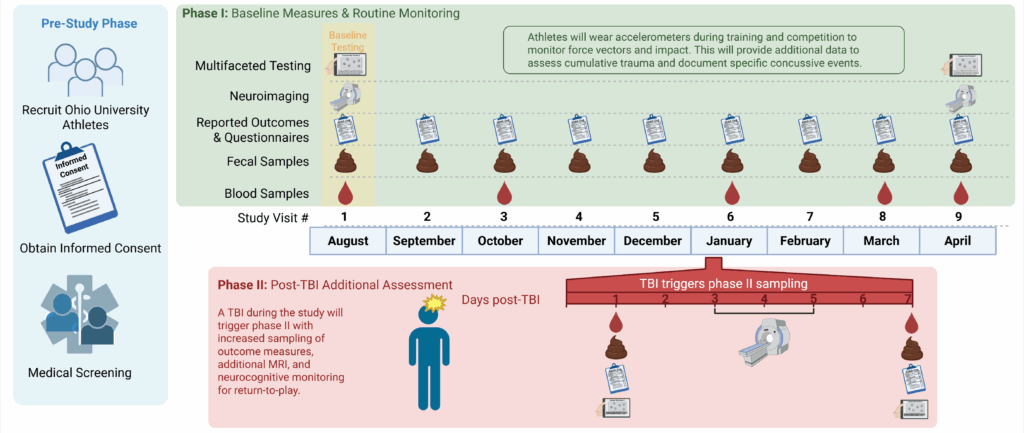
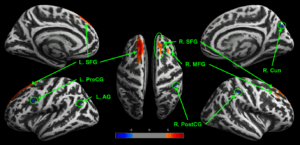 Pituitary dysfunction with reduced growth hormone (GH) secretion is common in patients following traumatic brain injury (TBI), and these patients often develop chronic symptoms including fatigue and altered cognition. We examined 18 subjects with a history of mild TBI, fatigue, and insufficient GH secretion. Subjects received GH replacement in a year-long, double-blind, placebo-controlled, crossover study, and were assessed for changes in physical performance, body composition, resting energy expenditure, fatigue, sleep, mood, and neuropsychological status. Additionally, magnetic resonance imaging (MRI) was used to assess changes in brain structure and resting state functional connectivity. GH replacement resulted in decreased fatigue, sleep disturbance, and anxiety, as well as increased resting energy expenditure, improved body composition, and altered perception of submaximal effort when performing exercise testing. Associated brain changes included increased frontal cortical thickness and gray matter volume and resting state connectivity changes in regions associated with somatosensory networks. GH replacement altered brain morphology and connectivity and reduced fatigue and related symptoms in mild TBI patients. Additional studies are needed to understand the mechanisms causing TBI-related fatigue and symptom relief with GH replacement.