Mary Moore, PhD Student in Literary History, 2026-27 Rare Book Graduate Assistant

Long before I arrived at Ohio University, Halloween had secured its place as my absolute favorite holiday. Perhaps because my birthday falls just three days before, perhaps because I grew up in a Halloween loving family and in a city with its own unique Halloween traditions (I’m referring, of course, to St. Louis, MO), or perhaps simply because I have an affinity for the occult; regardless, it was a joy to arrive to OU and find a community that matched my enthusiasm for this holiday.
Even twenty-four years ago Graduate Assistant Mary Moore, pictured here at age 2, was a Halloween enthusiast!
Ohio University has a long and notorious history for celebrating Halloween, which reportedly began with an “organized” Halloween party in 1974, sanctioned by then dean of students Carol Harter. Halloween parties in the decades since have purportedly waxed and waned in their extremity and flare. Details about this year’s Halloween celebrations in Athens can be found on the official Athens Halloween website, whereas the official university policies regarding guests can be found here.
If the Uptown celebrations aren’t your scene, or if you’re simply looking for a more bookish way to celebrate this holiday, look no further than the Mahn Center! I first decided to create a showcase of Halloween inspired Rare Book materials shortly after starting as the Rare Book Graduate Assistant (again, Halloween enthusiast here) but that plan solidified after I helped prepare materials for a session of English 3070J, taught this semester by Dr. Joe McLaughlin. For this class we pulled every copy of Mary Shelley’s 1818 novel Frankenstein: Or, a Modern Prometheus, of which we hold a whopping 18 copies. Feeling inspired, I am thrilled to share with you today a sampling of our Frankenstein editions and other Halloween related materials we hold in the Rare Book Vault at the Mahn Center.
Frankenstein
Since its publication in 1818, Mary Shelley’s Frankenstein has become one of the most famous examples of horror and science fiction known across the globe. Given that we hold 18 copies, I won’t be able to showcase them all. However, because this is both an older, and more importantly enduring text, we have an immense variety of printing examples to share.
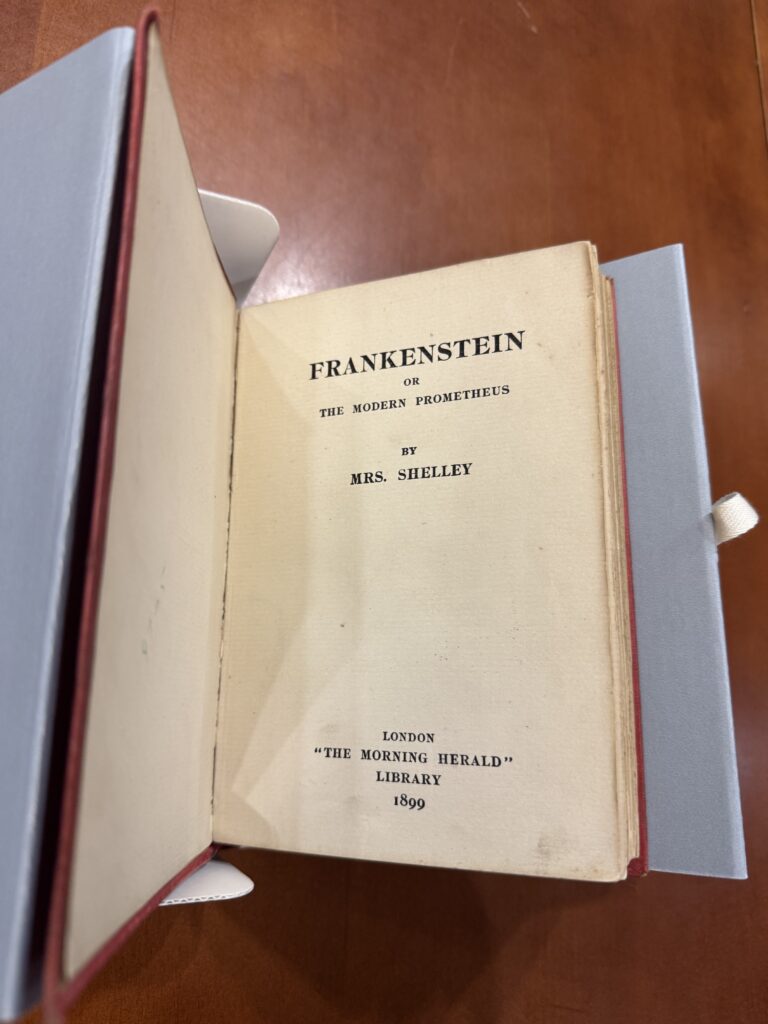
From what I can gather, not a single library or archive in the state of Ohio holds an 1818 edition of Frankenstein. One of our oldest editions housed at the Mahn Center, however, was printed in 1899. This edition is fun to consider for a variety of reasons, including that it was attributed to “Mrs. Shelley” (rather than Mary Shelley). Our edition features an imprint attributing its printing to “The Morning Herald,” which was a short-lived London newspaper, making its printing in a single volume book (rather than, say, a serialized newspaper edition) peculiar. Our edition also features a stamp on the spine stating “Lever Bros.,” likely referring to the 19th century British soap makers (who would go on to form Unilever), who with their industrial printing capacities, primarily used for advertising materials, also purportedly printed cheap versions of popular books. In our case, the likely story we can consider is that our octavo (8vo) edition of Frankenstein was printed by “The Morning Herald” and later bound in red boards by the Lever Brothers. (I’ve traced as much of the provenance of this irregular edition as I could without getting my hands on Mattias Tornquist’s 2026 Tracing Frankenstein: Editions, Performances, and Inspired Fictions, which appears to include an exhaustive print history bibliography).
My favorite detail about this edition is that it was printed on handmade paper, which had predominantly faded into private presses with the popularization of mechanized papermaking during the industrial revolution. (Throughout this blog post I, when possible, reference the size of the book, as I’ve done with this edition, describing it as “octavo” and offering the shortened “8vo.” This informational guide from Abe Books can help provide more information on the different sizes of books from the handpress period and how they relate to the original size piece of paper from which the pages were made!).
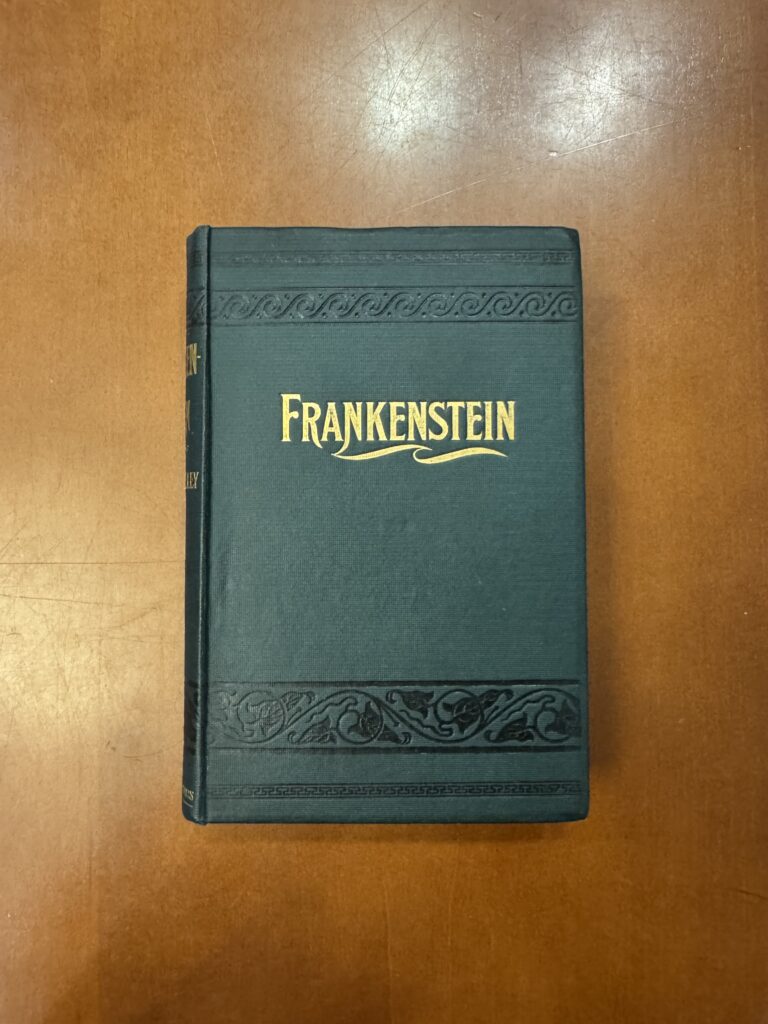
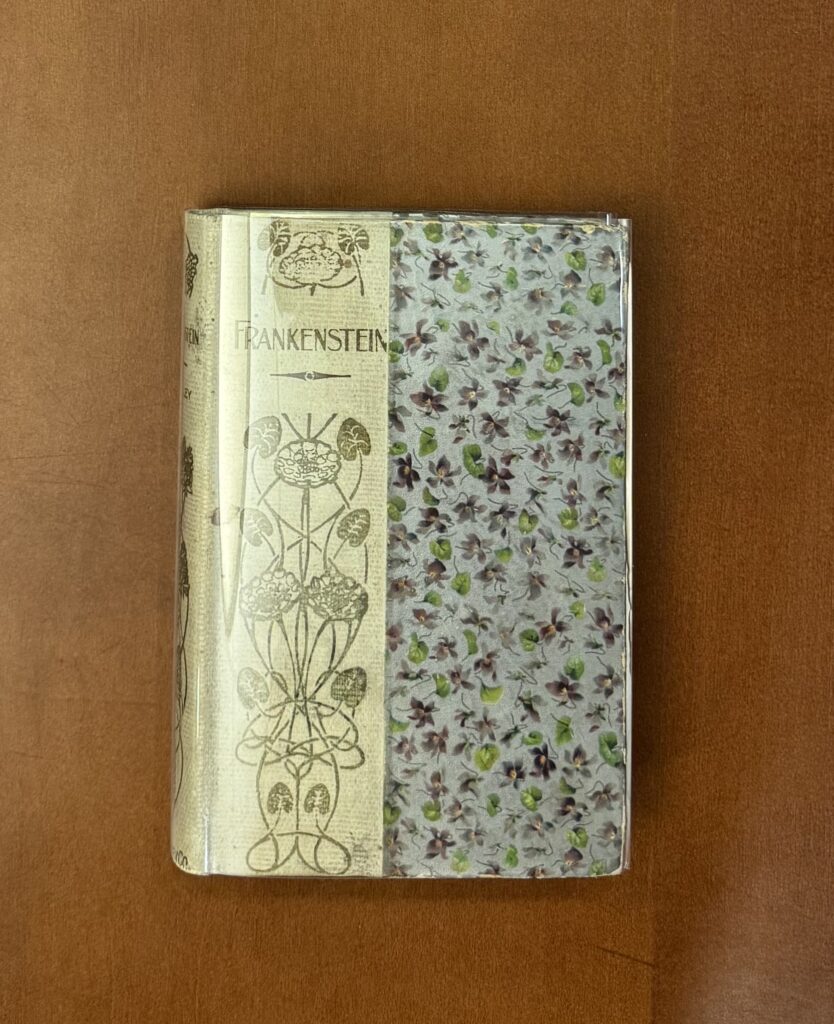
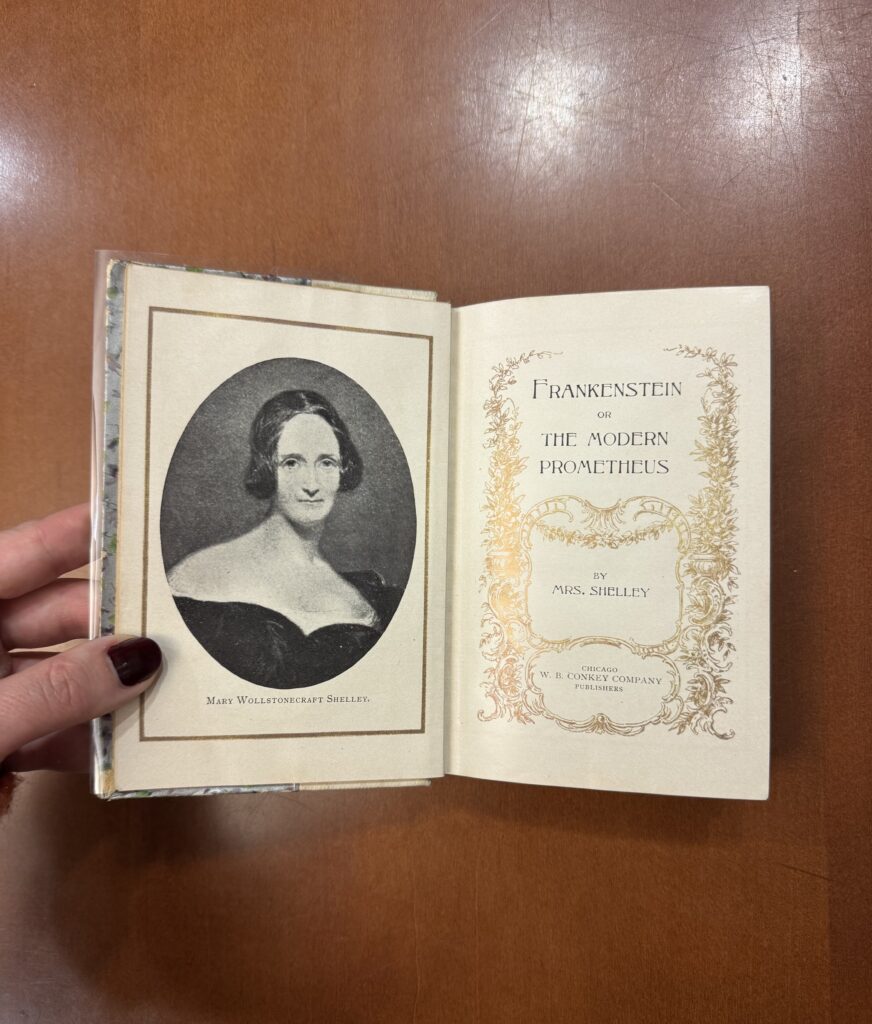
The turn of the century brought about two of my favorite printings that we hold at the Mahn Center. First, we have this beautiful 1900 printing done in London by W. Nicholson and Sons. This edition features a gorgeous, embossed dark green leather cover. Like the 1899 printing, this edition attributes the novel to “Mrs. Shelley” and features a singular attributed illustration on the unnumbered leaf prior to the title page. My absolute favorite edition in our holdings, however, is our 1901 printing, done in Chicago by W. B. Conkey Company, and features a beautiful binding, with boards ½ covered in silver decorated with violets. This edition also features a portrait of the author with her full name: Mary Wollstonecraft Shelly.
If you thought movie-tie in editions were a 21st century invention, think again! The Mahn Center holds a 1931 British printing that advertises the Universal film of the same year, featuring a movie still as the cover image as well as a list of the actors included on the title page. Our 1934 printing however, is enhanced with incredible—and now iconic—wood engravings by artist and novelist Lynd Ward.
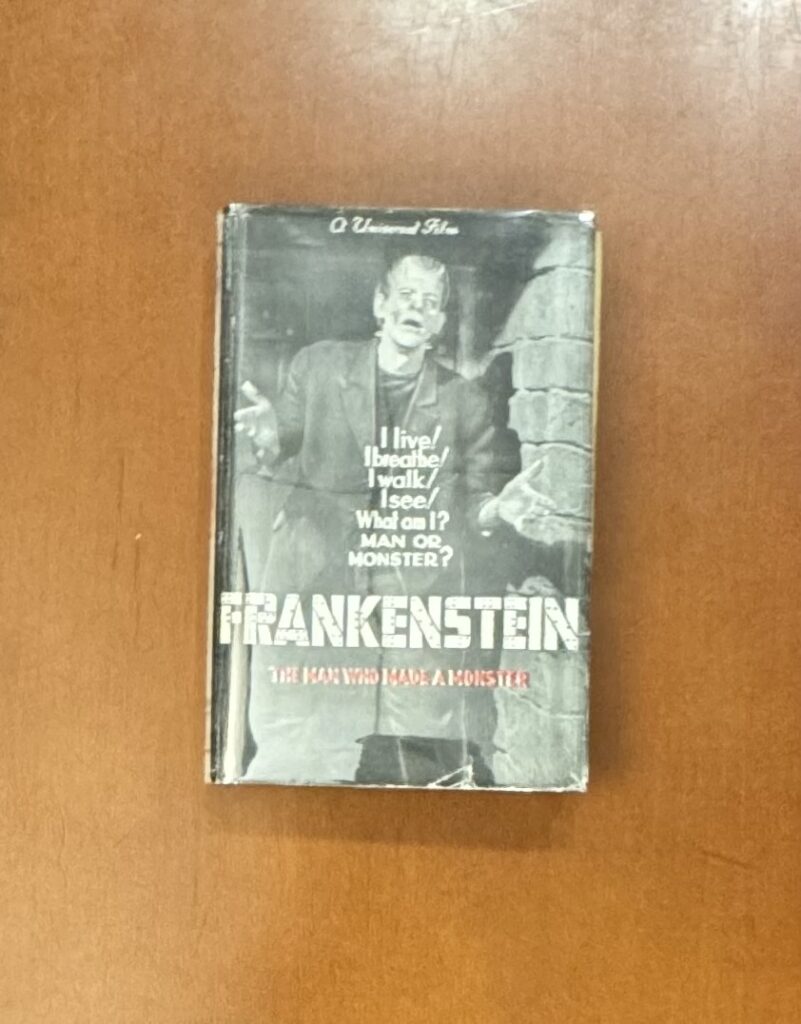
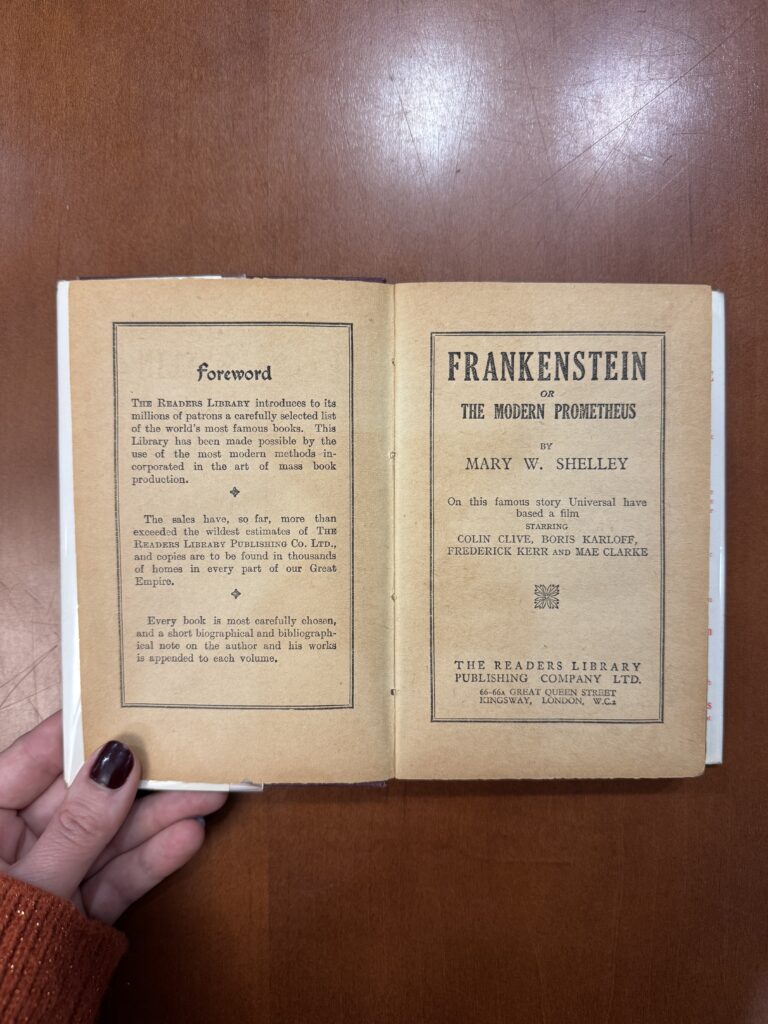
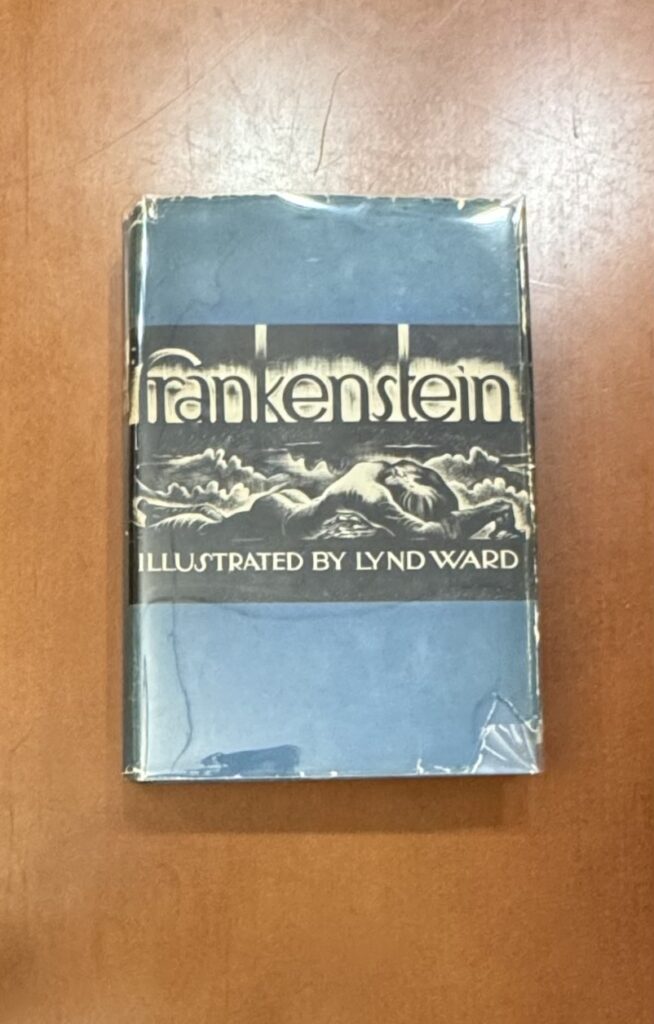
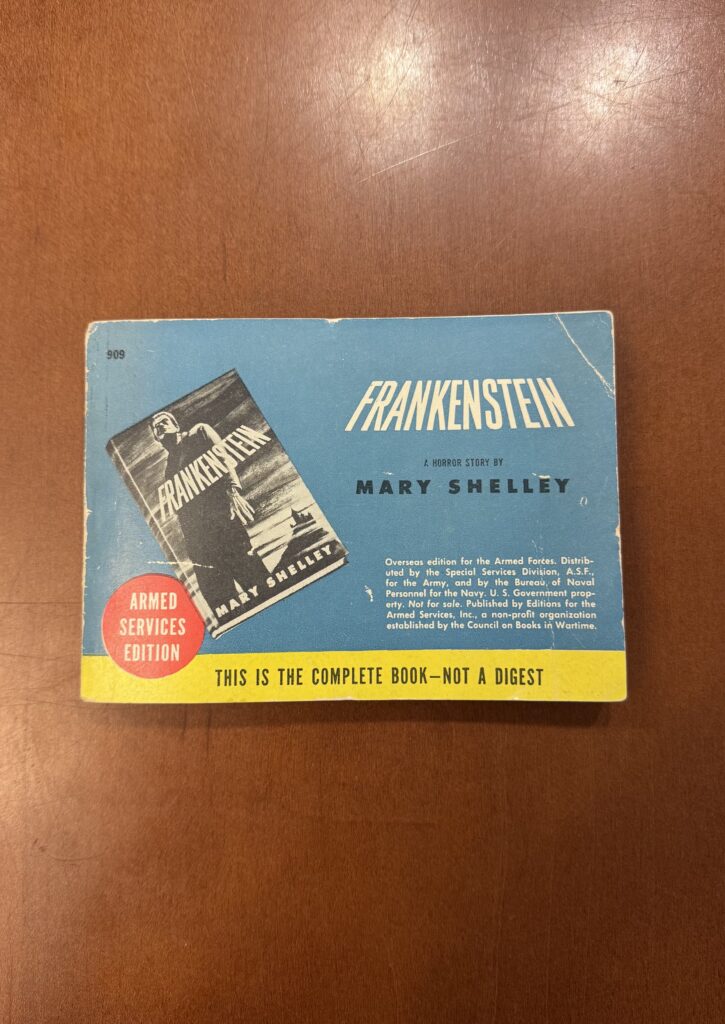
Our last edition from the mid-20th century is an extraordinary 1946 printing done for the Armed Services Collection, resulting in a postcard shaped squatty paperback, more portable for military servicemen during World War II.
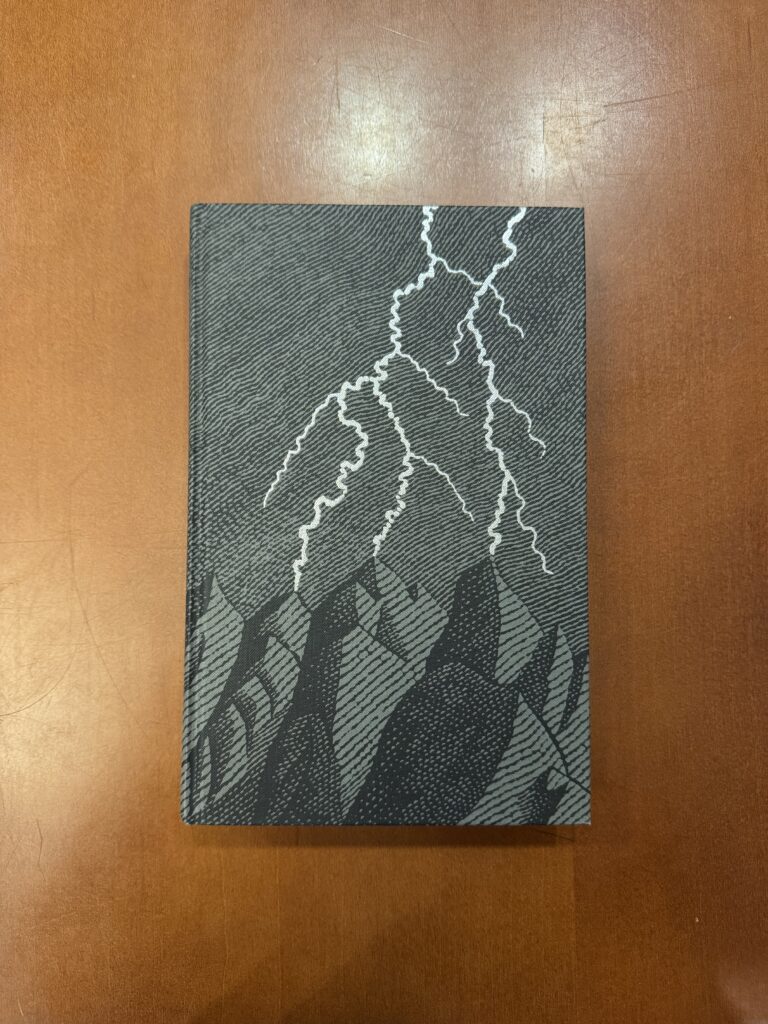
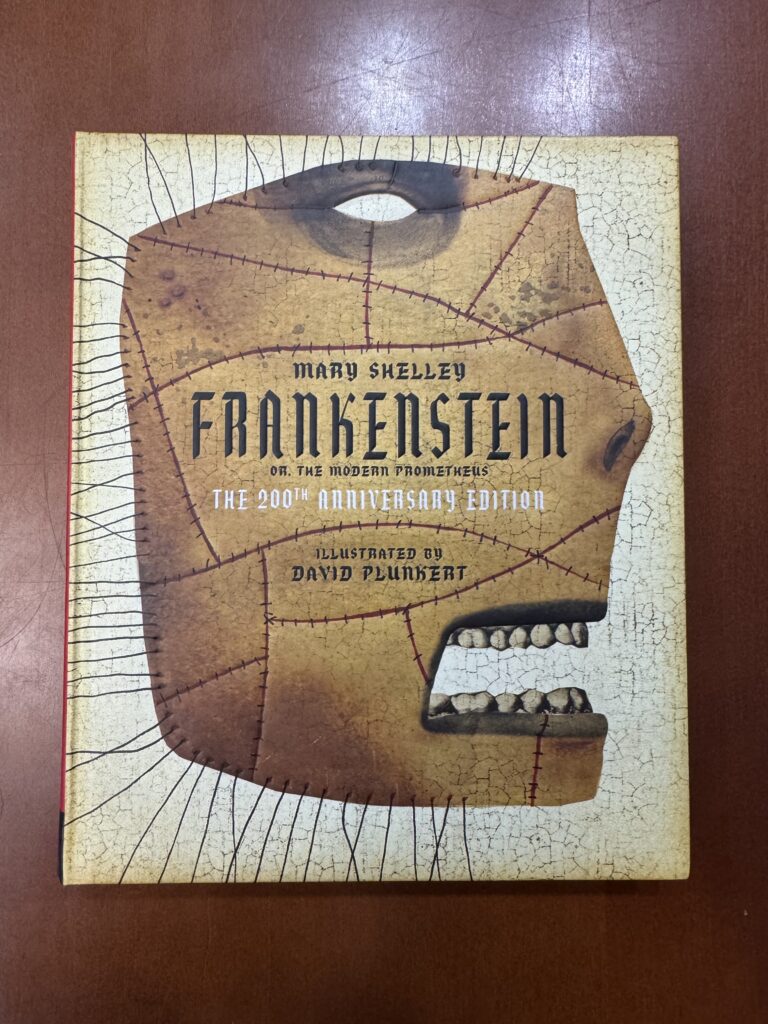
Our most modern, albeit still special editions, include a 2004 edition printed in London by the Folio Society, featuring a black slipcase and illustrations by Harry Brockway. We also hold the 2018 200th Anniversary Edition, produced by Rockport Publishers in Massachusetts and illustrated by David Plunkert.
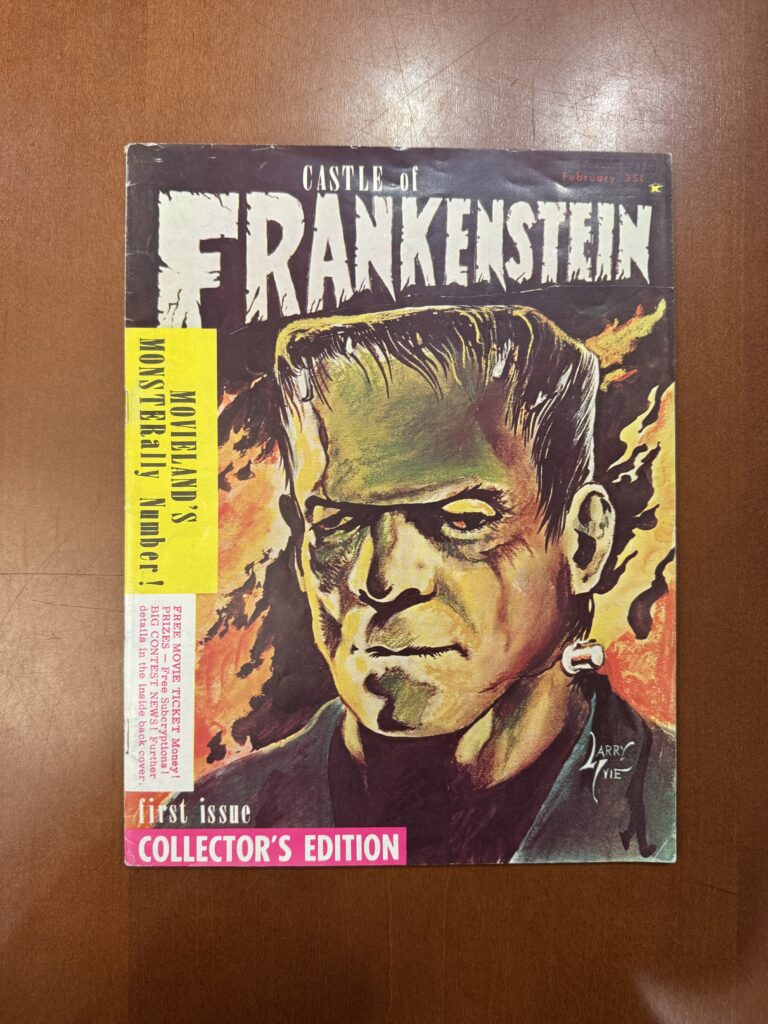
Lastly, I would be remiss to not include our most artistic renditions of Frankenstein, which include two pop-up books and a horror, science fiction, and fantasy magazine. The magazine is a 1970s edition of the magazine “Castle of Frankenstein,” with our “collector’s edition” featuring a full-cover illustration of the infamous creature and movie stills from the 1957 film “The Curse of Frankenstein.”
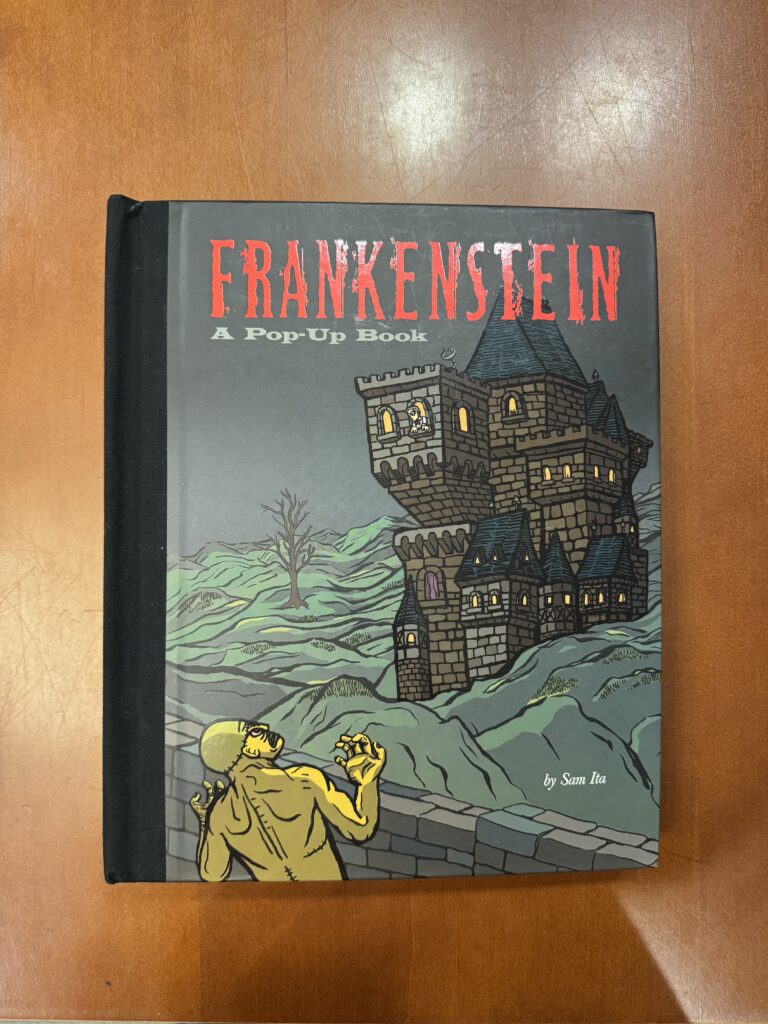
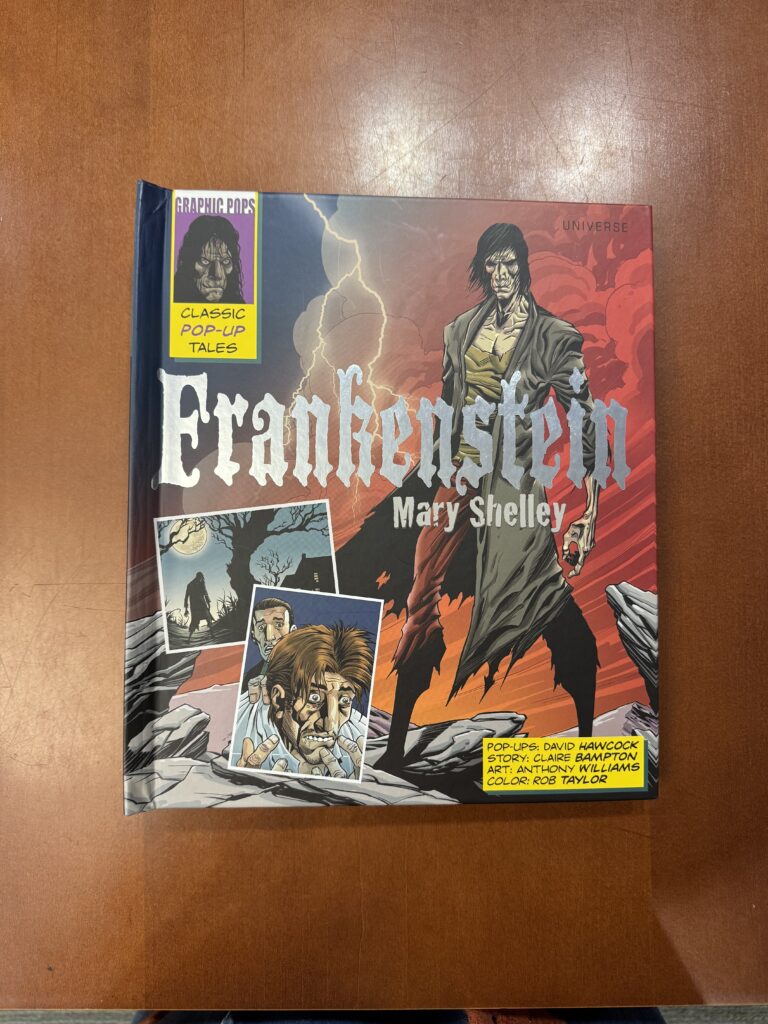
Our two pop-up books were both produced in 2010 and with comic book inspired flair. The “red” edition was illustrated by Sam Ita, is heavily abridged, and was produced by Sterling Innovation. The “silver” edition was illustrated by Anthony Williams, colored by Rob Taylor, adapted by Claire Bampton, and features pop-ups designed by David Hawcock; this edition was produced in 2010 by Universe Publishing. I won’t spoil the pop-ups of either edition because the paper engineering really is that spectacular, so you should plan a visit to see them in person!
Additional Spooktacular Books
While none of our other spooky books are as well represented at the Mahn Center as Frankenstein, we do hold a variety of other equally enticing editions.
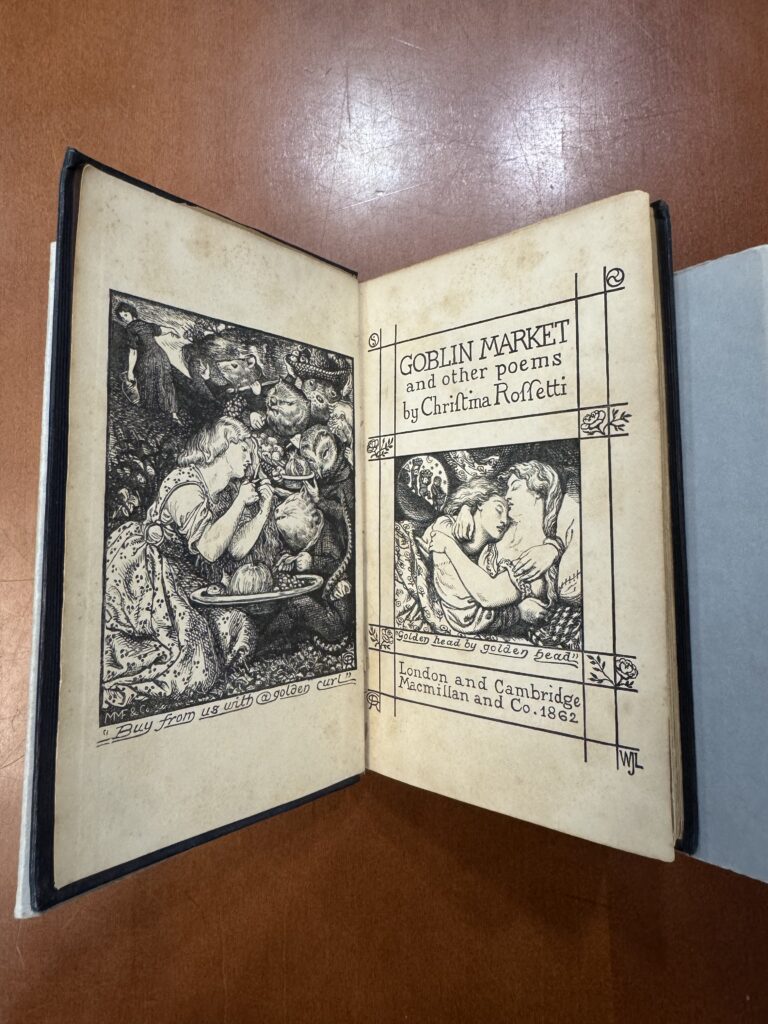
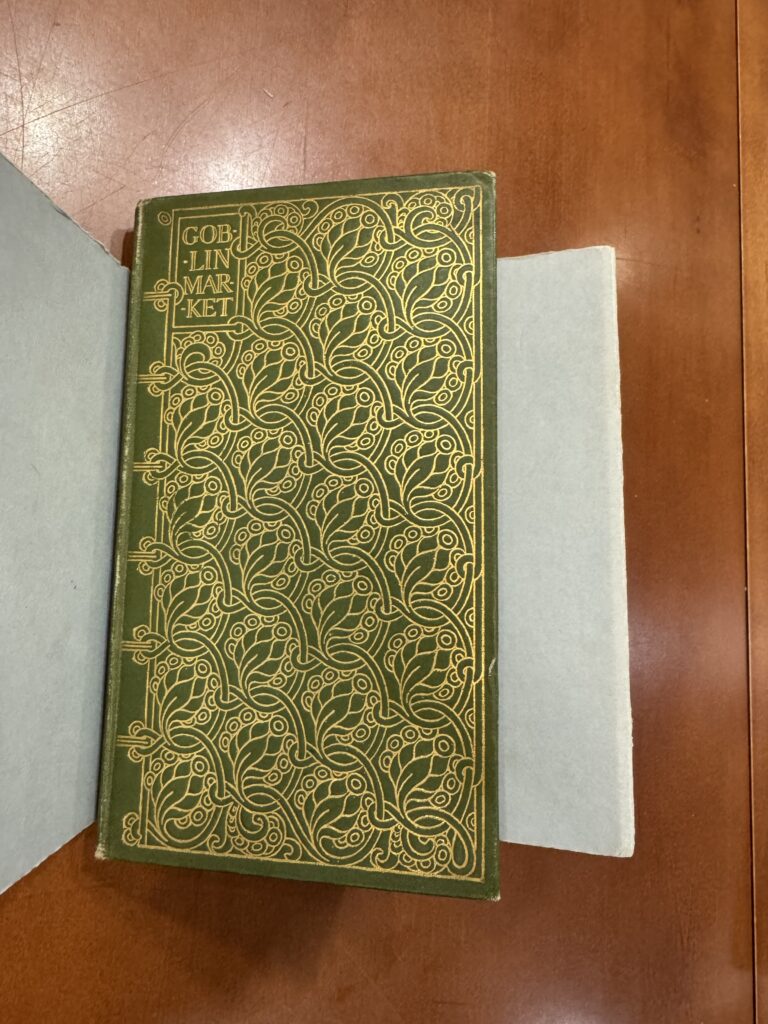
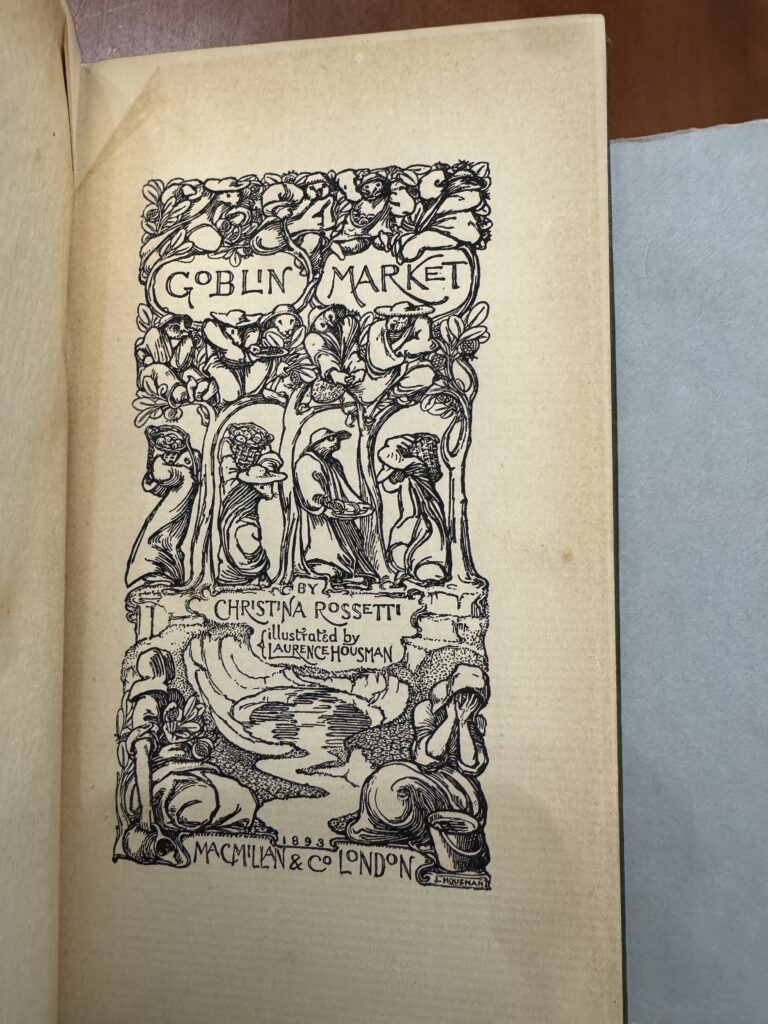
“Goblin Market” is an 1862 narrative poem written by English writer Christina Rossetti, featuring two sisters tempted with fruit by goblin merchants. You can read the poem in its entirety with The Poetry Foundation, or come and view one of the six editions we have at the Mahn Center. I first encountered this poem in my ENG 7235 Speculative 1890s course with Dr. Joseph McLaughlin, where we read the poem and came to view several of the editions at the Mahn Center. I’ve selected both the first edition and a gorgeous 1893 edition to show to you today. The first edition features an inscription dated 1864 and contains the now iconic frontispiece illustration (typically decorative or informatively depicting a scene from the text, that sits on the page opposite a title page) and title page. The 1893 edition is wrapped in green boards and is gold embossed in a floral pattern. It contains illustrations by artist Laurence Housman.
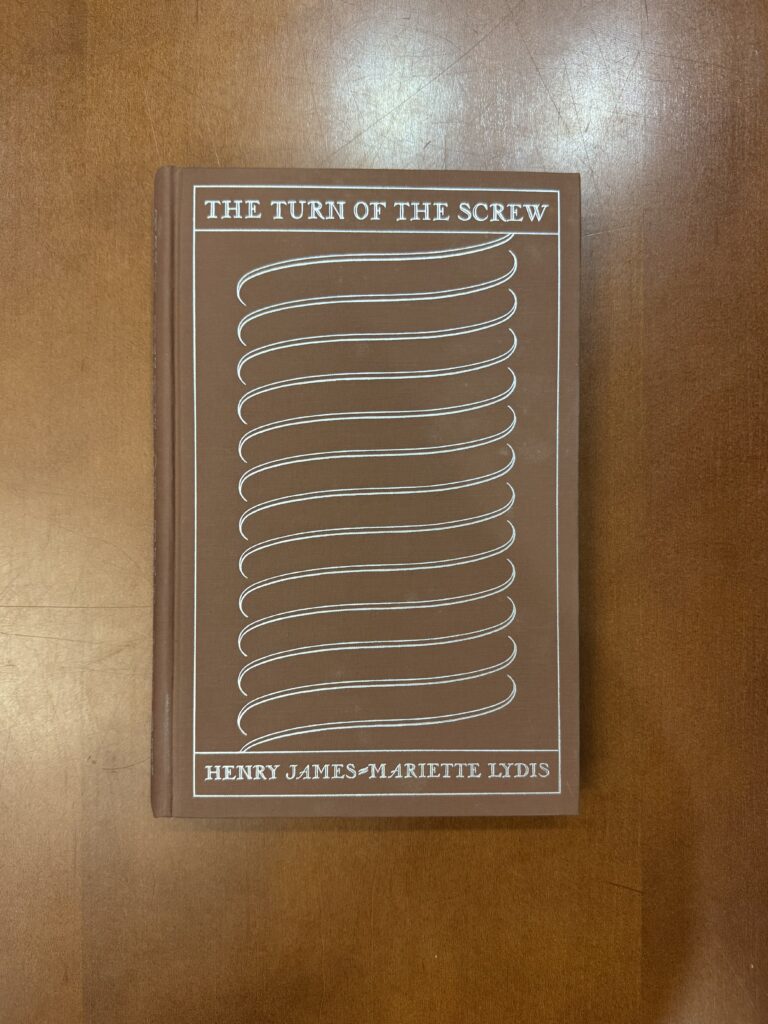
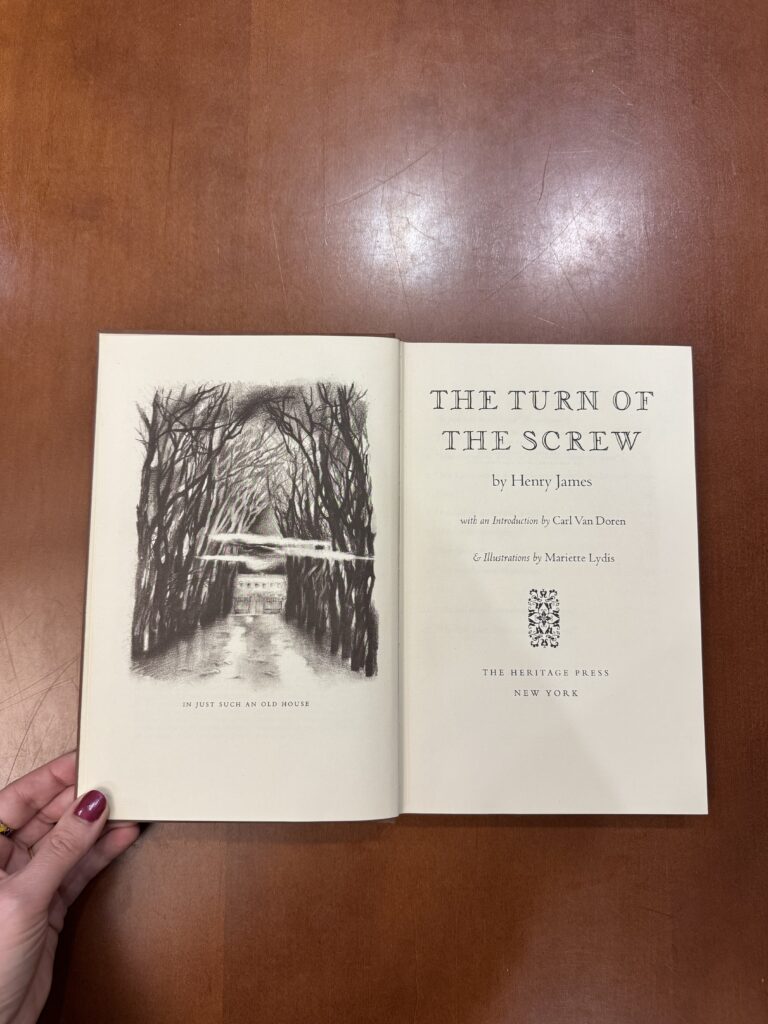
Though I was not previously familiar with The Turn of the Screw, I came across it while gathering spooky materials for this blog post. It was published in 1898, written by author Henry James, and is considered a horror novella. The novella follows a governess who, while caring for two children in a remote home, become convinced that the children are haunted! We have a spectacular 1945 edition produced by The Heritage Club, with illustrations by Mariette Lydis. Our copy of The Ghostly Tales of Henry James also includes The Turn of the Screw among other spooky short stories and novellas.
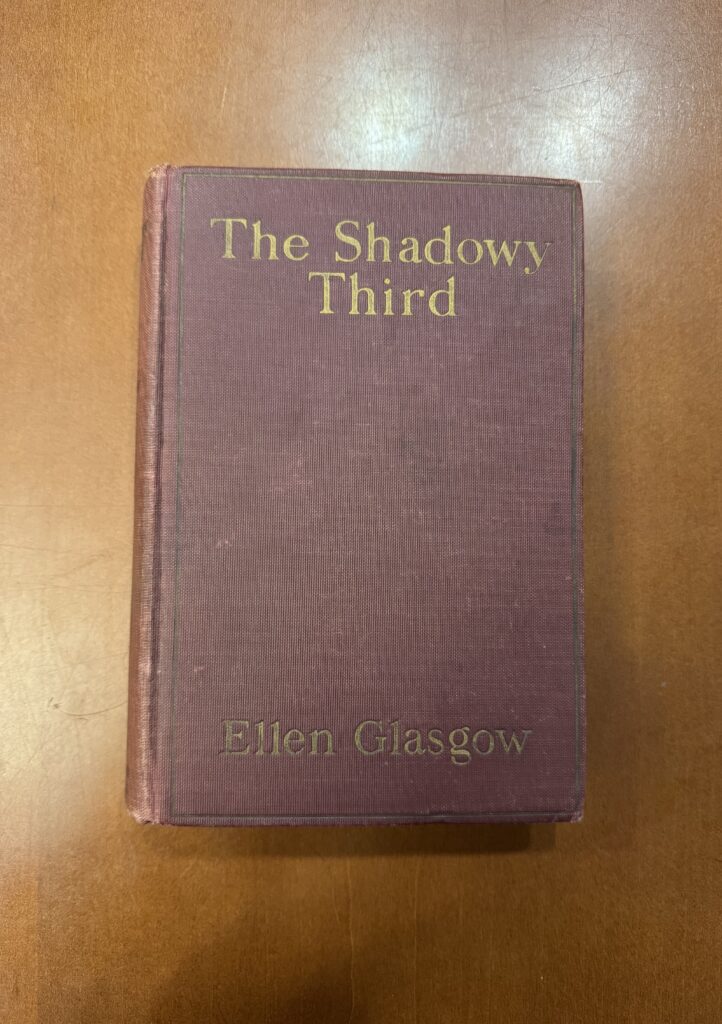
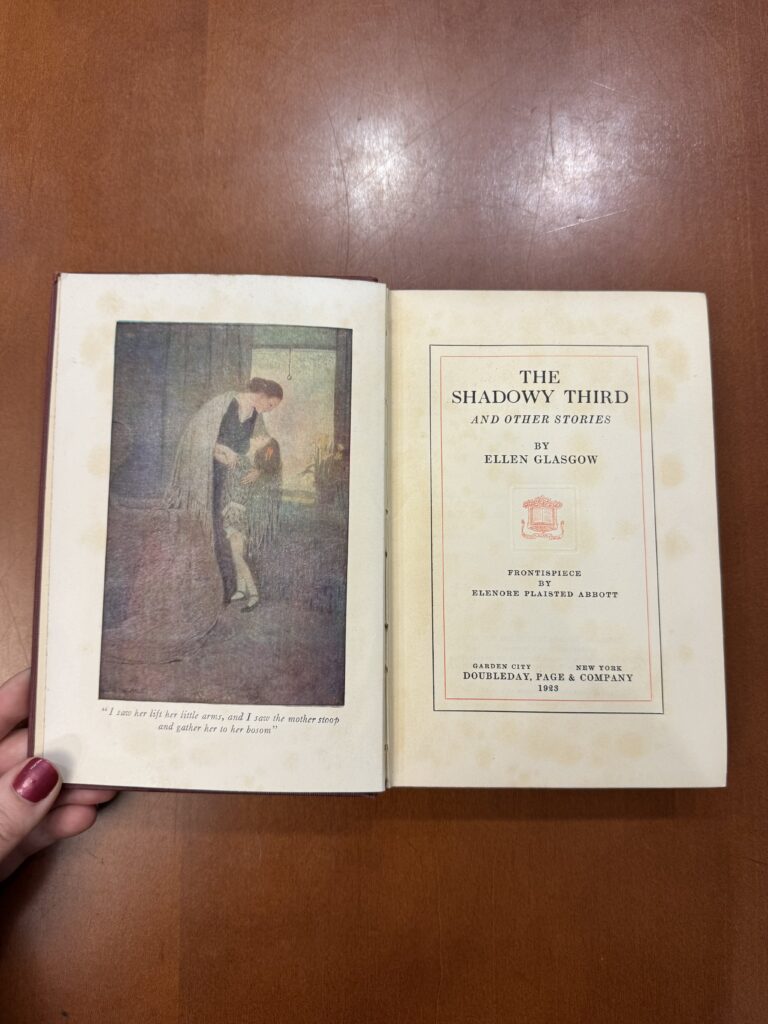
Another new-to-me text I selected for showcasing is The Shadowy Third and Other Stories by Ellen Glasgow; We hold a 1923 (likely first edition) printing of this short story collection, featuring seven spooky stories. Ellen Glasgow was a Pulitzer Prize winning writer best known for her novel In This Our Life. The Shadowy Third is technically still available to modern readers through print-on-demand services, but I recommend you come and visit our edition at the Mahn Center for an authentic experience.
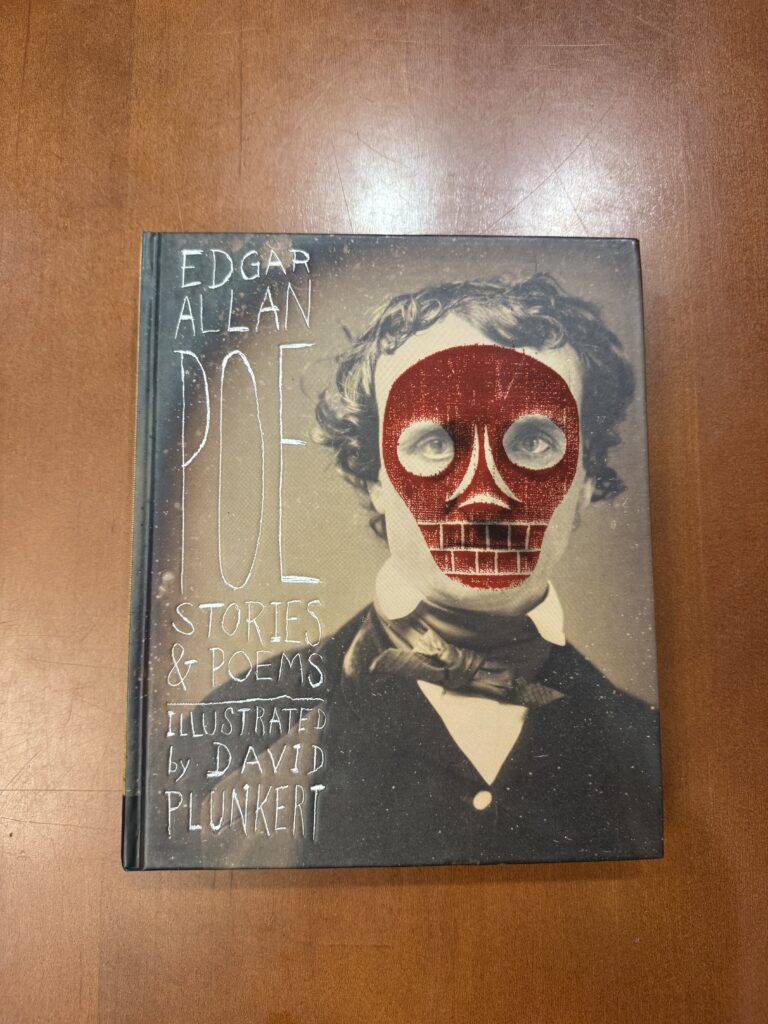
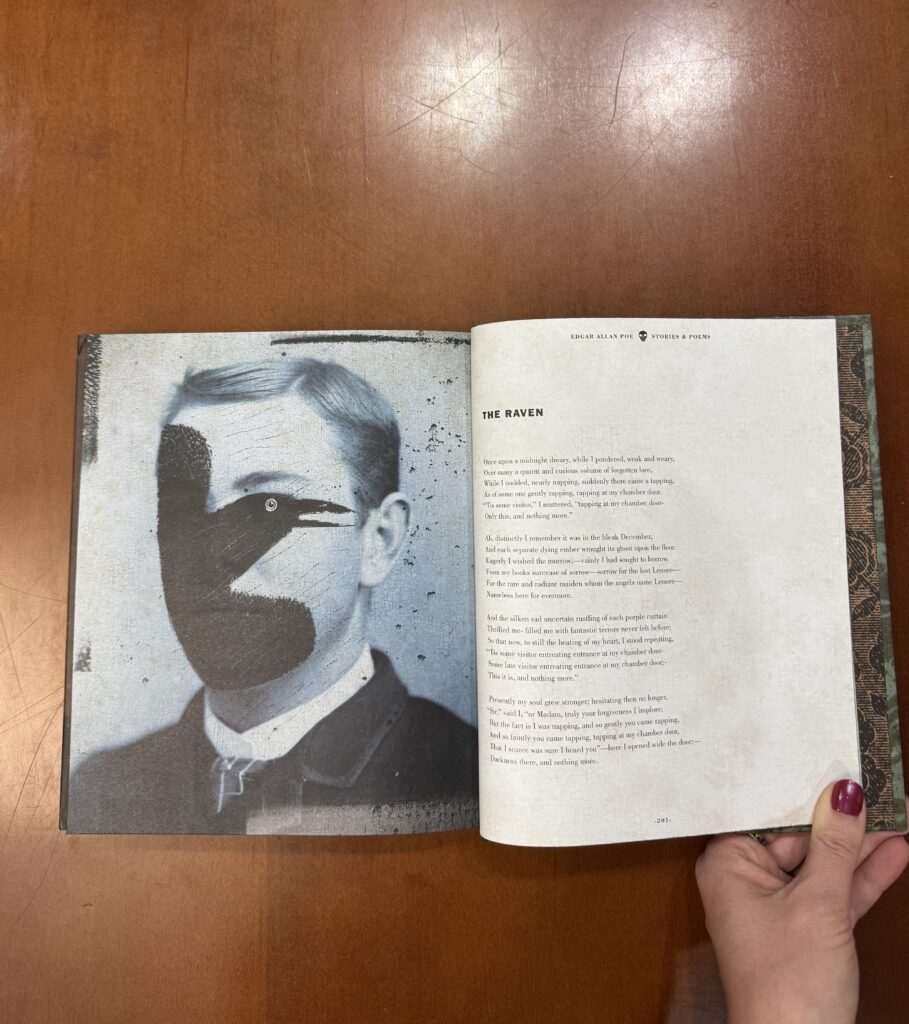
In some ways Edgar Allen Poe has become synonymous with Halloween and other spooky season literary celebrations. While we have dozens of editions of Poe’s works and biographies, I’ve selected two to showcase to you all. First, we have our 1946 edition of The Raven and Other Poems, which was printed just one year after the poem was first published in a larger collection. We also hold an incredible 2015 printing of Edgar Allan Poe Stories and Poems, produced by Rockport Publishing’s “Classics Reimagined” series, where classic works are paired with modern graphic artists. The illustrations by David Plunkert (who also illustrated our aforementioned 200th anniversary edition of Frankenstein) absolutely bring Poe’s spooktacular work to life.
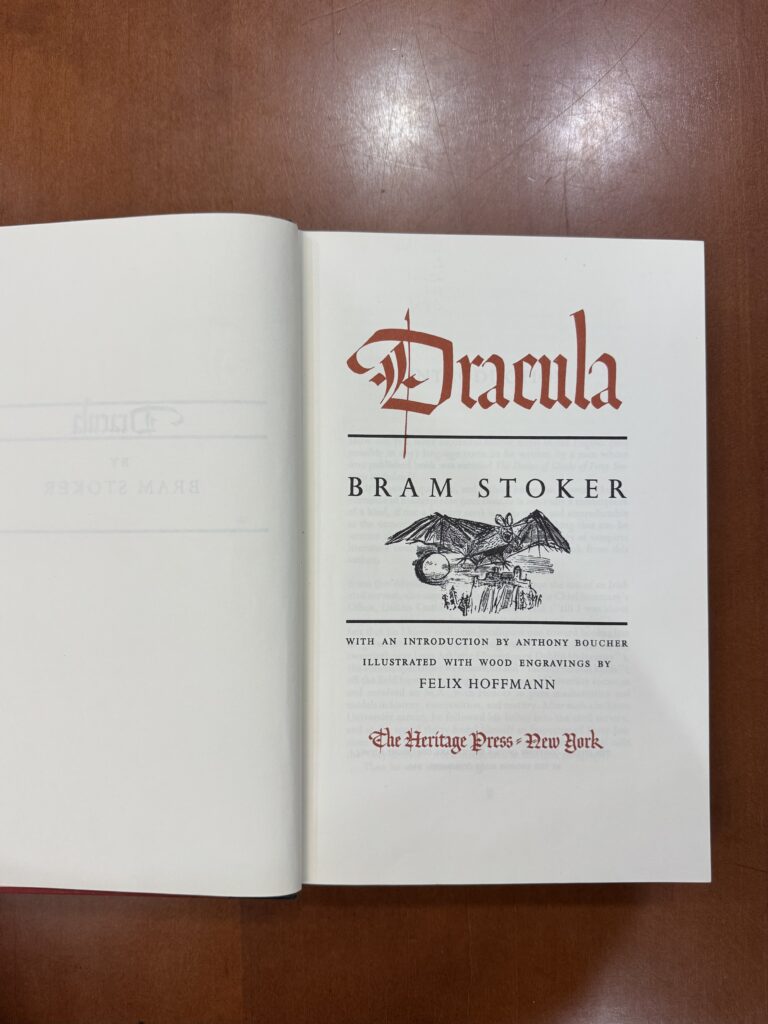
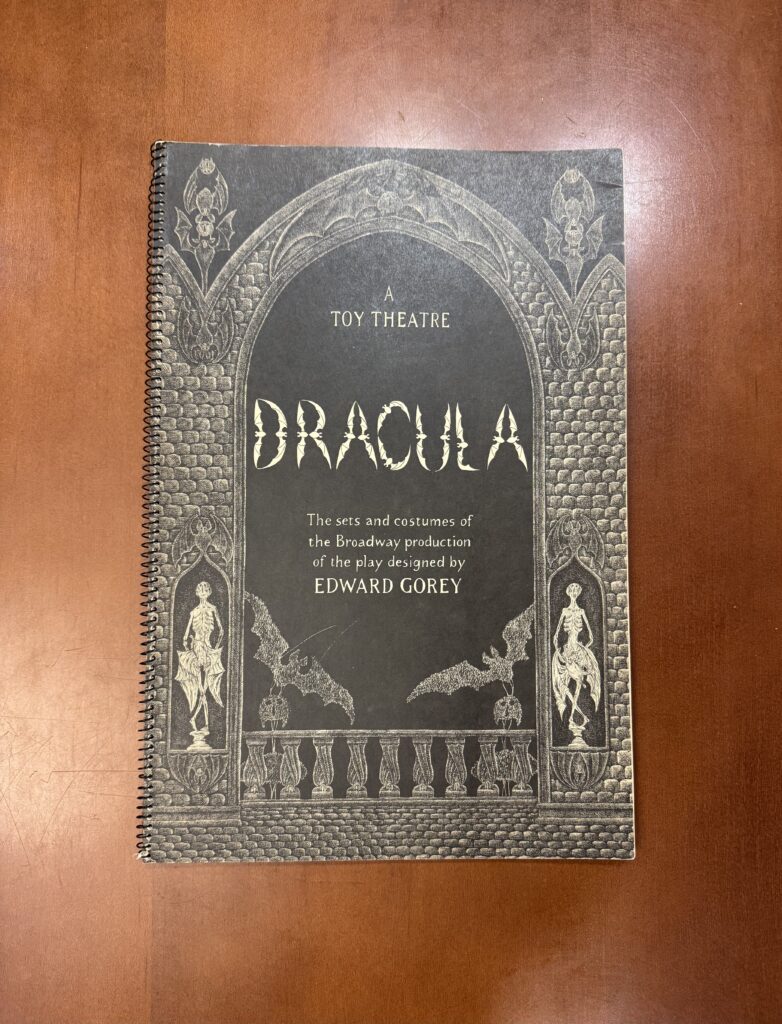
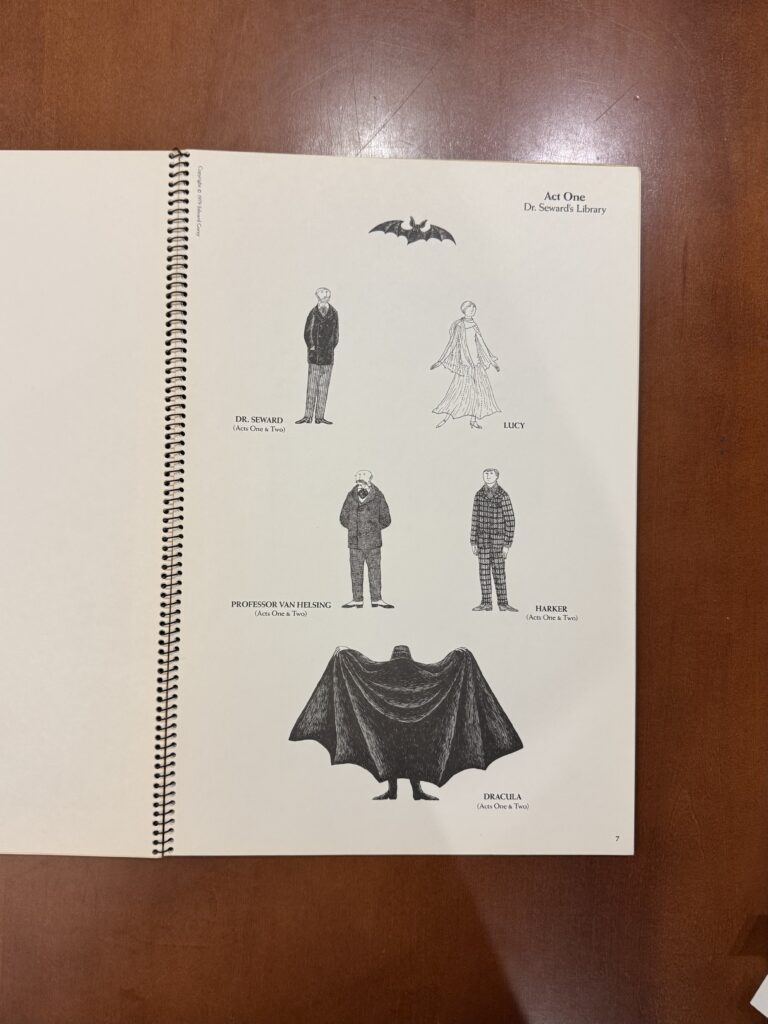
We have two editions of Bram Stoker’s iconic 1897 gothic horror novel Dracula, including a gorgeous 1965 edition produced by the Limited Editions Club in a marbled slipcase. Issued in only 1500 copies, our edition features illustrations by Felix Hoffman who also signed the text. We also hold a copy of the 1979 Dracula: A Toy Theater, which includes set drawings and costumes from the 1977 Broadway revival of the 1927 “Dracula” play, for which costume designer (and illustrator) Edward Gorey won a Tony Award. This book could, in theory, be cut apart to create paper dolls and a paper “toy theater,” though our edition is entirely intact. If you’ve ever wanted to imagine the characters from Dracula as paper dolls, you can come see them at the Mahn Center! Or, if the idea of reenacting Dracula particularly entices you, the Toy Theater set is available for purchase pre-cut from the illustrator Edward Gorey’s website.
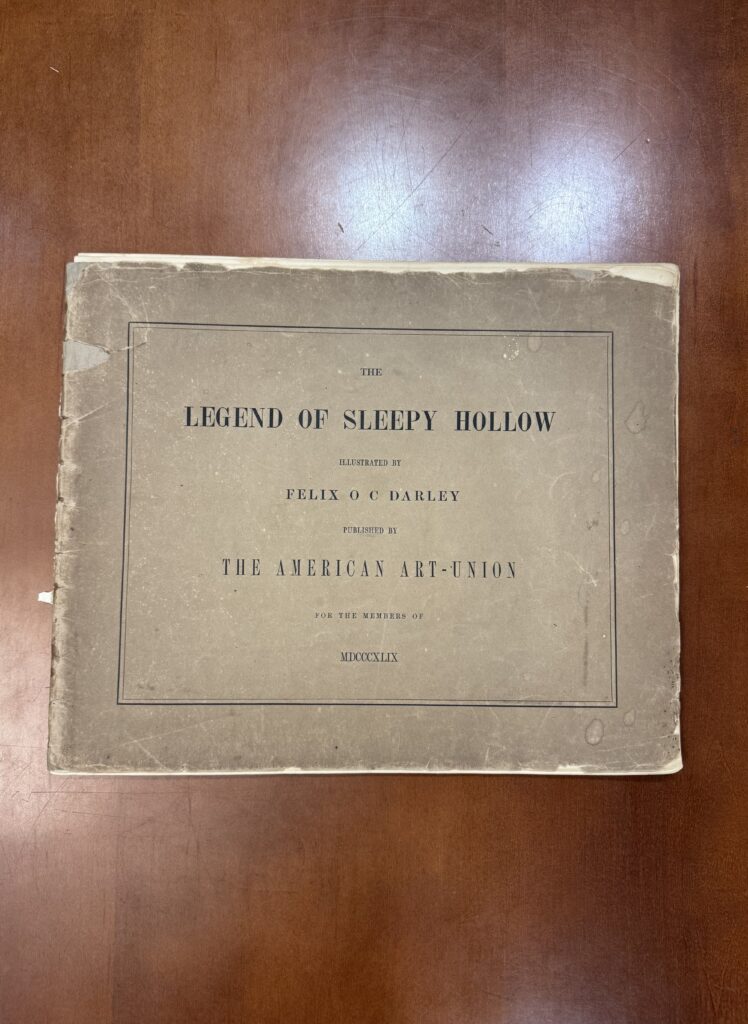
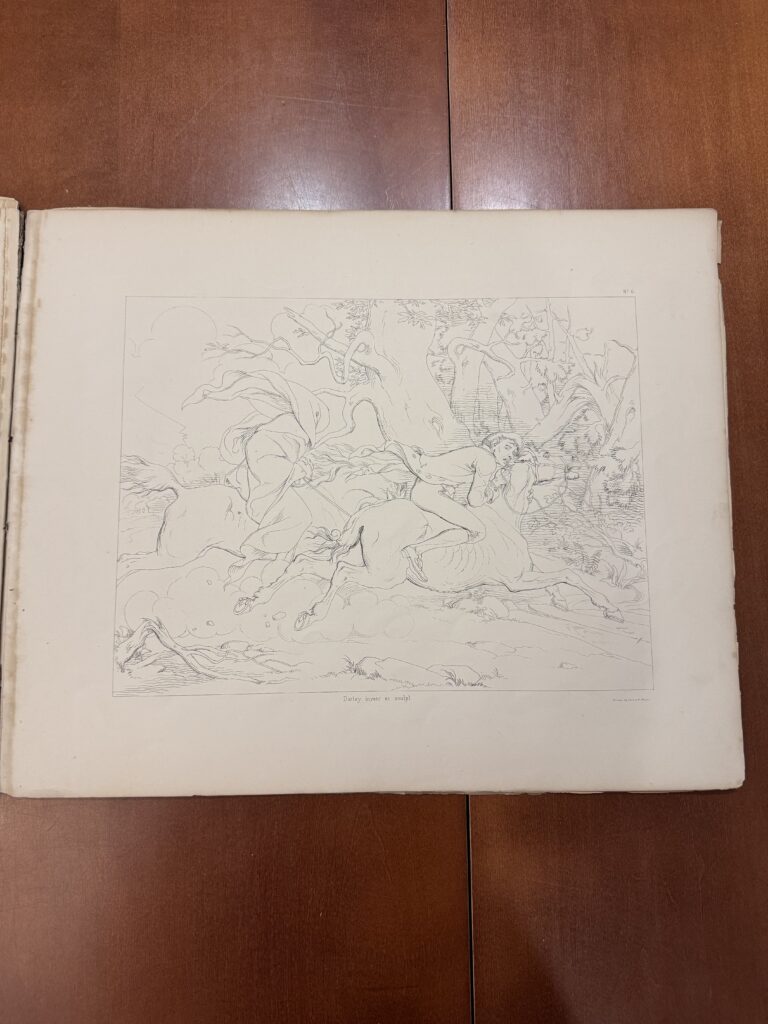
The Legend of Sleepy Hallow, from which we get the infamous Halloween figure The Headless Horseman, is admittedly not a text with which I am most familiar. However, we hold two editions of the quintessential American tale at the Mahn Center. Our Illustrations of the Legend of Sleepy Hollow, printed in 1849, includes both the text and gorgeous illustrations by Felix O C Darley. We also hold a Rip Van Winkle and Sleep Hallow omnibus edition that was printed in 1900.
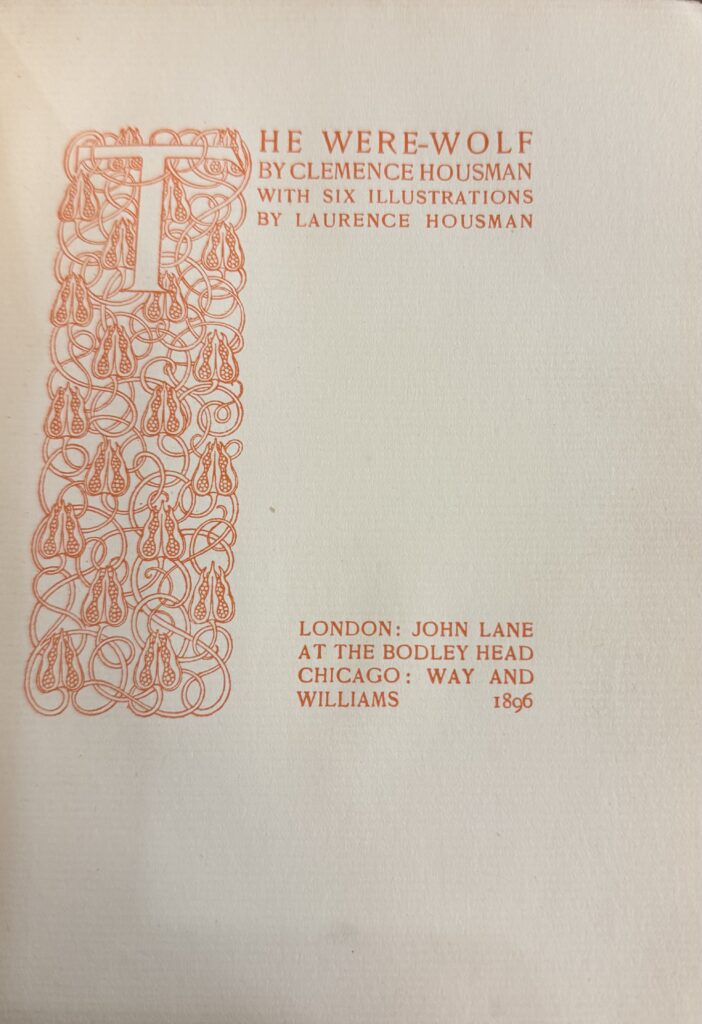
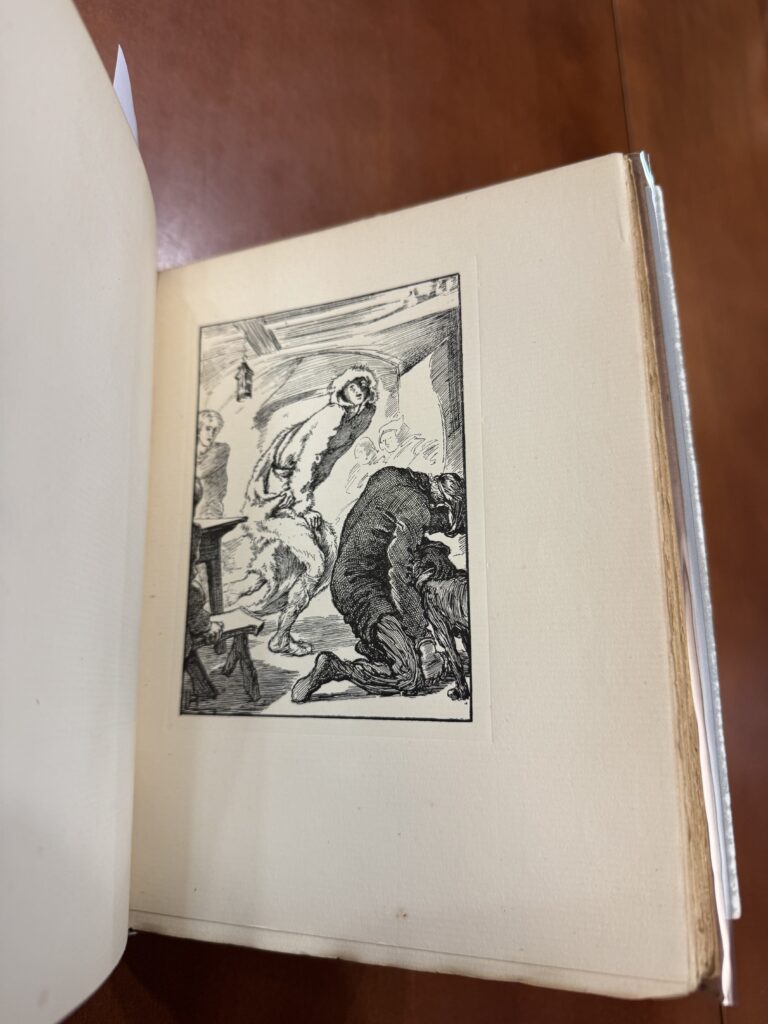
The final text that I’ll highlight is our first edition octavo (8vo) of Clemence Housman’s The Were-Wolf. Concurrently published in both London and Chicago in 1896 by the sister of aforementioned artist/illustrator Laurence Housman, this gothic horror novella tells the story of two brothers encountering a female werewolf (most werewolf media portray werewolves as male). Clemence Housman was, in addition to her work as an author, heavily involved in the women’s suffrage movement. Our edition includes six original illustrations done by her brother, and is additionally inscribed to “Mary B. Housman,” purportedly the cousin of Edward Housman, Clemence and Laurence Housman’s father.
Further Reading
If your interest in the intersection of Halloween and rare books has been piqued by this blog post, there are a variety of other resources that you can consider, including this Halloween blog post by the rare book shop Petter Harrington, the high resolution scans and transcripts from the original Frankenstein manuscripts (held at the Bodleian Library at the University of Oxford), this blogpost by JSTOR daily about the competition that prompted Frankenstein, and the book Frankenstein: The First Two Hundred Years written by Christopher Frayling, an account of the iconic text across media from 1818-2018.
Of course, if you are interested in seeing any of these materials in person, you are welcome to schedule an appointment in the reading room at the Mahn Center.
Happy Halloween!
Works Cited
Frayling, Christopher. Frankenstein: The First Two Hundred Years. Reel Art Press, 2017.
Hollow, Betty. Ohio University 1804-2004. Ohio University Press, 2004.
Learn more about Mary (pictured at left in the rare book vault in front of The Magazine of Fantasy & Science Fiction) along with the other fall 2026 rare book students in the Meet the Students post.