By Thomas J. Raulerson, Linguistics with a Latin Minor ‘27, Fall 2026 Rare Books Intern
Mysteries—our world is full of them. As humans, we love to figure things out; we love to discover, to learn, and to know things. After all, “knowledge,” said Shakespeare, “is the wing wherewith we fly to Heaven” (Henry VI, Part 2). So, when we are presented with something that remains to be learned or to be known, we will not rest until that mystery is solved. I myself have always loved mysteries. My grandmother read them often. Her bookshelves were adorned here and there with the great mystery writers of decades past; many times, when a Christie film or such played on the television, we would watch it together. This affinity for mysteries has stayed with me even to the present time. It was, therefore, a very serendipitous thing that for my first project as an intern at the Mahn Center, our rare book librarian, Dr. Intrator, provided me with a mystery of my own.
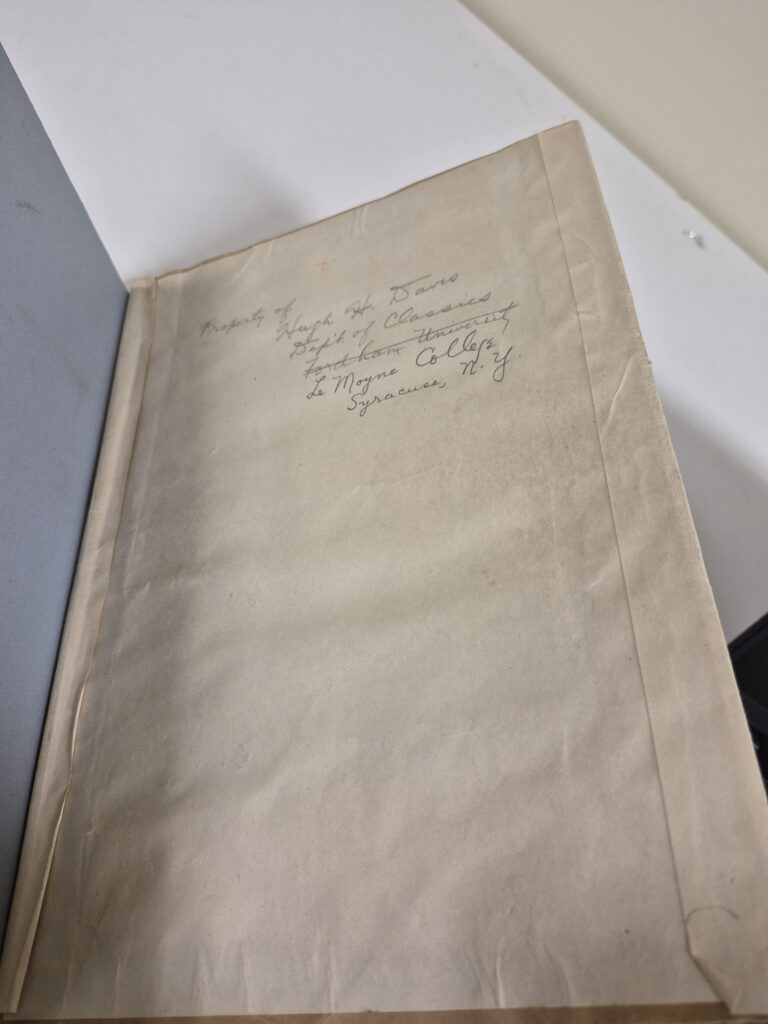
I was given five rare books that had never before been catalogued. They were all in Latin, my second language, and some of these came from the collection of material that Pomeroy, Ohio native, Ohio University alumnus (’32), and Classics Professor (Fordham University and Le Moyne College) Hugh H. Davis donated many years ago. The origin of several of these books was obscure; yes, even Dr. Davis seems to have been unaware of some of their history! Nevertheless, over several weeks, through diligence, perseverance, and the modern advantages of our digital world, I was able to find out a lot about these texts. In this post I will discuss how I did it.
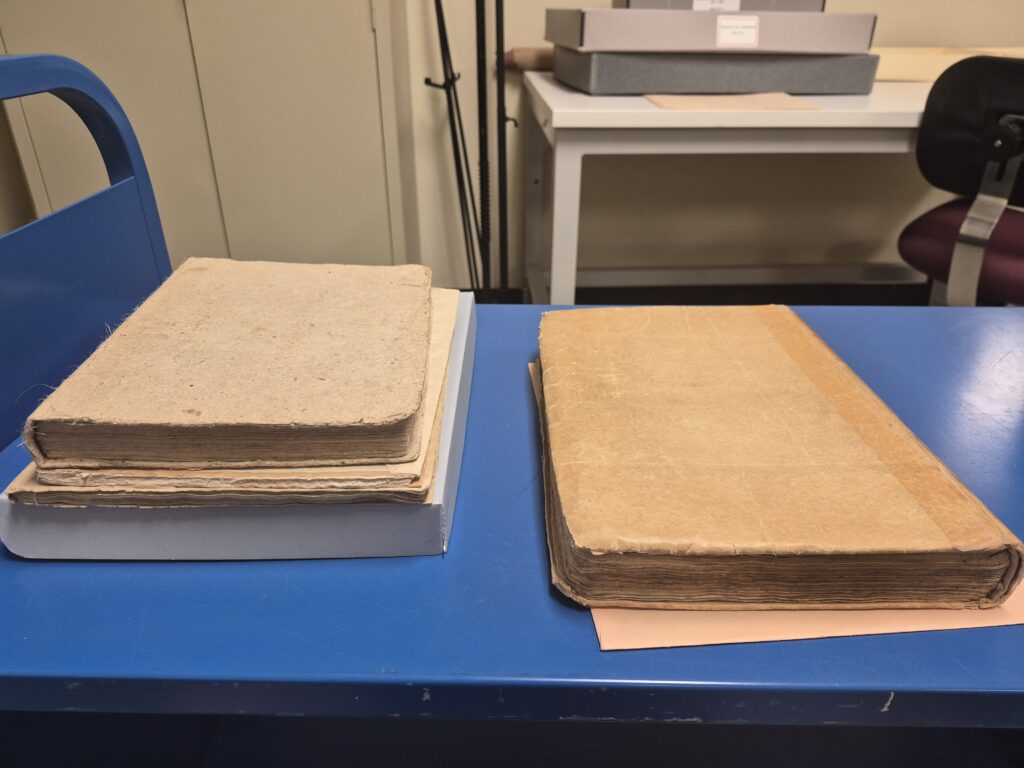
THE MILANESE VIRGIL (1533)
Virgil’s Works with Servius’ Commentary, 1533, Milan.
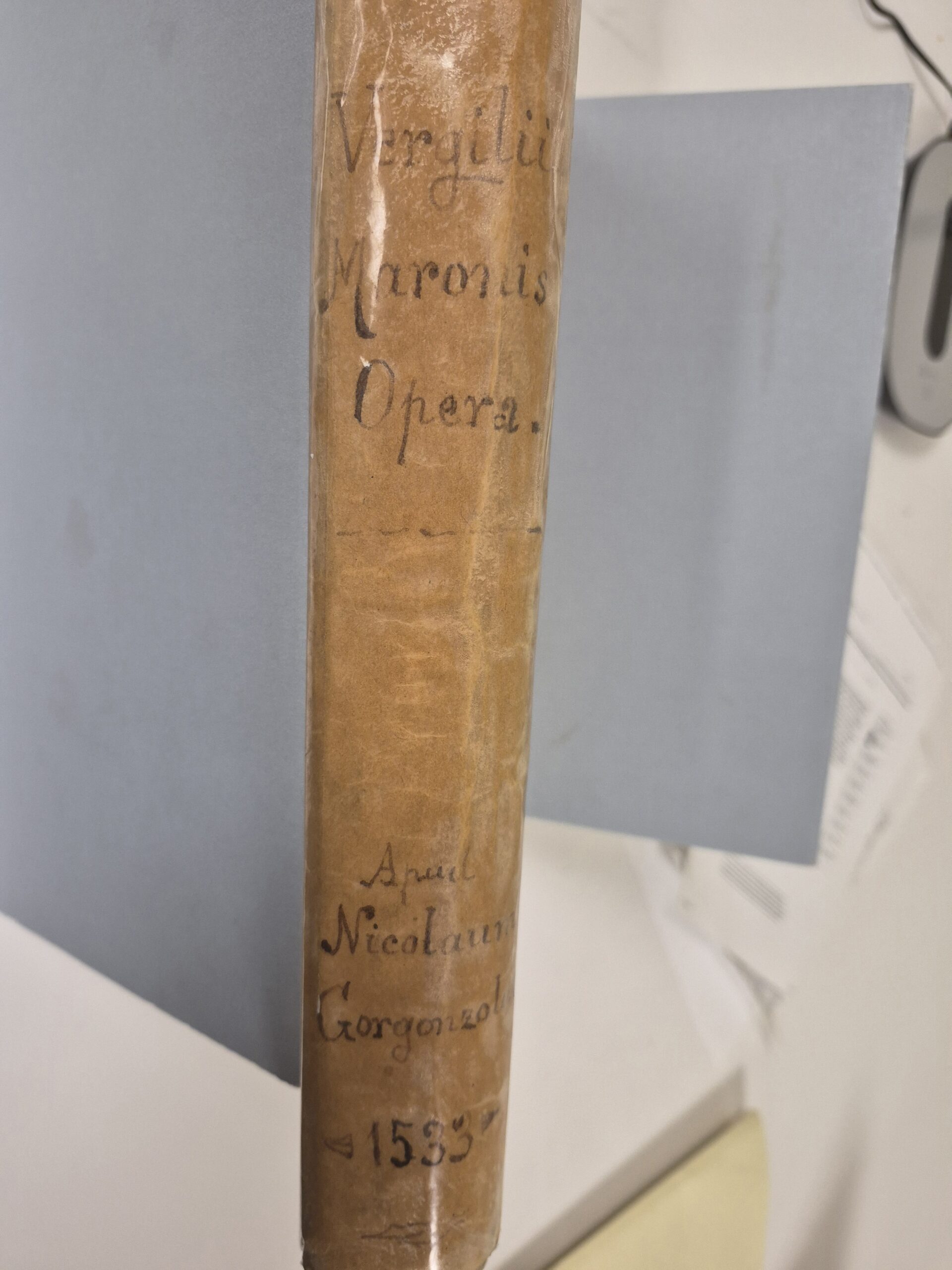
The first book I looked at was also the easiest to determine information about. I immediately identified its contents. As the large text on the spine so readily boasted, these were the collected works of Vergilius Maro or Virgil (Vergilii Maronis Opera). Virgil was a Roman poet of the first century, and he is near unanimously regarded as the greatest poet in the whole of the Latin language. As to what he wrote, he is known for his Eclogues, his Georgics, and, most especially, his epic poem, the Aeneid. These are the three works contained in this book, and they were therefore not hard to recognize.
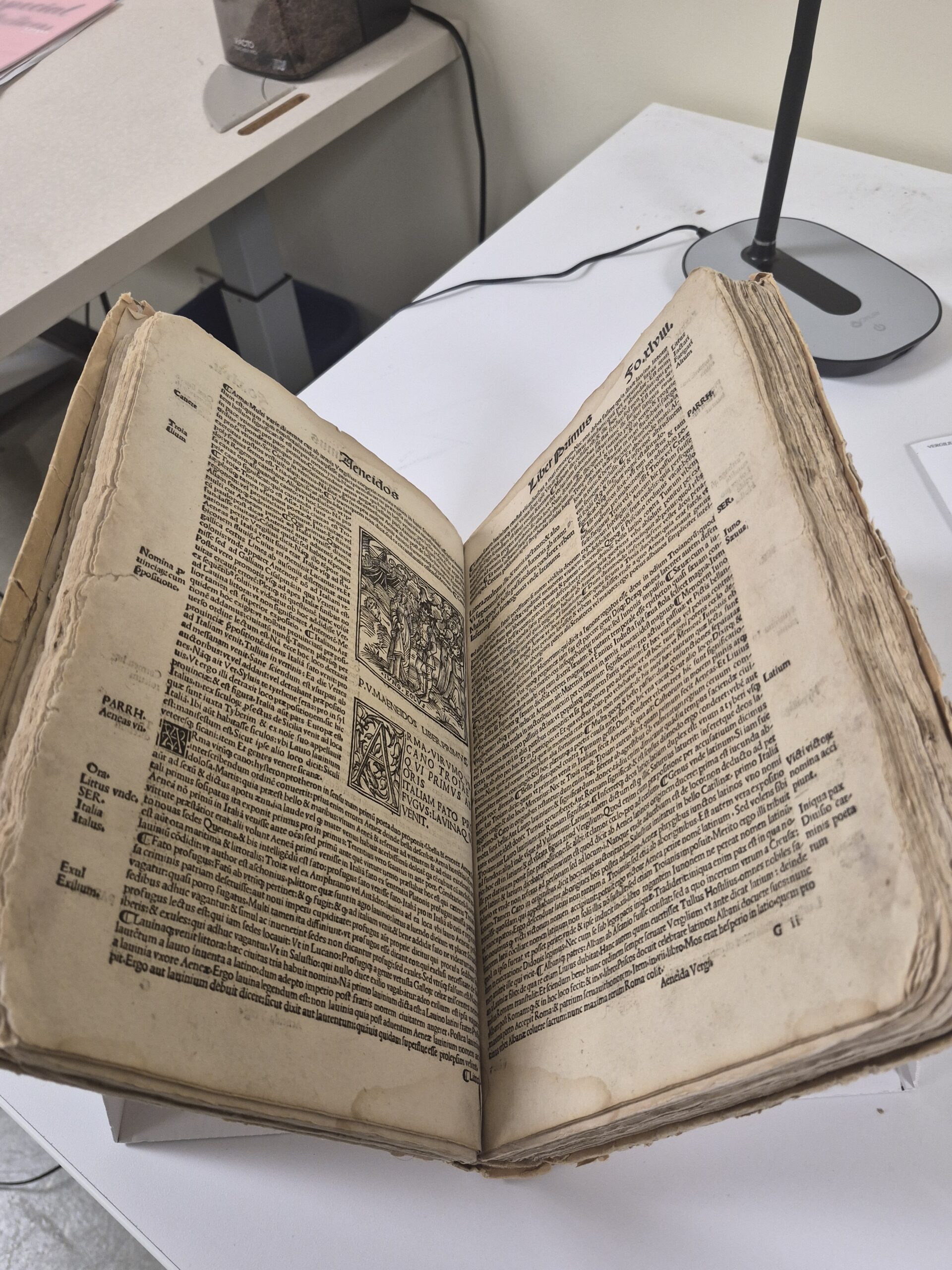
Wrapped snugly around the text of Virgil is a certain commentary. This, too, was a text I knew: as identified on the title page, the commentary came from the later Roman grammarian Servius. His Virgilian Expositions were widely published in Early Modern Europe. They help to explain Virgil’s more difficult passages and extrapolate literary meaning from his often grandiloquent language.
The remainder of the book’s text is supplementary material from various other commentators—especially of the later Renaissance era, as is also apparent from the title page. This was an important bit of information, as it allowed me to confirm around what time the book had been written. The spine claimed that the text was published in 1533 “apud Nicolaum Gorgonzolam,” i.e., under the publisher Nicholas (Niccolò) Gorgonzola, whose name we find in the text itself. If it had indeed been published at this time, the other contributors to the text would have been Gorgonzola’s contemporaries, which seemed to make sense.
The year 1533 and Gorgonzola’s name were also present in an auction listing for another copy of this book. Dr. Intrator had printed and shown this listing to me beforehand. I knew, then, that if I wanted to verify this book’s origins, I would have to find out more about its elusive publisher.
The smoking gun came when I found and consulted an online entry in an Italian language encyclopedia, available on the website of the Enciclopedia Treccani, for Niccolò Gorgonzola. It states that he was active in Italy in the 16th century, and, indeed, that he published Virgil’s works in the Italian city of Milan. He had, moreover, done so in 1533. Success! It seems the information written onto the spine of our copy was authentic.
Gorgonzola lived an interesting life. As a young man he was ordained a priest and later went on to publish a huge number of texts until his death in 1537. He mostly worked in Venice and later in Perugia, though he was living in Porta Romana in his native Milan when he published this book. He published so many books, in fact, that this edition is actually his second printing of Virgil’s works.
As I had seemingly unraveled the mysteries of this volume, it was on to the next for me.
CICERO IN TWO PARTS (1493)
Two Incunabula of Cicero, Milan, 1493
As I worked through the rest of the books, it became clear that two of them were parts of a whole. These were two incunabula, both containing works of the Roman orator and writer Marcus Tullius Cicero. An incunabulum is a book originating from the very start or infancy of printed literature, namely the 15th century. I was ecstatic to be able to work with incunabula. They are a living relic of the earliest days of “books” as we understand them today. I have always found them very interesting.
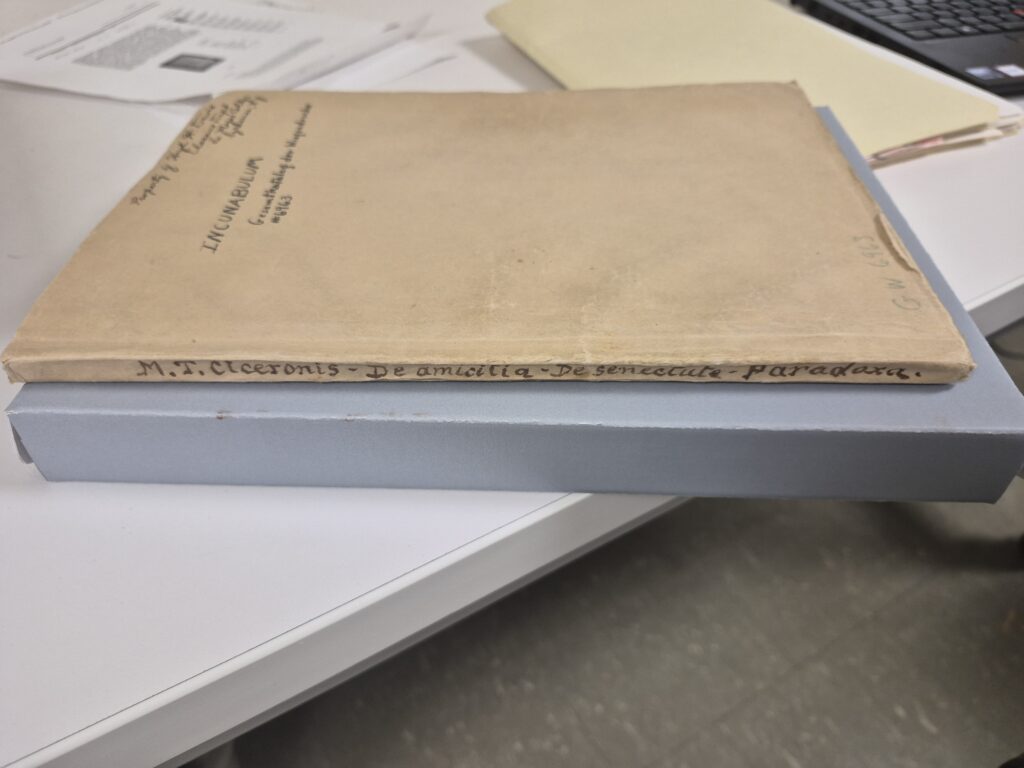
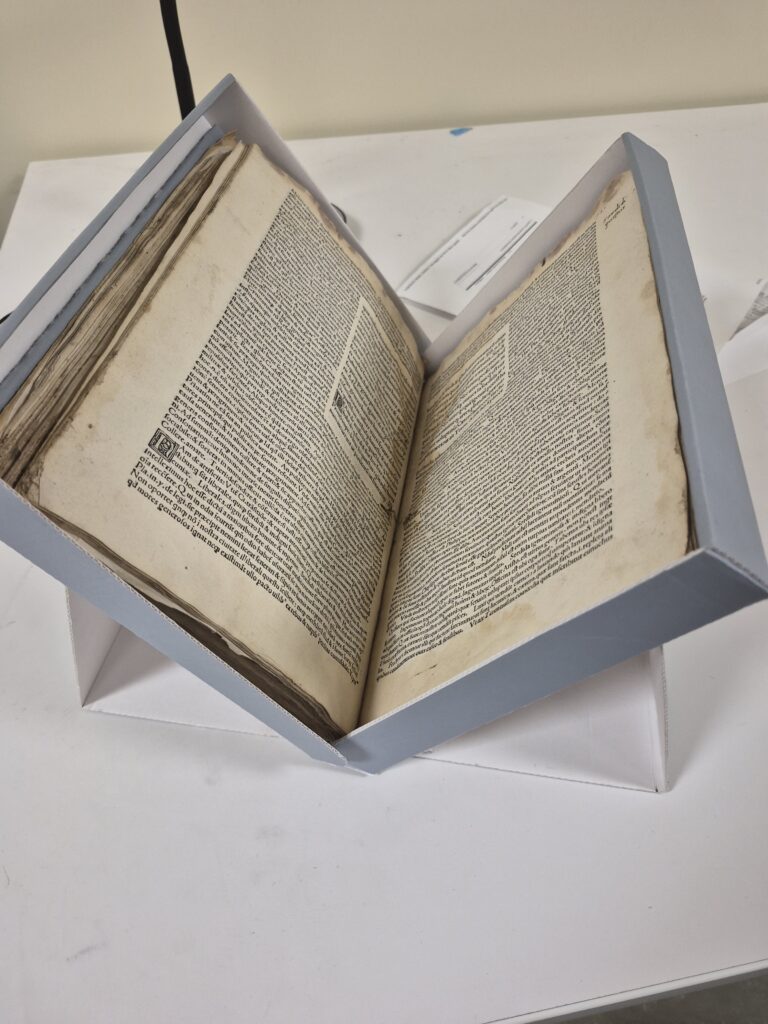
Dr. Intrator had provided me with a file containing Dr. Davis’ notes on parts of his collection. That file came in handy here, as he had written extensively about this text collectively. He mentions possessing four Ciceronian treatises: On Duties (“De Officiis”), On Friendship (“De Amictia”), On Old Age (“De Senectute”), and the Paradoxes of the Stoics (“Paradoxa [Stoicorum]”). It became apparent that we possessed one volume containing the first treatise and one containing the remaining three. Dr. Davis notes, “Although the signatures for De Officiis are put together as a separate volume with recent make-shift paper covers, the treatise properly belongs with the other treatises … in a single volume, as my research proved.”
In addition to this, Dr. Davis states that the original incunabulum was published in Milan in 1493 by the publisher Leonardus Pachel. However, as the totality of his research was not readily available to me, I needed some way to confirm that what he said was correct.
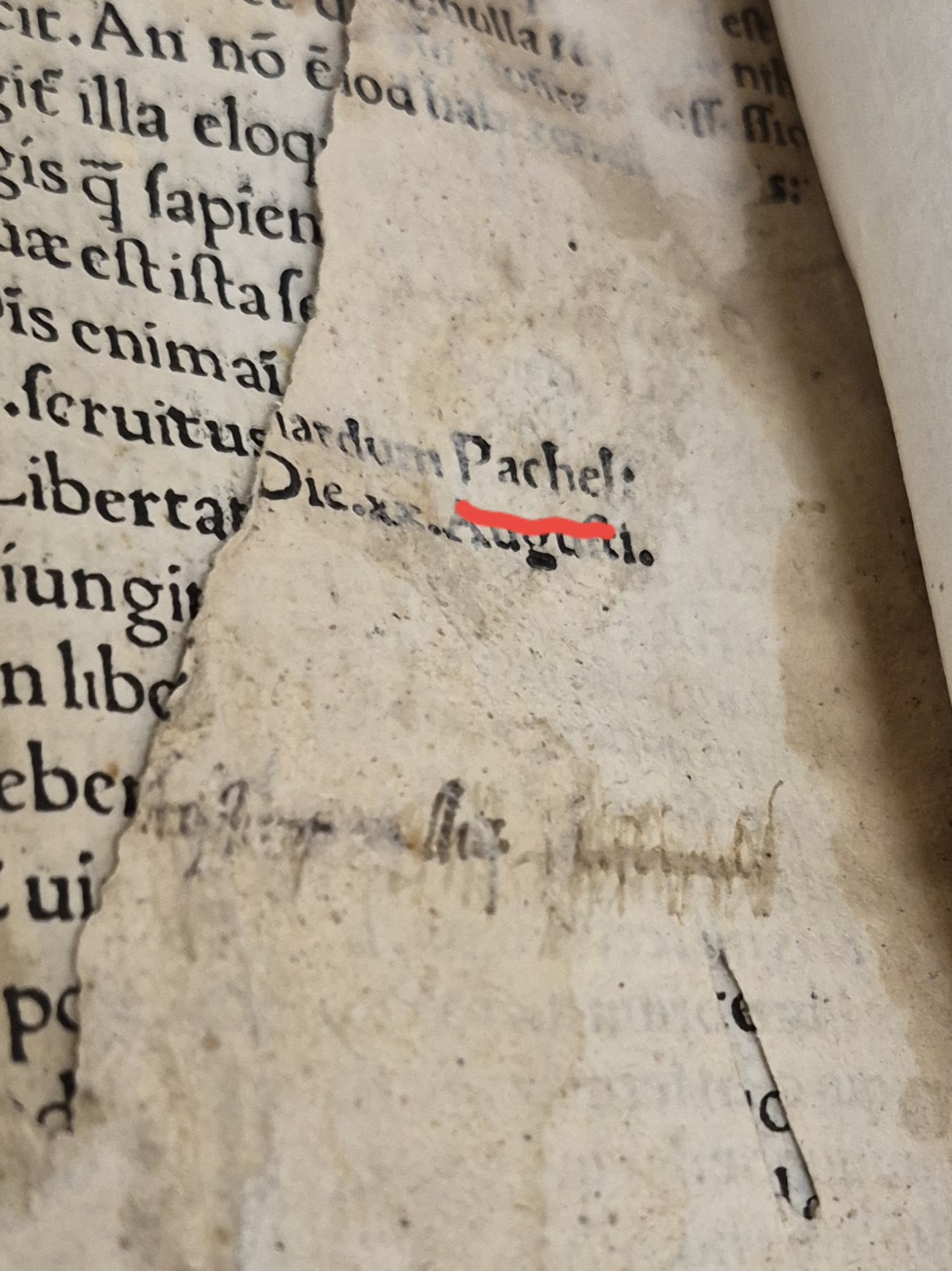
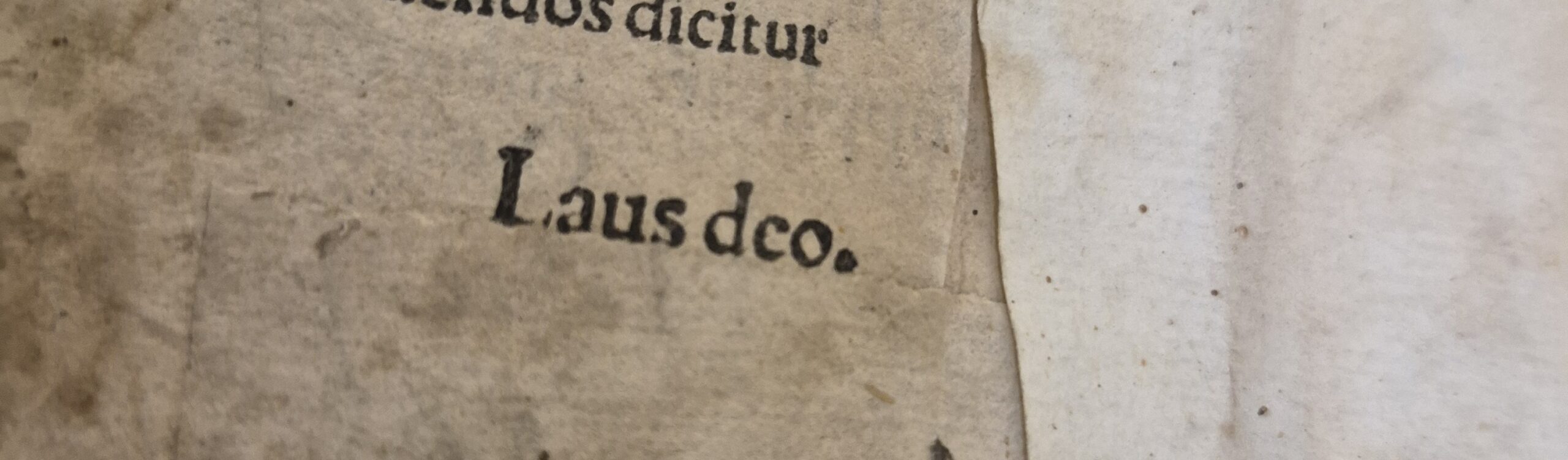
The German language Gesamtkatalog der Wiegendrucke (GW), that is, the General Catalogue of Incunabla, proved the key here. This catalogue, which now exists in digitized form, helps to compile data about and keep track of incunabula. Dr. Davis had provided the relevant GW number (GW 6963), which allowed me to look the texts up. And indeed, the information he related was present in the catalogue. To further confirm, I looked for any useful details in the incunabula themselves. Dr. Davis is correct in his assertion that they are “badly mutated.” The title page of the first part, where we might expect to find the publisher’s name and place, is only fragmentary. I thus looked for relevant information elsewhere in the text. I finally found it on the even more fragmentary final page of the second volume, wherein one of the only legible words is “Pachel.” It seems both Dr. Davis and the GW were in fact correct. I felt compelled to exclaim, even as that very page did, “Laus Deo!” (“Praise be unto God!”). It truly had been Leonardus Pachel who had printed this book in 1493—only a year after Columbus’ voyage!
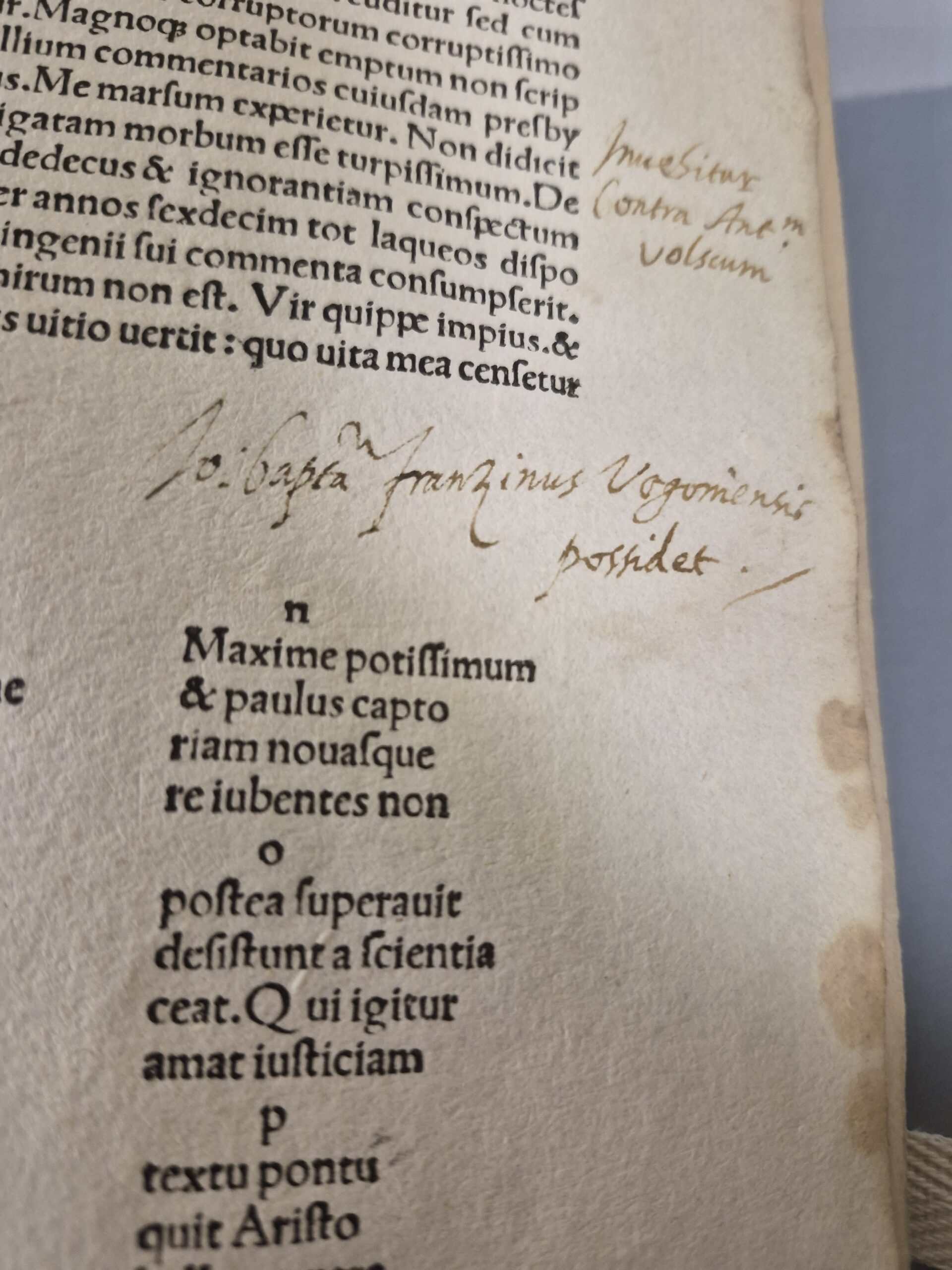
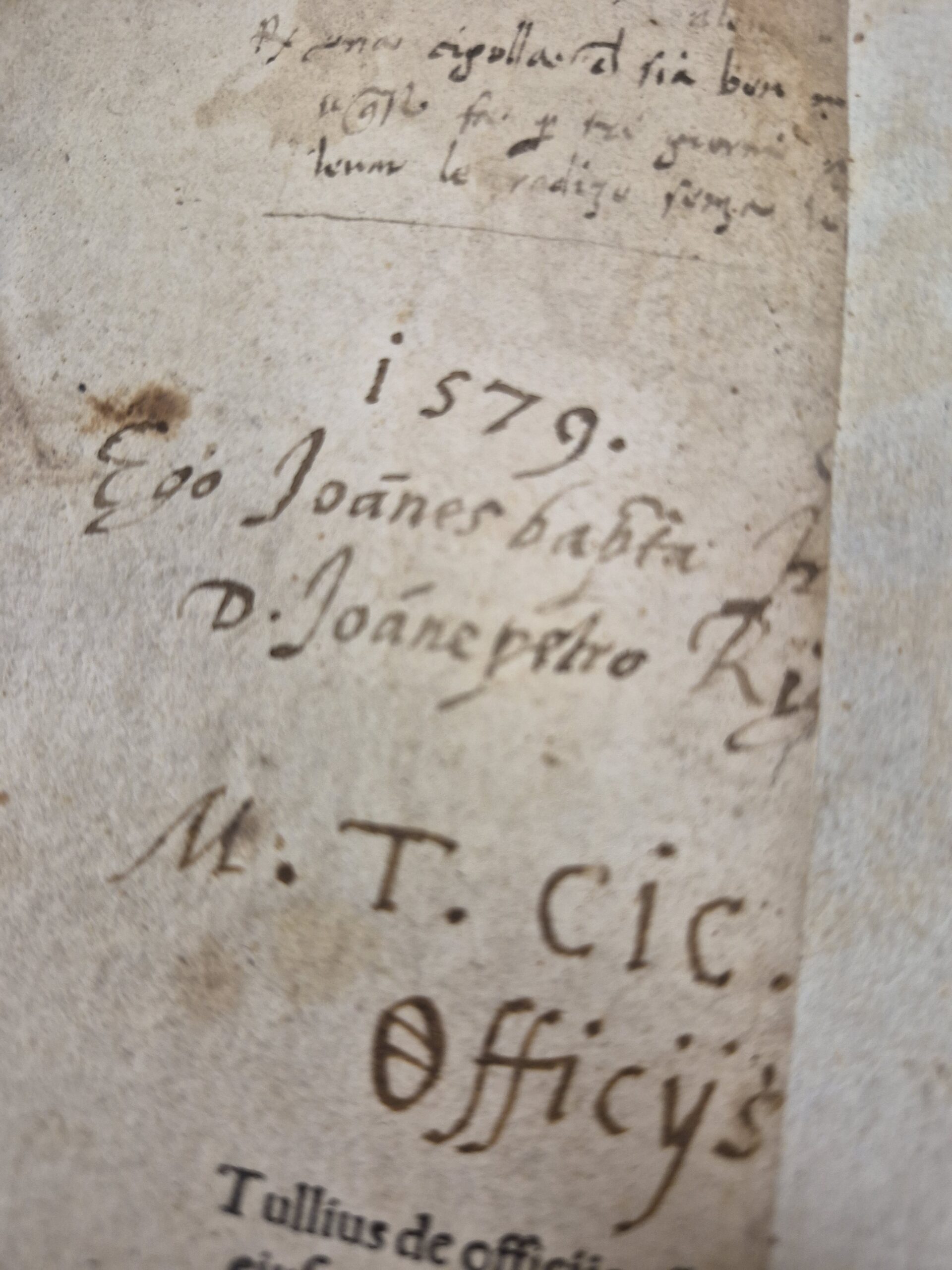
Another interesting fact that can be gleaned from the text itself is about a former owner. About a generation or two after its original publishing, the book seems to have fallen into the hands of a certain Joannes Baptista (Giovanni Battista?) Franzini, who is also called Joannes Baptista Vogoniensis. The former surname is Latinized as “Franzinus,” and the latter is an obscure topographical term that, as far as I can tell, is nowhere else attested. From Dr. Davis’ note that “[Joannes Baptista was] from a mountain hamlet near the present-day Simplon Pass,” it seems he was from the Italian village of Vogogna.
The handwritten annotations throughout the book seem to be Joannes Baptista’s, as far as Dr. Davis can tell. And his name appears in a few places, including his proud declaration on the final page, “Joannes Baptista Franzinus Vogoniensis possedit.” That is, “Joannes Baptista Franzini from Vogogna possessed this.” A similar declaration on the first page of the second incunabulum tells us that he acquired it around 1579. At the time he obtained the incunabulum, then, it was the equivalent of someone in 2026 purchasing a book from 1940 (a year before America entered the Second World War)! As I continued my project, it became apparent that my work had begun to connect me as much with the people who had produced these early books as the books themselves. Perhaps no one has said the name of or even thought of Joannes Baptista Franzini in decades. Perhaps before me, the last person to do so was Dr. Davis. Before him, who knows how long the man had been forgotten? Certainly to us in this part of the world, he is wholly lost to time. His name, however, lives on here, and his annotations and occasional corrections show that he was a very learned and diligent man.
Onwards, then! The next of these volumes was one that Dr. Davis seems to have considered among his most enigmatic. It was also the most in-depth mystery that I was able to solve.
OBSERVATIONS OF THE LATIN LANGUAGE (c. 1490)
A Series of Latin Observations/Annotations on Pliny and Others, Venice, c. 1490
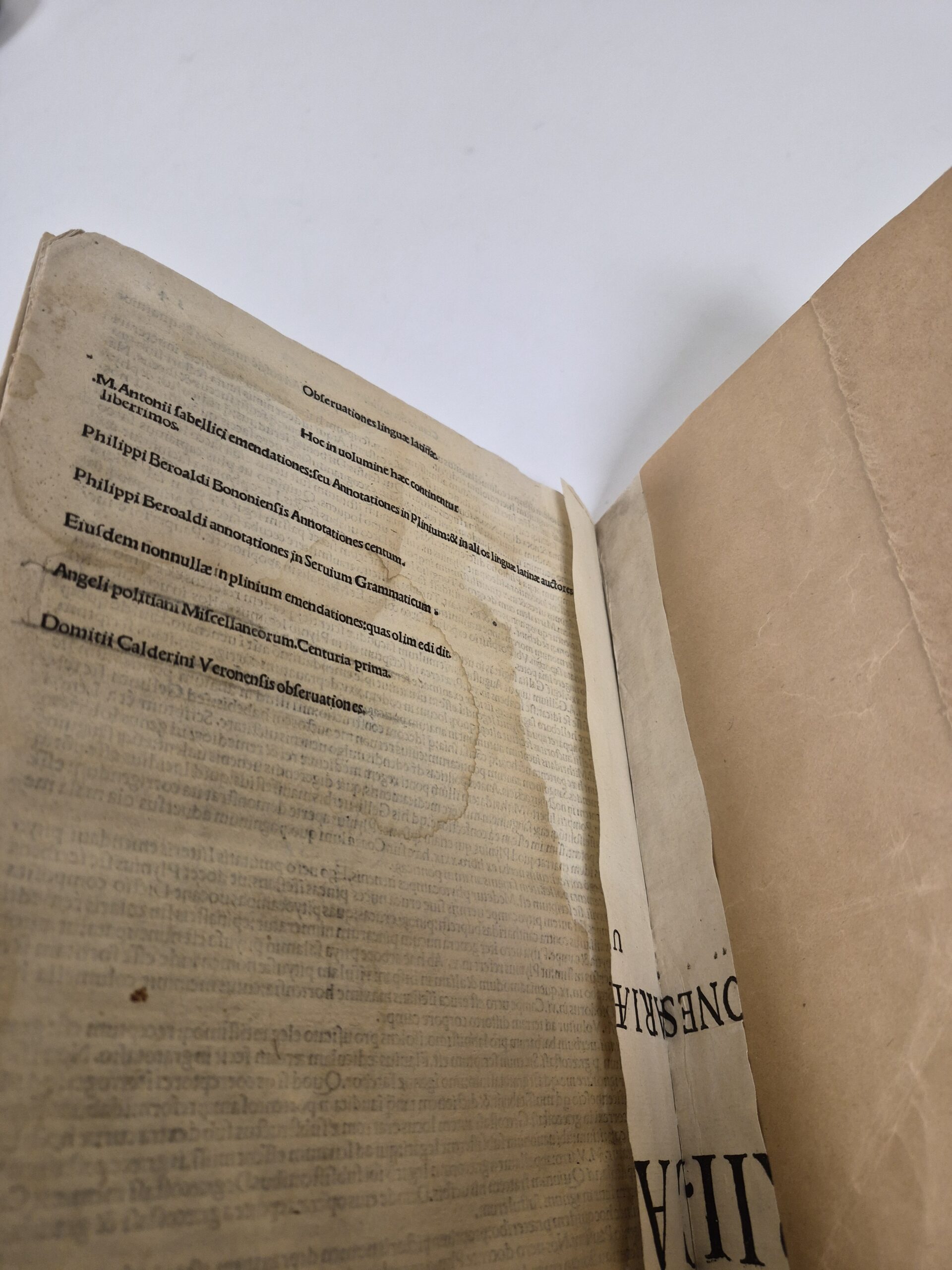
Dr. Davis’ notes spoke of a rare and obscure volume, (also an incunabulum), that compiles several Renaissance commentators’ annotations or emendations of ancient Latin writers. This book, Observationes Linguae Latinae (“Observations of the Latin Language”), seemed to be the next one I looked at. Dr. Davis was wholly uncertain of its place and date, but I was able to confirm the book’s identity thanks to the table of contents, which, oddly [for us, more typical for the time and place], was located at the back of the book. What the text contained was as Dr. Davis described.
The table of contents listed six works, four of which are in our copy. Translated by me, they are as follows: “M. Antonius Sabellicus’ emendations, or, annotations on Pliny and on other celebrated authors of the Latin language;” “One hundred annotations of Philippus Beroaldus Bononiensis;” “Philippus Beroaldus’ annotations on Servius the Grammarian” (yes, he wrote a commentary on a commentary); and “Some emendations of the same on Pliny, which he published long ago.” These commentaries were evidently published to supplement the Classical Latin texts commonly used in education at the time and, like the annotations on Virgil mentioned above, helped to clarify and expound on specific passages. Each of these four works appeared in their entirety in our copy.
Two works, however, were missing, although they were present in the table of contents. Dr. Davis observed their absence as well. These works were “Angelus Politianus’ first century of miscellaneous things” (a century referring to a set of a hundred) and “The observations of Domitius Calderinus Veronensis.” Where they ought to have been placed in the book, our copy merely ends, with the table of contents serving as an abrupt final page. The missing works neither precede or come after it.
I further searched Dr. Davis’ notes to see whether he might have had an explanation for this anomaly. In a 1965 correspondence with the University of Illinois, Dr. Davis asked whether their copy of Observationes Linguae Latinae contained the missing works. It did indeed, as their library confirmed, and in their copy, said works were placed after the table of contents. Why then were they not in ours? And was it not odd that their placement left the table of contents in the middle of the volume? Dr. Davis gave one possible explanation. He states, “Dr. Kurt Buehler of the Morgan Library, New York City, suggests the possibility ‘that [the extant leaves] could be sold with—or independently of—[the missing ones].’” Therefore, Observationes Linguae Latinae had the option of being sold as a whole or in parts, presumably according to a buyer’s wants and means.
A probable explanation, to be sure; but still I was left with the question of when and where this text was published, and the lack of a title page—let alone the second half of the book!—did not help. With no more relevant facts left in Dr. Davis’ files, I turned to perhaps the only resource available to me that he did not have: the internet.
The whole of Dr. Davis’ exchange, as mentioned above, had been found in an unassuming manila envelope, not unlike what one might see in a detective film. And just like in such a film, it contained the crucial bit of evidence I required to find out the book’s origins. On it was written an identification number: Hain #14059. This turned out to refer to Ludwig Hain’s catalogue of incunabula, Repertorium bibliographicum. Hain being a 19th-century lexicographer. Diligently scouring the web, I eventually came across a digitized text with the same classification number. This edition was available on the website of the Munich Digitization Center and was an exact match for our copy. After the table of contents, furthermore, the missing portions are present, just like in the University of Illinois’ copy. The online version is in good condition, and it even contains handwritten rubrications (elaborate red markings adorning the printed letters).
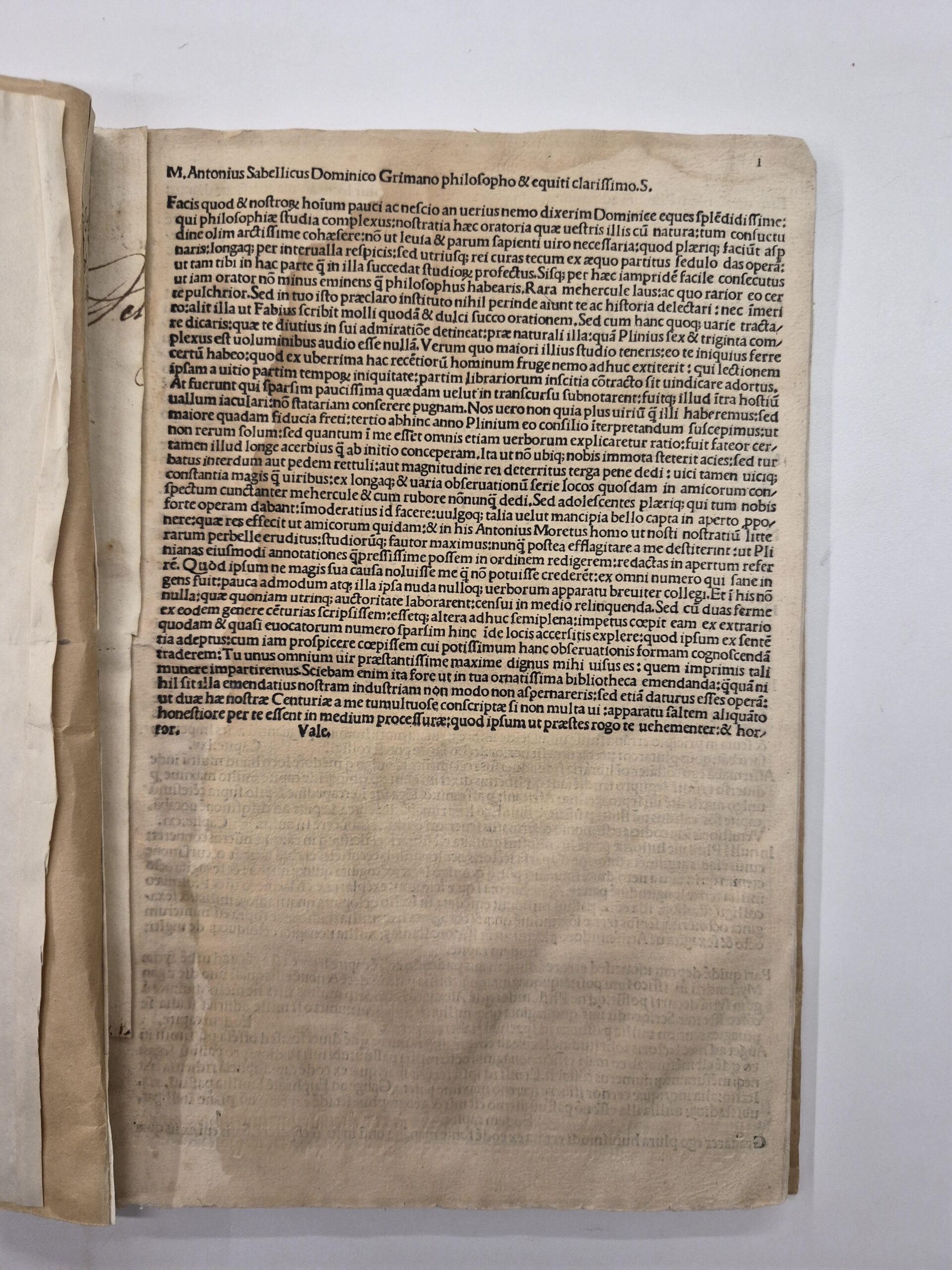
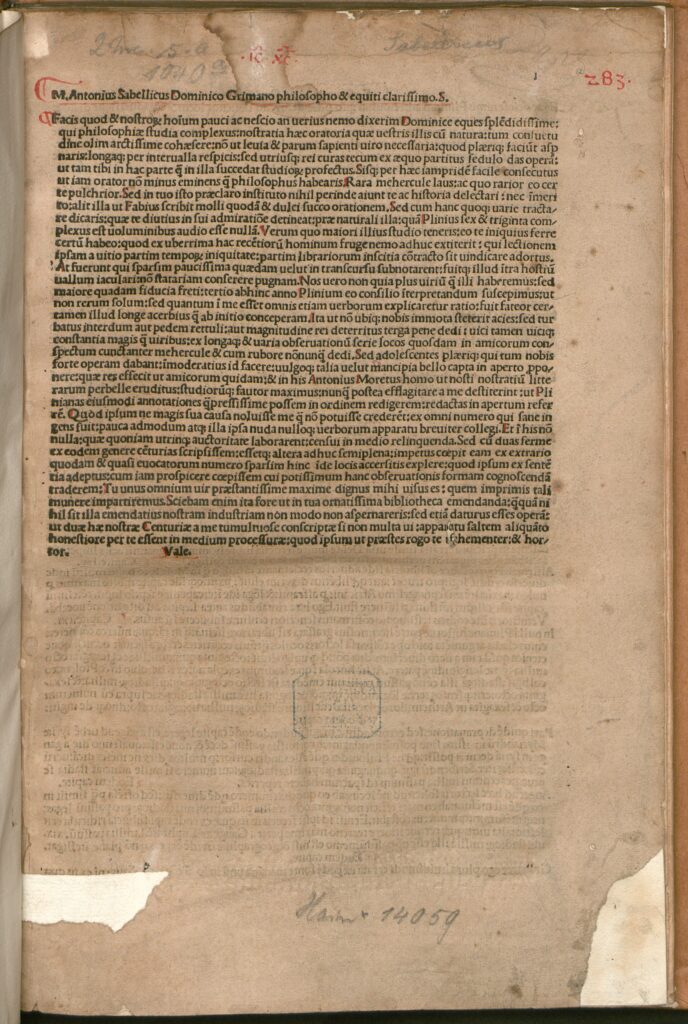
Finding this version turned out to be precisely what I needed. The Munich Digitization Center provided significant details about the history of this book. The website identifies the Observationes Linguae Latinae as having been published in Venice (“Wenedig”) by a certain Baptista de Tortis. Said publishing occurred around 1490. The Enciclopedia Treccani entry about de Tortis’ life shows that he was, indeed, active around this time, though it does not mention the Observationes. Should this revelation prove correct, therefore, I was able to determine something that Dr. Davis never did. The accessibility of information that the modern internet affords us is truly unprecedented. What took a long exchange of letters to find out in the 1960s can in this century be learned using the devices we have at our very fingertips. With that notion in mind, I had never felt more confident in my abilities as a junior bibliographer. I was quickly solving the mysteries of these uncatalogued books one at a time. Surely, there was nothing that could bring me down!
WHAT BROUGHT ME DOWN: HORACE’S WORKS VOLUME II
No matter how hard one works to solve them, some mysteries will always have to be put aside for later. As mentioned, I had been given five books; well, this was the fifth.
Having come down to the Mahn Center in a rather good condition, this handsomely formatted volume with its extensive notes by Ludovicus Desprez contains the works of Q. Horatius Flaccus (Horace). Horace was a high-style poet of the first century B.C., whose elaborate phrases have always impressed me. For this reason, I was thrilled to see his work among the material I had been given.
I identified the book as containing Horace’s famous Satires (the “Satirae” or, as they are called elsewhere, his “Sermones”), his Epistles (his“Epistulae”), his Book on the Poetic Art (“Liber de Arte Poetica” or “Ars Poetica”), and an index. This book is not mentioned by Dr. Davis and does not appear to be a part of his collection.
In an attempt to point me in the right direction, Dr. Intrator presented me with an e-mail correspondence that she had had in 2015 with Dr. Neil Bernstein, Ohio University’s Latin professor. Dr. Bernstein noted several oddities about this Horace text. He observed that it was likely a rebind, because the first page is labeled “367.” This presumably meant that the book was starting halfway through. Dr. Bernstein had been able to identify a possible match from 19th-century France, which he provided a link to. The pagination (page numbering) and content were identical, but the formatting was entirely different. It thus seemed to be a different edition.
Inspecting Dr. Bernstein’s version further, the reason why our copy began on page 367 was soon apparent. In his edition, there were two tomes—i.e., two volumes comprising the whole book. It seems our copy of the text was the same. So, while it was still likely a rebind, as apparent by its condition, our text was also probably the second part of two and was always meant as a separate unit. Whether we ever even had the first tome, I could not ascertain. Further complicating the matter, it quickly became manifest that there were potentially dozens of editions of Horace’s text with Deprez’s notes published over multiple centuries and in many places. These mostly followed the same format, too. This revelation meant that there were many editions that I would have to go through in order to find a match.
Our edition, furthermore, did not seem to be 19th century at all. Its typeface and its marginalia (elaborate patterns in the books’ margins) seemed to suggest, to me at least, that it was significantly older. And so it might well have been, as I found editions of this text dating back to the 18th century.
I then began my search. I consulted online libraries and archives diligently, but I was disappointed again and again. So many editions under the same title and with the selfsame content proved not to be exact matches at all. An 18th-century version published in Milan under the Fratres Raymundos (i.e., the Raymund/Raimondi Brothers) seemed a promising lead when I found a listing for it, but it turned out to be a red herring when I discovered a digitized version. Other versions look to have been printed throughout Europe as far as England, and there was even an edition published in the 1820s in the U.S.!
I spent several weeks going through each of these to see what details matched, but with what little context I had, it proved a Sisyphean task. Neither any listing nor any digitized book seemed to match our copy of Desprez’s Horace. My best guess at present is that it did originate somewhere in Italy—the editions printed therein tended to match most closely, and every other text with which I worked was Italian in origin—and that it had been printed sometime before the year 1800. Even so, I made the difficult decision to leave our friend Horace aside for now.
MY TAKEAWAY: THE MYSTERIES, FRUSTRATIONS, AND TRIUMPHS OF ARCHIVAL WORK
So then—mystery solved? Not quite. In spite of my diligence, there remained questions left to be solved. But I should feel quite satisfied regardless: I have come to realize that the joy of archival and special collections work is that it is as unsolvable as it is unpredictable. Our collection will never truly be “solved.” There will always be something new to archive, something new to discover, something to be left aside for another day. I had been so focused on solving some mystery that I nearly lost sight of the value of my work. This value came not from knowing everything about every text itself, but from learning so much about the history and context in which they were created, and, most especially, about the people by whom these books were printed. Learning this, for me, was a triumph.
So, Messrs. Gorgonzola, Pachel, Franzini, de Tortis, and especially you, Dr. Hugh Davis, who entrusted their books to Ohio University’s care, this one’s for you. Here you are not forgotten. You and your work will all live on in our collection for generations to come.
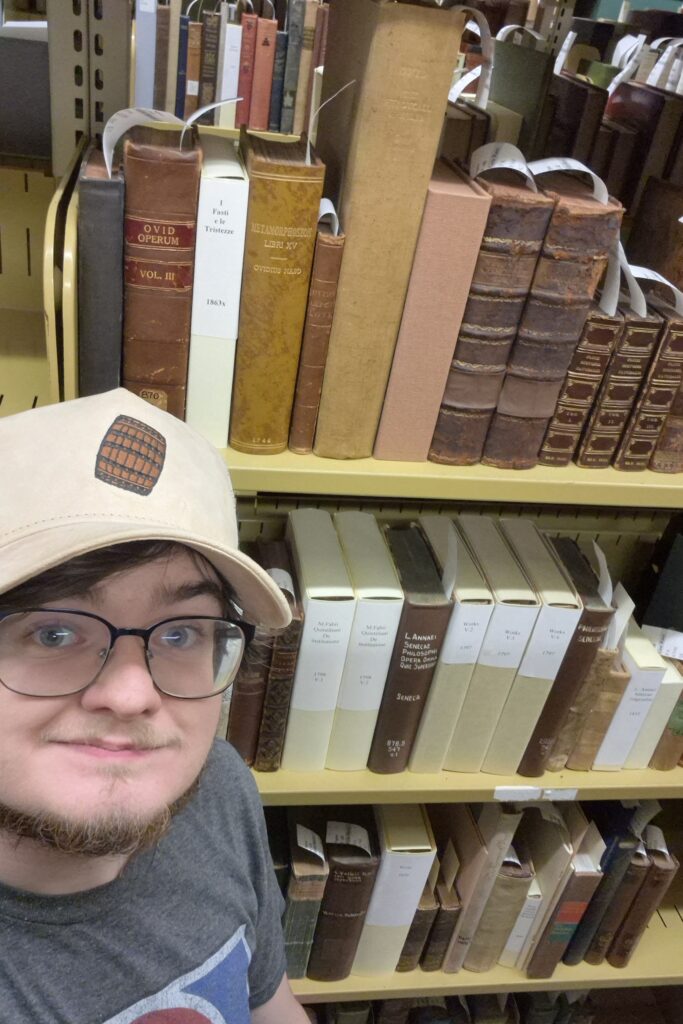
Learn more about Thomas (pictured at left in the rare book vault in front of books shelved in the Classics Collection) along with the other fall 2026 rare book students in the Meet the Students post.
REFERENCES
Ganda, A. (2013). GORGONZOLA, Niccolò. In Dizionario Biografico degli Italiani (at Treccani.it).
G.W. 06963, Cicero, Marcus Tullius: De officiis etc. (2011). Gesamtkatalog der Wiegendrucke Datenbank. Gesamtkatalogderwiegendrucke.de. GW. Datenbank «Gesamtkatalog der Wiegendrucke».
Rivali, L. (2019). TORTI, Battista. In Dizionario Biografico degli Italiani (Vol. 96, at Treccani.it).
Sabellicus, M. A., Beroald, P., Poliziano, A., & Grimani, D. (c. 1490). Sabellicus, Marcus Antonius: Emendationes seu annotationes in Plinium, i.e., Observationes Linguae Latinae (2 Inc.s.a. 1040 a). Munich Digitization Center, Bayerische Staatsbibliothek, Munich, Germany. ‘Sabellicus, Marcus Antonius: Emendationes seu annotationes in Plinium’, Image 1 of 133 | MDZ.
FURTHER EXPLORATION
An overview of the Classics Collection blog post, “Tracing Ownership & Usage in the Classics Rare Book Collection” by former intern Emma Campbell, as well as her digital exhibit, From Athens (Greece) to Athens (Ohio): Traveling Through Time and Place with the Classics.
Ohio University, Department of Classics, Splendid Survivors: The Classics, Classic Language and Literature, 1998.