By Arden Wells (Classical Civilization major, class of 2027) and Danielle Rymer (Art History major, class of 2026) fall 2025 University Archives interns working with Bill Kimok.
Like so many of our Ohio University peers, we (Arden Wells and Danielle Rymer) have come to appreciate the many resources that our institution offers its students and staff beyond the physical classroom experience and our academic courses. OHIO resources such as the Multicultural Center, the Pride Center, and the Women’s Center once provided designated spaces for the university community to meet, learn, organize, collaborate, plan, and execute programs and events. These centers, with their doors always open, and their staffs always welcoming, encouraged students, staff, and community members from diverse backgrounds, excluding no one, to come together in these spaces to learn about, share, respect, and celebrate together their various cultures and traditions. Until spring 2025, each of the centers were thriving entities, which, within just a few decades of their founding, had collectively become an expected and a cherished part of campus life.
Then, in late March, 2025, Ohio’s Republican senate majority passed–and Ohio Governor Mike DeWine signed–Senate Bill 1 (SB-1), effectively mandating that state supported colleges and universities in Ohio could not host courses or support programs that took a position on any “controversial belief or policy,” such as climate policies, politics, foreign policy, diversity, equity, and inclusion programs, immigration policy, marriage, abortion or “any belief or policy that is the subject of political controversy.”
Interestingly titled “the Advance Ohio Higher Education Act,” Ohio SB-1 forced Ohio University, among other compliance matters, to close three major student centers—the Women’s Center, the Pride Center, and the Multicultural Center by the end of June, 2025, or risk losing state government funding.
Once the centers were officially closed, the Ohio University Archives collected the remaining historical records from each of the centers. In late spring when we were interviewed for the position of fall interns in the Mahn Center, Arden and I felt honored to be asked if we would agree to review, organize, inventory, and describe the contents of the eight boxes of historical materials that had been transferred from the former Multicultural Center.
And, so, this is how our semester as interns in the Mahn Center began. When we arrived on campus for the fall term, we completed a few basic readings describing the incredibly thorough process of organizing, examining, and cataloging records, as well as the importance and methods of preserving these materials, and highlighting potential uses of the records in the future. In the assigned readings, we learned about the proper ways in which we should handle the records: carefully sorting through the papers to avoid wear and tear, removing any metal objects and other fasteners from the documents, and ensuring that there would be no spills or other damage to the papers while we were doing this. We read about the importance of protecting sensitive information and disposing of it properly, especially as it pertains to individuals who are still present and alive. After completing the assigned readings, we had a better understanding of the process and what we could expect to accomplish by the end of the semester.
To begin, since we shared this project as a team of two, we met and agreed to a process, and then we split our eight boxes between us and began our work. We first started by taking each file from each box and carefully looking through the documents to familiarize ourselves with the contents of the collection. In doing this, we found a lot of fascinating and unexpected information. For instance, there were several articles from Holocaust Remembrance Day regarding stories from survivors. These firsthand accounts were delivered to Ohio University annually, emphasizing the gravity of the Holocaust and providing important context to that tragic history. Additionally, we found magazines that were made for Greek Life on Campus, pamphlets and posters for events such as Bob Marley Day and Kwanzaa, and promotional materials for individual and group artistic efforts by students and celebrities alike. We found that there were meaningful historical changes in the MCC as the years progressed, as, for instance, we discovered that the university’s MLK festivities progressed from a simple plea for recognition led by student activists, to a community-wide week of acknowledgement, mourning, and celebration. For each event, photo, or article, one thing was clear: the Multicultural Center was based on inclusion, not exclusion, and its support was even more vital to the university community than we had previously thought.
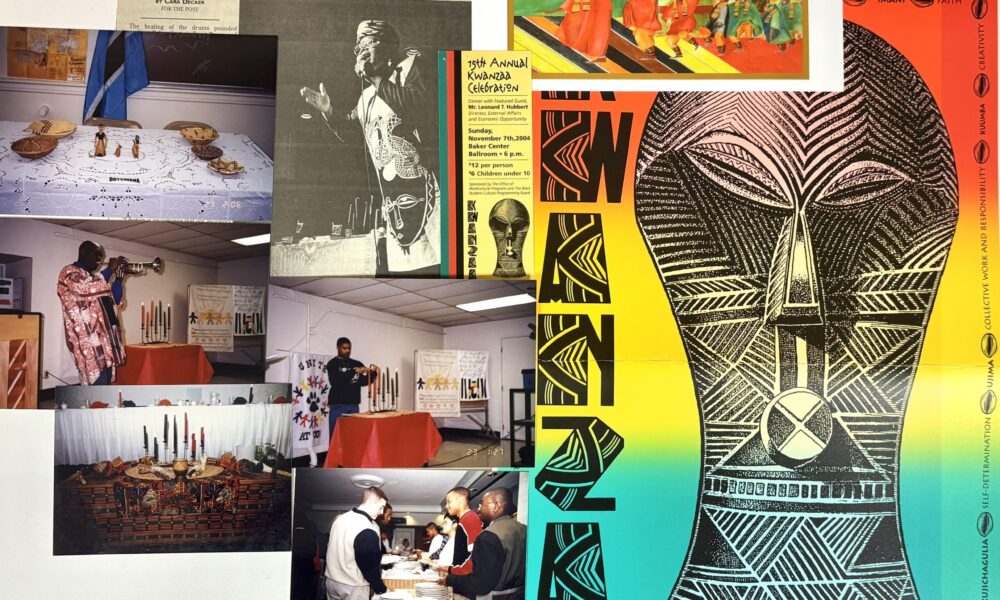 Kwanza Week Celebration
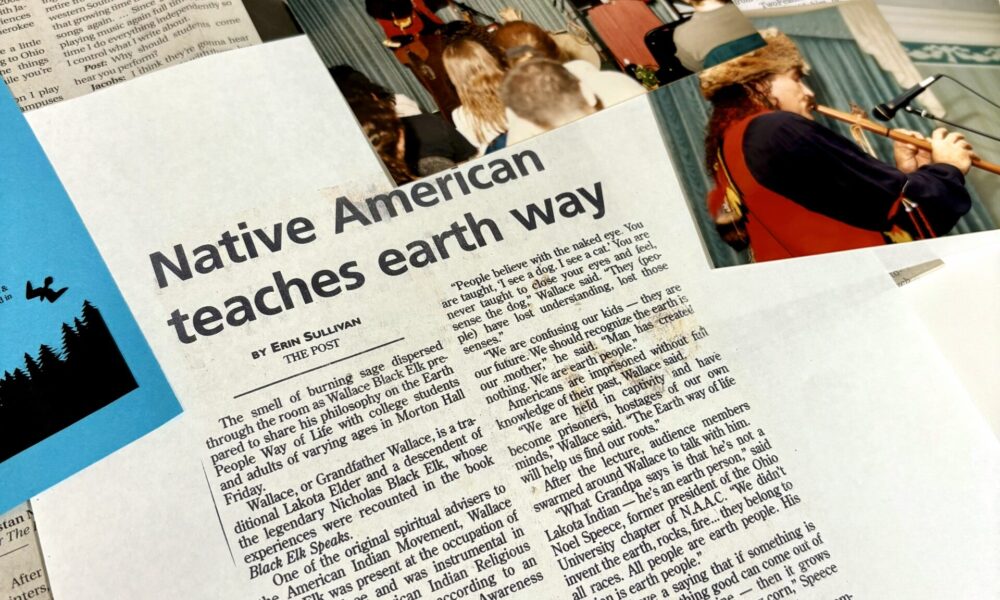
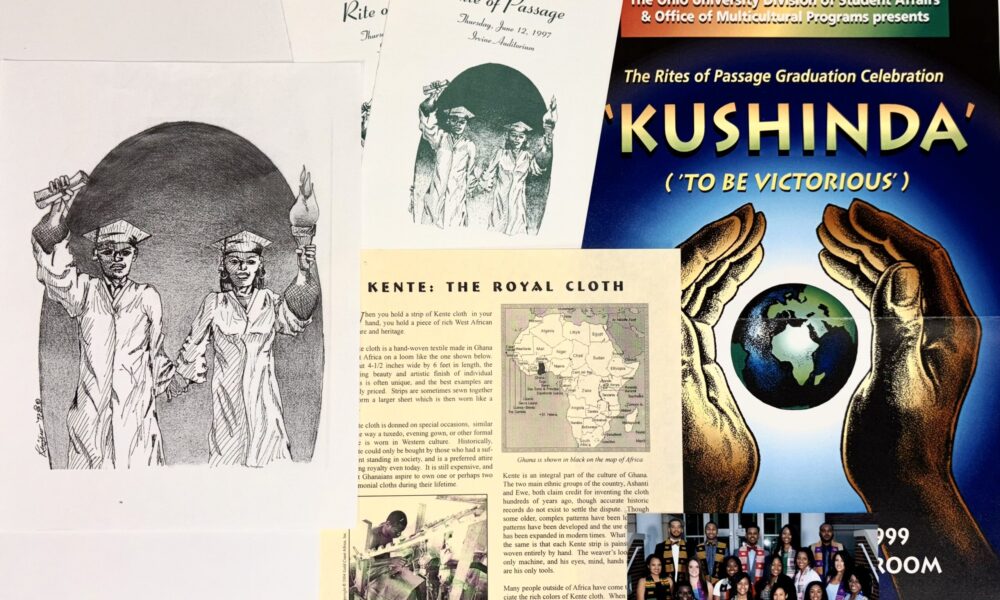
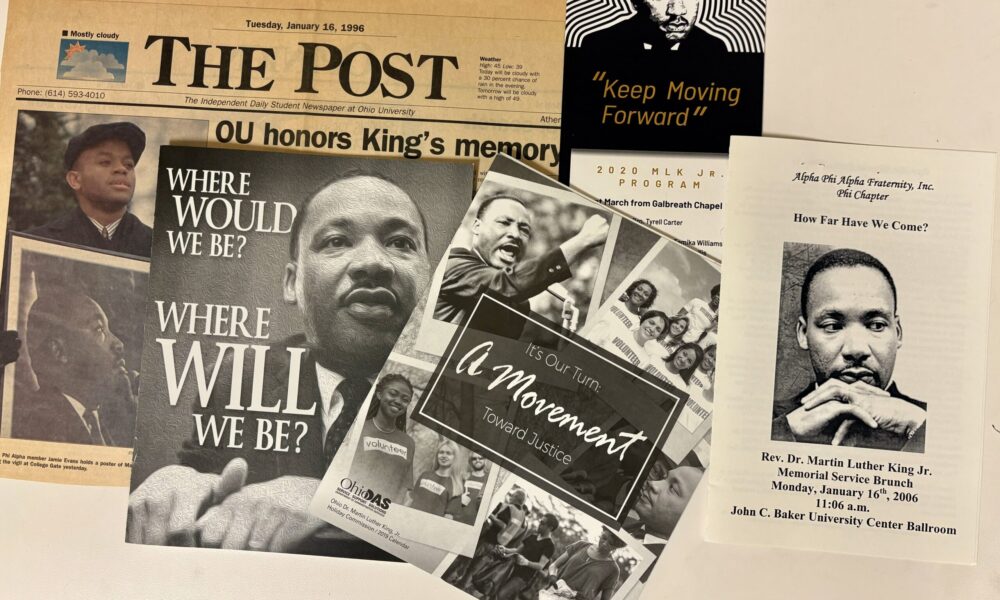
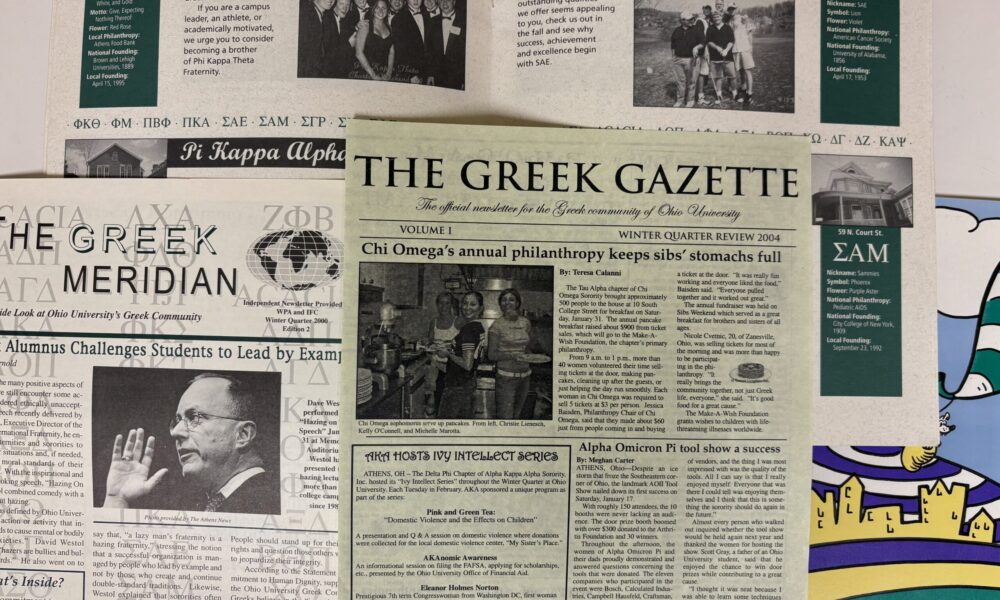
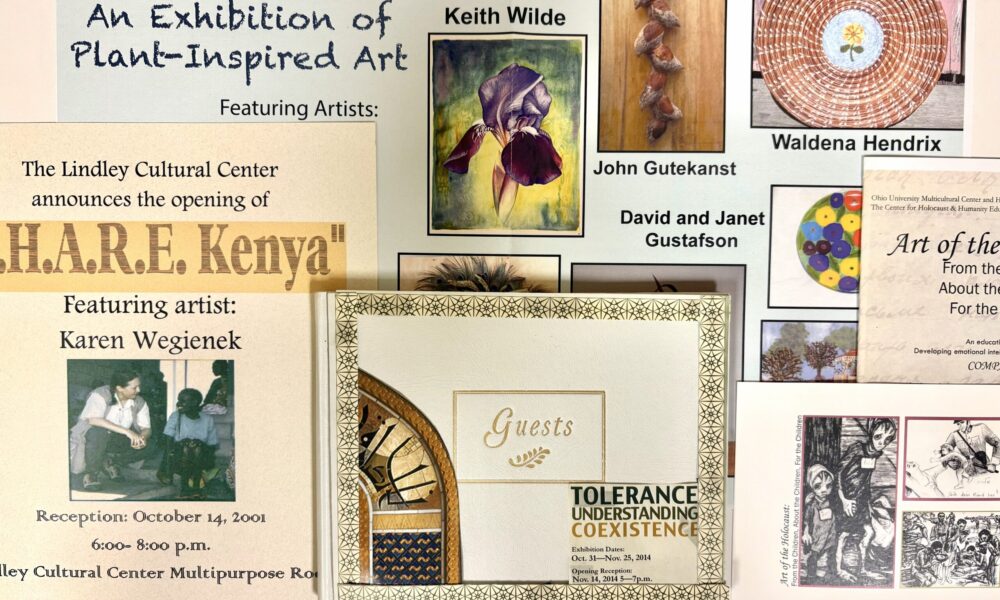
After going through all the records once, we slowly began removing the staples and paper clips from each of the pages. Following the pain (sometimes literal) and agony of removing these annoying attachments, we moved on to the more difficult portion of the project, disposing of documents that seemed not to contribute to the coherence or the purpose of the collection, or which we deemed to be too confidential or sensitive regarding individuals such as social security information, and personal addresses and phone numbers.
The collection in its original state had been organized by event and by year, and, in following basic archiving theory and practice which we remembered from our readings, we maintained this original system as best as we could. The only changes that we made were arranging these events alphabetically, and relabeling many of the files for better identification and consistency within the collection. Some sections, such as the art exhibit files, needed to be completely reorganized, since we wanted each exhibit to have its own searchable folder rather than leaving them all piled up in one or two folders.
In the end we were left with six boxes of neatly arranged, labeled, and indexed folders instead of the eight boxes with which we had begun the project. Our next task, before adding the MCC Collection to the Mahn Center ArchivesSpace database, was adding a description to accompany the finding aid. After extensive research and navigating through various primary sources, we were able to piece together the origins of the MCC. It began during the mid-1970s when, in response to the concerns of university Black students, President Harry Crewson opened the Lindley Hall Student Center as a resource for the Black student community. University concern about creating the center mostly related to the potential for it to be considered as a form of segregation. Due to sensitivity about this, there was no mention of race in the center’s name. Black students meanwhile, as expected by its proponents, immediately used the center as a much-needed community space. The Student Center, eventually was renamed as the Cultural Center, and, in 2007, when the center moved into an office in the new Baker University Center, its name was changed to Multicultural Center, reflecting its broadened scope which included a variety of groups, including, among others, Latino, Asian, Indian, and Appalachian cultures, and the fact that the MCC was supporting of all OHIO students through awareness events, celebrations, performances, and scholarships.
Finally, Manuscripts Curator Greta Suiter taught us how to enter all of our information into the ArchivesSpace database where it exists today to inform future OHIO students and other researchers about what the MCC and its programs had once meant to Ohio university life, culture, and traditions.
It has only been six months since SB-1 forced the closure of the three important student centers and we are still mourning the loss of those spaces including the MCC that have vanished physically from campus. But we hope that the work that we have done by organizing its historical papers will continue to inform and benefit the university community, and, perhaps, someday these legacy materials will be used to help plan a new center based on the MCC’s incredible historical significance and accomplishments.
Digitization of content from the Women’s Center, Pride Center, and Multicultural center collections are available online. Visit the Libraries Digital Archival Collections to search.