By Disha Hoque, Journalism ’27, Digital Initiatives Assistant
Bill Kimok’s office in the Mahn Center for Archives and Special Collections displays baseball paraphernalia, community-specific flags and bits of OU clippings collected through his years in Athens, Ohio.
Among the collage, sits an “Honorary Dyke” pin, awarded to him after students requested him to be the advisor of Swarm of Dykes, a peaceful radical action group for OU’s queer community.
“They asked me a couple of months ago if I would be interested in (advising),” Kimok explains. “‘Do you know who I am? Do you know I’m like, a 71-year old straight white guy?’ They were like, ‘yeah! We want you!’”
Aside from this advisor role, Bill Kimok, typically dressed in a button up, blue jeans and baseball cap, is the keeper of Ohio University’s history, described in his title of university archivist and records manager. Different from other subject-specific historians, Kimok’s role encompasses all things Ohio University; including the history and records of the 220-year-old institution.
As the campus’ first historian assigned specifically to tend to University archives and history, Kimok spearheaded the university archives’ organization system and spends his days sorting through the rows of records, relics and pieces of University history stored both in Alden Library and Hwa-Wei Lee library annex, located on Columbus Road.
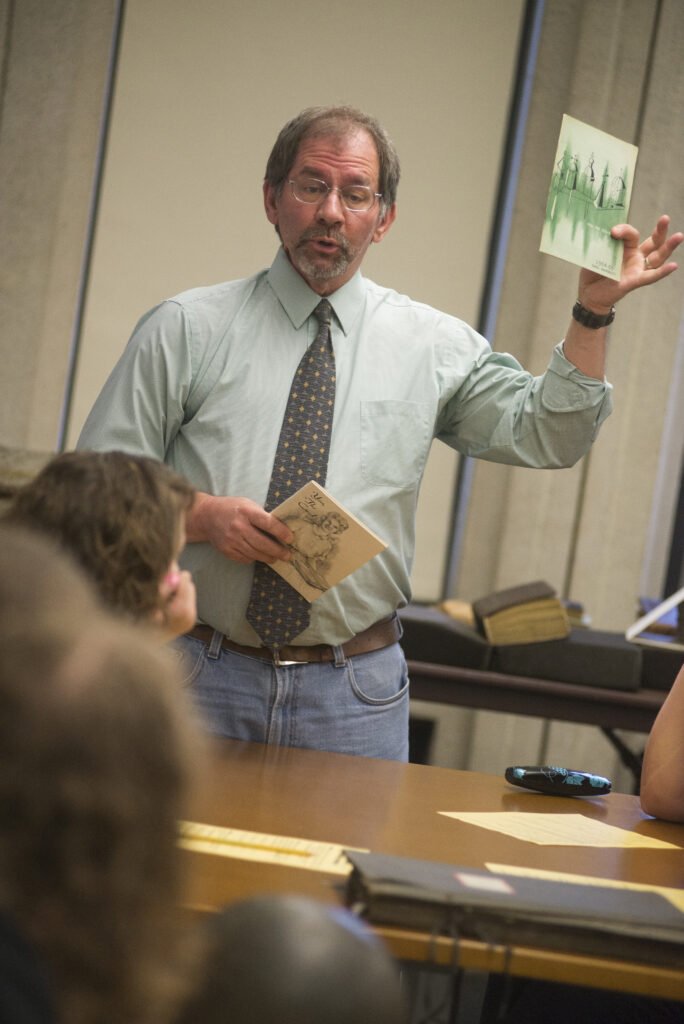
“(My role) is the collective memory of the institution,” Kimok says. “If I want to sound snobbish.”
Kimok spends most days on the fifth floor of Alden Library, also known as the Mahn Center for Archives and Special Collections. Visitors are greeted by the archives with life-size Rufus mascot cut-outs and old banners at the door.
Aside from being the keeper of OHIO trivia and important dates, Kimok also oversees the organization of the university’s records.
Either found shuffling through archives, retrieving student or local records requests, or showcasing displays of information to students by appointment or in workshops, Kimok’s work in the archives spans from educating to cultivating collections. Before every class visit, archival research appointment, or showcase, Kimok goes to the archives and handpicks books, relics and documents to share with his audience.
He answers around 30 information requests weekly, often from students or alumni, shuffling through the walls of information, organized by his system, to retrieve and share the requests to researchers, alumni and students.
Prior to coming into the role in 2003, Kimok received undergraduate and master’s degrees in history from the State University of New York at Albany. During his time in school, Kimok melded his childhood passion, baseball, with his focus on African American studies with an article on Black baseball, published in a scholarly journal and later cited in bibliographies.
Afterwards, Kimok came to OU to pursue a PhD. After being hired as a student assistant to the previous records manager, he halted work on his doctorate after the University requested he become the university’s records manager. After time in this role, the University tasked him with the role of university archivist.
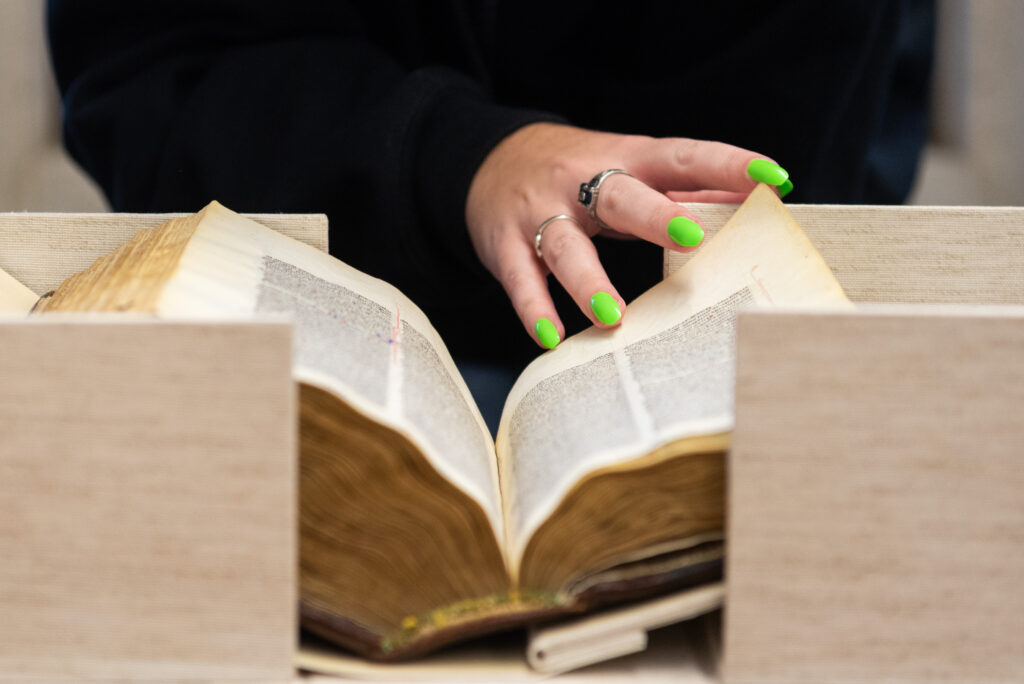
While touring the Mahn Center’s closed stacks, swipe-accessed by archival staff only, Kimok swiftly pulls out a 13th Century Bible, handwritten in Latin and traced in gold detailing. In a museum, this bible would be placed between sheets of glass and a boundary rope, and is part of the library’s rare books collection overseen by fellow Historian and colleague, Miriam Intrator.
“We want people to have that feeling with the archives,” says Kimok. “We don’t want them to be intimidated or feel turned off by (history.)”
Because of this philosophy, Kimok encourages students to take a “hands-on” approach to history. He urges visitors to closely observe the gold engravings on the bible and interact with the campus relics he pulls out from the infinite shelves of the Mahn Center.
As the first female graduate of OU, Margaret Boyd’s 1869-1873 grade transcript cards are among the relics Kimok can easily draw out from the shelves of documents and manila folders.
“(Boyd) was so well known that they knew her as Miss Maggie, not just Margaret,” Kimok adds to his presentation, one of seemingly infinite fun facts from his own memory of University history.
Along with documents, plaques hanging from now-demolished student residence halls including Cady House, Weld House, and Scott Quad, are also part of Kimok’s tour of the archives.
Despite the rows of university history in the Mahn Center, along with other archival collections, the archivist undergoes a selective process for every piece of history on the fifth floor.
Campus records are organized into Kimok’s three different categories. First, “records’ hell,” by which he means the documents are shredded or discarded. A second fate, “records’ purgatory,” means archives are sent to the off-campus annex. Finally, Kimok decides which records are useful and valuable enough to enter “records’ heaven,” or the Mahn Center’s collection.
“And basically that makes us God, right?” Kimok asks with a shoulder shrug and grin.
As for the contents of the archives, Kimok has become more than familiar with university history and facts, often piping in tidbits of additional information to his presentations and showcases.
“He just knows (history) like the back of his hand,” says Katherine Jellison, an OU history professor and previous professor to Kimok. “He can talk off the top of his head about the materials.”
Jellison, and other professors, often coordinate with Kimok to retrieve information for research or send students for coursework resources.
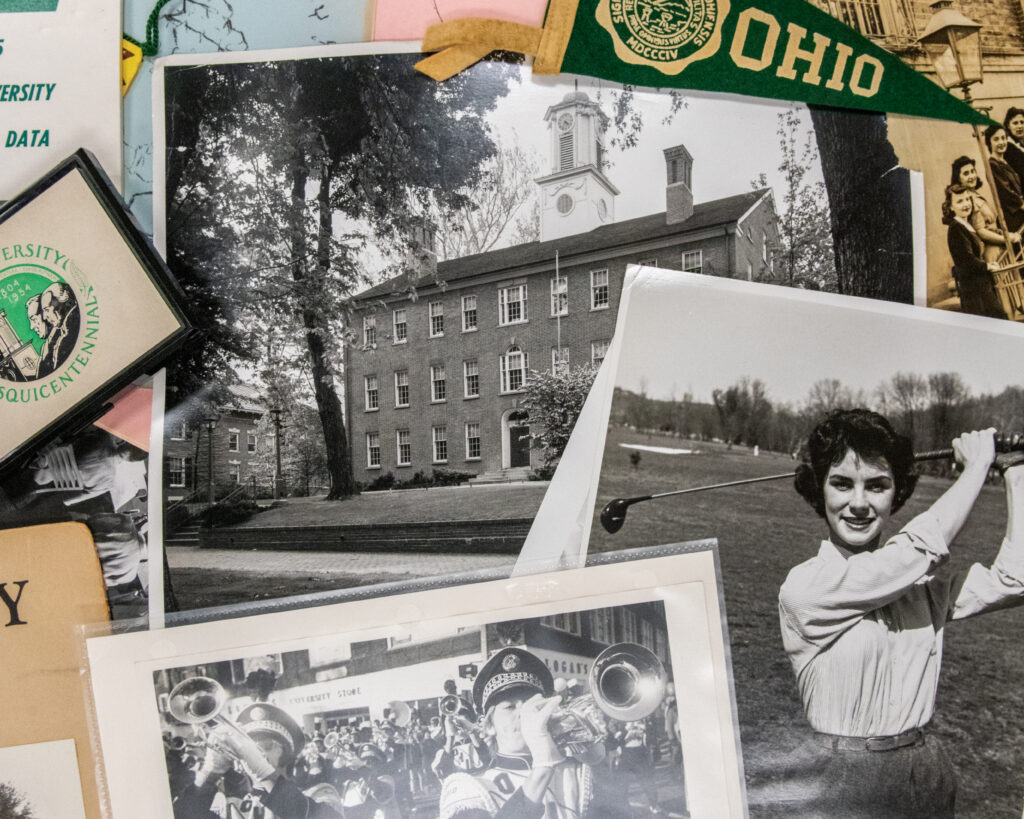
This semester Kimok, along with the three Mahn Center interns he oversees, are processing records from the Pride Center, Multicultural Center and Women’s Center.
The three centers, located in Baker University Center, closed in April after Senate Bill 1 was signed.
SB1, or the Advance Ohio Higher Education Act, bans public higher education in Ohio from offering DEI-related programs, scholarships or training. To comply with the new laws, Ohio University closed the three centers.
While evaluating records after their closures were announced, Kimok quickly realized the importance of preserving their records and history.
“I just noticed a lot of sadness when I was cleaning out the records, and I felt guilty that I was taking records from these places where students used to go,” says Kimok.
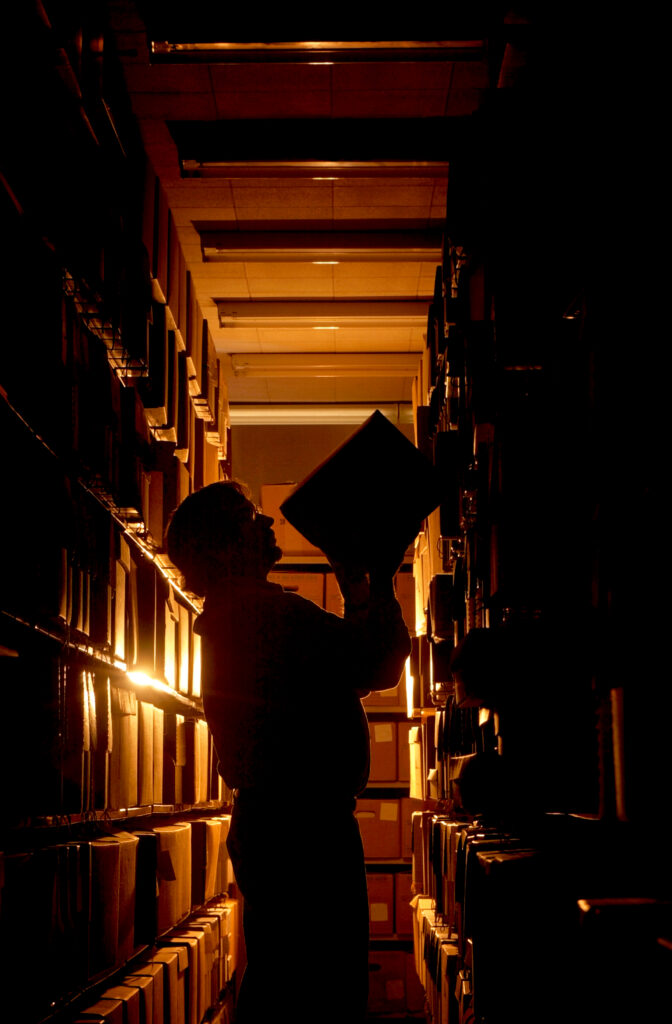
As part of the “rescue” operation for the centers’ archives, including decades-old collections of documents, books, clothing items and other resources, Kimok and the Mahn interns are hoping to repurpose the archives.
“I still have the record of (the centers) happening, and there’s no reason people can’t see the record of them having happened,” says Kimok.
Kimok’s service of organizing and preserving the centers will serve the University and surrounding area in the future, says Jellison.
“When future historians do research about the period that we’re living through right now, the sources that he’s preserving and processing and securing for future researchers will be central to telling the stories of the difficult times we are living through,” says Jellison.
For Kimok, this act of preserving archives is his form of activism. After protesting the Vietnam War in high school and engaging in peaceful activism, now, he finds himself most helpful through his work and providing information to students.
“I’m much more effective than I would be carrying signs around, because I’m helping this generation and the next generation and next generation understand how to learn things for themselves,” says Kimok.