By Zach Bisselberg, History and Classical Civilization with a Minor in Religious Studies ’27, Spring 2026 Rare Books Intern
Over the course of this semester, I have had the pleasure of being a Rare Books Intern at the Mahn Center for Archives and Special Collections. It has been one of the most rewarding experiences during my time at Ohio University, but I was certainly anxious before getting started. On the first day, however, many of those nerves went away when my supervisor, Miriam Intrator, told me that I would be working with the Gilbert and Ursula Farfel Collection of Incunable and Manuscript Leaves.
With my academic background in history and classics, this was the dream collection for me. The Farfel Collection consists of over 700 incunable (early printed) and manuscript (handwritten) leaves, dating from the 8th through 20th centuries. Briefly, leaves refers to individual pages that were originally part of complete manuscripts and books that have been either purposefully or incidentally taken apart, and then the leaves dispersed. In the Farfel Collection these leaves represent a huge variety of languages, scripts, and themes. Dr. Farfel, a physician and avid collector, married OHIO alum Ursula Farfel (’56), who encouraged him to donate his collection to Ohio University in 1999. Along with the leaves themselves, Dr. Farfel also donated his personal notebooks, correspondence records, and photographic materials.
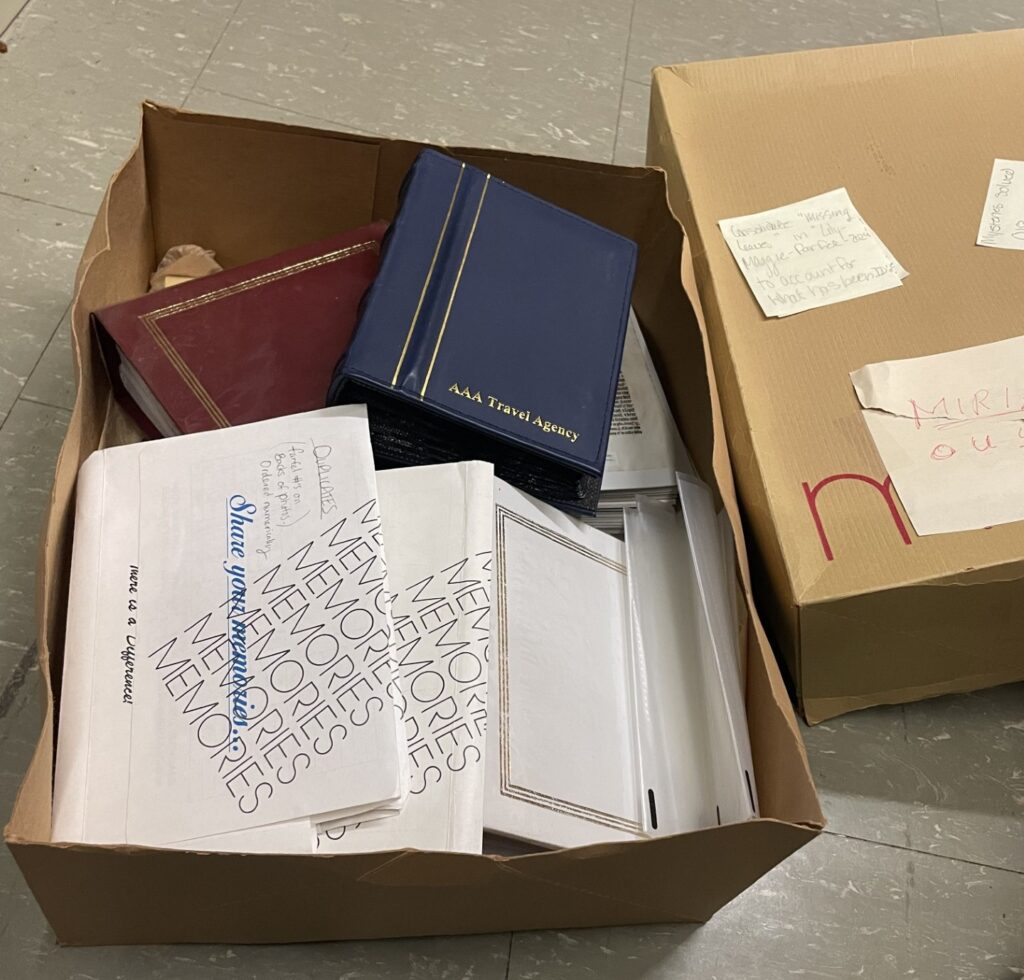
This semester, my primary project was to process the photographic materials, which were first delivered to me in a beaten-up cardboard box. Opening it up, I was met with photo albums, loose photo prints, strips of film, and more miscellaneous items loosely thrown in. It felt a little overwhelming at first, but I quickly jumped in. All the photos were taken by Dr. Farfel himself, which gave me a unique perspective on this collection; as I rehoused the prints into archival quality sleeves, I felt like I was viewing Dr. Farfel’s collection through his eyes.
Not every leaf has its own photo print, but many have duplicates or photos taken from different angles. Working through these brought so many questions to my mind. Did Dr. Farfel only photograph his favorites? What was he trying to show with different angles? Why are some leaves laid out differently? Even as my primary focus remained on getting these prints more safely stored, these questions percolated in the back of my mind.
My view towards the collection shifted further as I prepared for the Founders Day Student Showcase. Based on my observations so far, I wanted to show off leaves that showed the diversity of the collection, which is why I selected three with different languages and scripts. I also wanted to implement the personal element that I felt I had developed by processing the photographs, so I did most of my research by looking at Dr. Farfel’s notebooks. This was the first time I had opened them up myself, and I was completely blown away by how meticulous Dr. Farfel was in his documentation. Each leaf has its own entry with basic information like production place and time, but some also have personal notes and descriptions of unique qualities. Altogether, this added a whole new element to the collection. Not only are the leaves incredible on their own, but connecting them to Dr. Farfel’s own notes and photos paints a picture of a traveler, collector, and lifelong learner. I think that Dr. Farfel’s mindset is summed up well in a quote that he wrote down inside the front cover of his first notebook: “the democracy of the intellect comes from the printed book.”
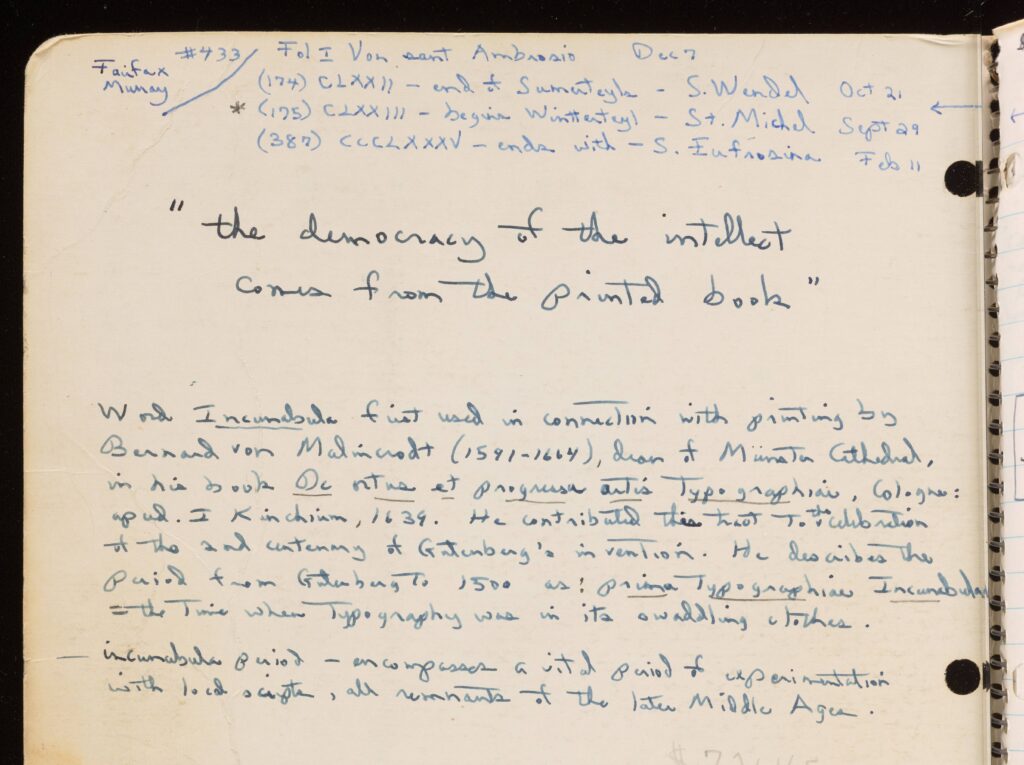
Explore one of the leaves that I displayed at the Founders Day Student Showcase
Interactive view (may be slow to load) of Farfel leaf #221, Unidentified manuscript leaf, France, 1400s. Zoom in and out and click on the vector points and shadow boxes to read and learn more. Link to interactive ArcGIS image annotated by Zach Bisselberg.
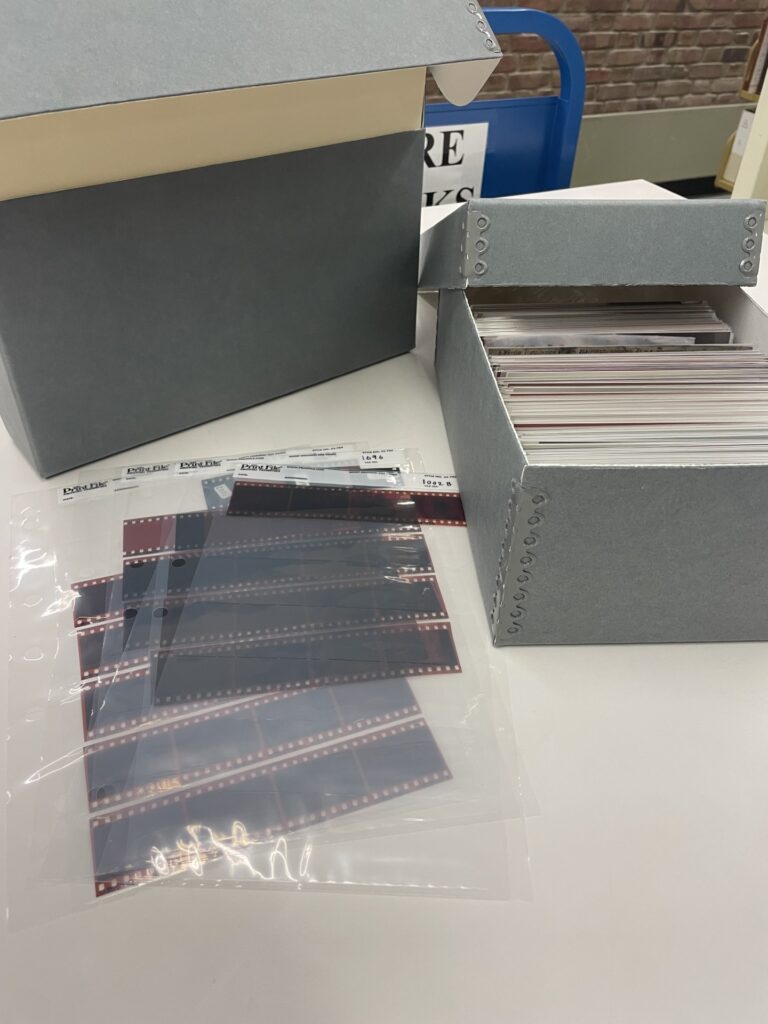
After the Student Showcase, I transitioned to wrapping up the photo project, and made sure to take my time experiencing this collection through Dr. Farfel’s lens. Looking through some photo slides, I noticed images from the Farfels’ own travels across Europe and of manuscripts that seemed to be taken at museums or booksellers. When it was all said and done, the rehoused photographic materials were not only stored safely, but will make for a great resource for anyone looking to physically explore the collection and get to know Dr. Farfel.
When I was first given this project, I could not have been more excited because of how much the collection overlapped with my academic interests. That certainly never went away, but as I processed these materials, I also realized that so much of what makes this collection special is not the leaves themselves; every single leaf in the collection is made more unique because of the ways that Dr. Farfel interacted with it. Dr. Farfel’s notes prove that he was a lifelong learner, and hopefully this collection encourages others to be the same.
Further Exploration
Gilbert and Ursula Farfel Collection of Incunable and Manuscript Leaves
A digital exhibit about the Farfel Collection by two other previous rare book interns, Zoe Duncan and Rachael Hebert: A Glance into Manuscript & Printed Leaves from 1200-1700 and a blog post by Duncan: https://sites.ohio.edu/library-archives-blog/2025/05/28/farfel-collection/.