By Maddy Feerick, Anthropology and Classical Civilizations ‘27, Spring 2026 Manuscripts Intern
When I started my internship this winter and was told I would be working on an exhibit featuring Manasseh Cutler, I must admit that I was less than excited at the prospect. U.S. history is certainly not one of my academic interests, but I went into it with an open mind. After all, I knew I wasn’t going to be working on anything directly within the realm of my major: Classical Civilizations. I was more interested in general experience doing archival work. In the end, this semester was more enjoyable and impactful than I ever imagined.
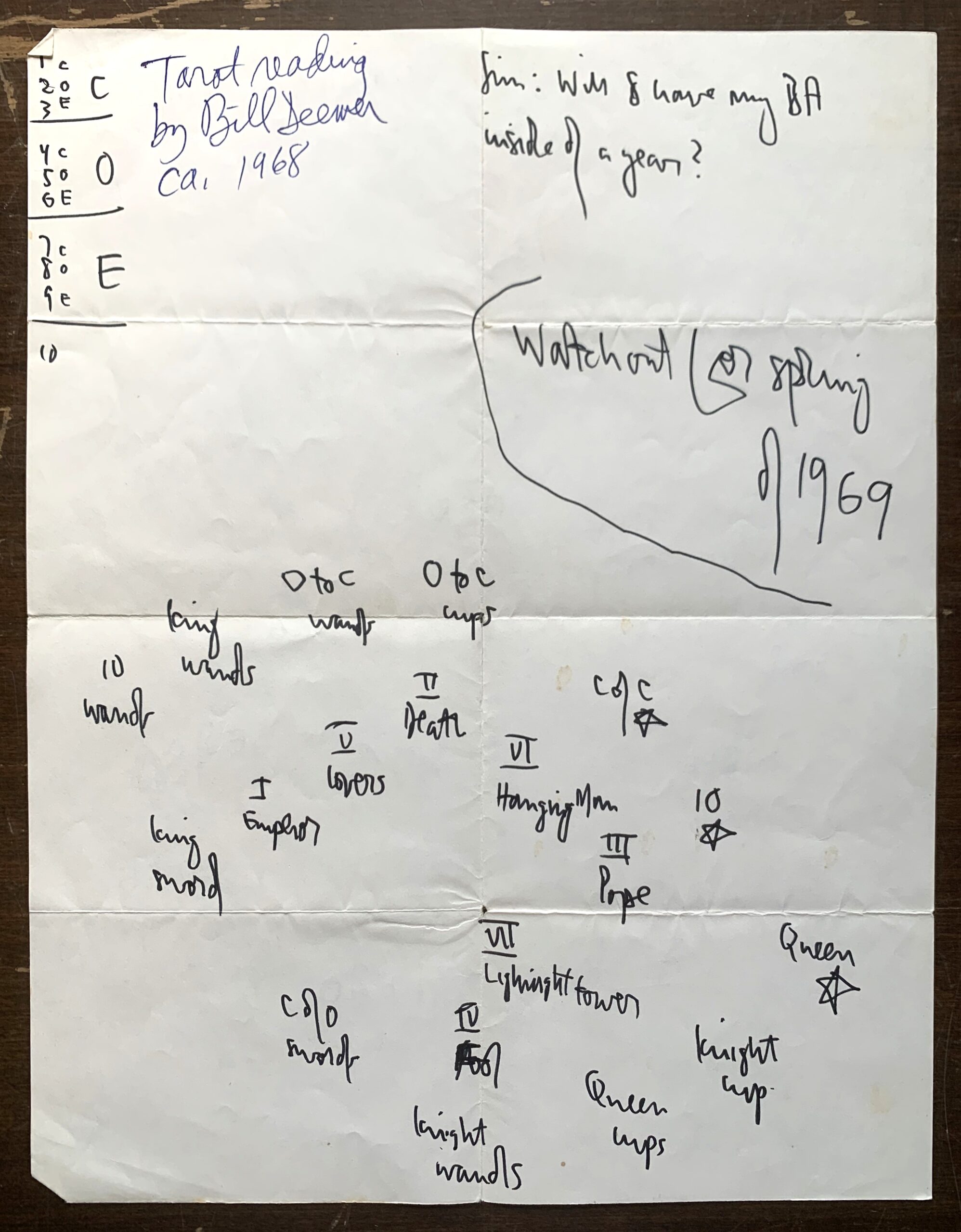
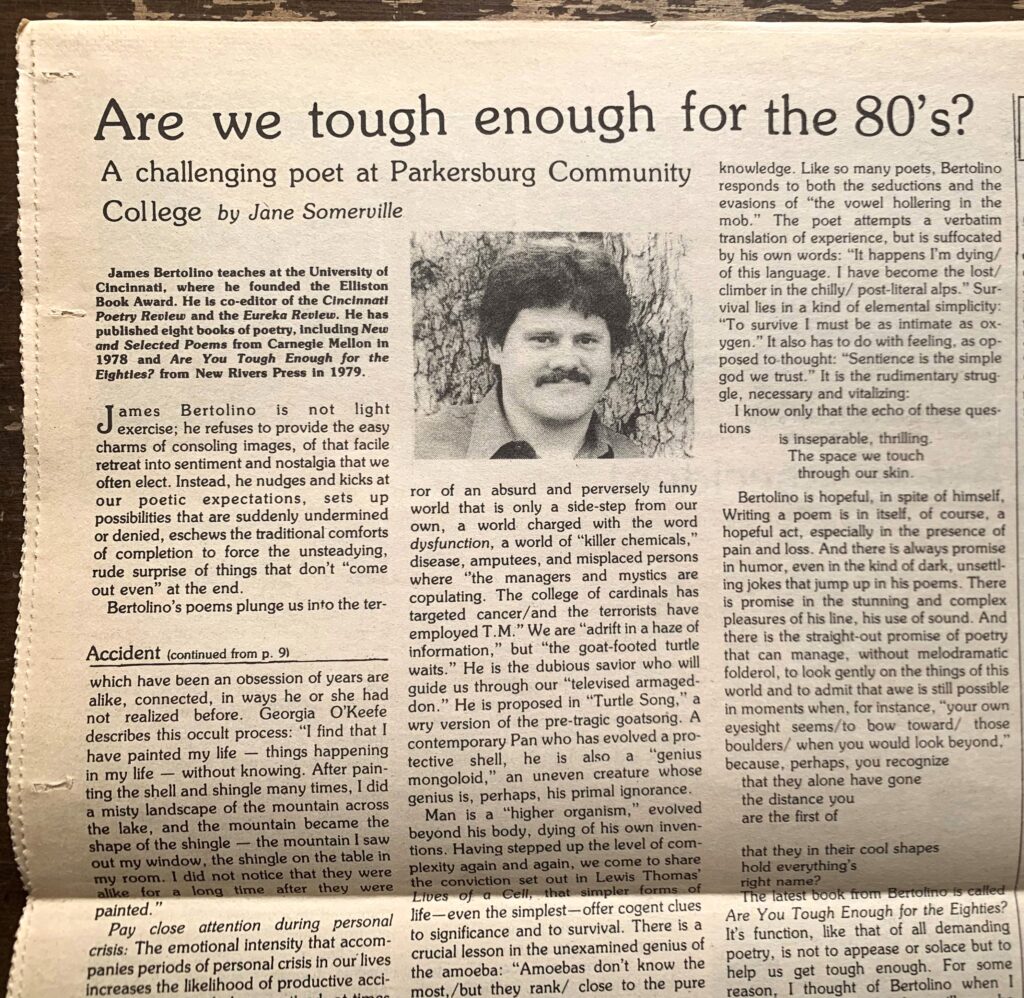
Before starting on the Cutler project, I was tasked with processing an entirely different collection. The Mahn Center had received two boxes of new material to add to the James Bertolino collection. Bertolino is an American poet who began his career in the 70s and continued to write until the 2010s. Processing this new material was certainly a challenge. Not everything fit nicely into the already established categories. His numerous notes and poetry drafts scrawled onto old letters and newspapers were, while valuable, antithetical to well defined categories, to speak nothing of the miscellaneous photos and art pieces.
This image shows notes from a tarot card reading from circa 1968 with notes “Will I have my BA inside of a year?” and “Watchout for spring of 1969”.
I learned a few important things from this collection. For one, the significance of any singular piece of history may not be clear to the archivist. Personally, I believe in preserving every bit of history, no matter how small or insignificant it may seem in the moment. As a student interested in archaeology, I often wonder what more we might know about the past if institutions like archives and museums had then been prevalent to the degree they are today. I also like to imagine what remnants of the world as we know it today will be analyzed and researched by future historians and archaeologists.
Something I did not expect going into this experience was the importance and prevalence of research in archival work. A lot of my work with the Manasseh Cutler papers was more organizational in nature — transcribing, summarizing, and filling out spreadsheets — but I did have the opportunity to write an essay for the upcoming digital exhibit focused on Cutler for the America 250 and should be online in August. This essay focused on Cutler’s education at Yale to accompany his 1761 admission form. Unfortunately, this was the only document in our collection from that time of Cutler’s life. I therefore had to do some digging.
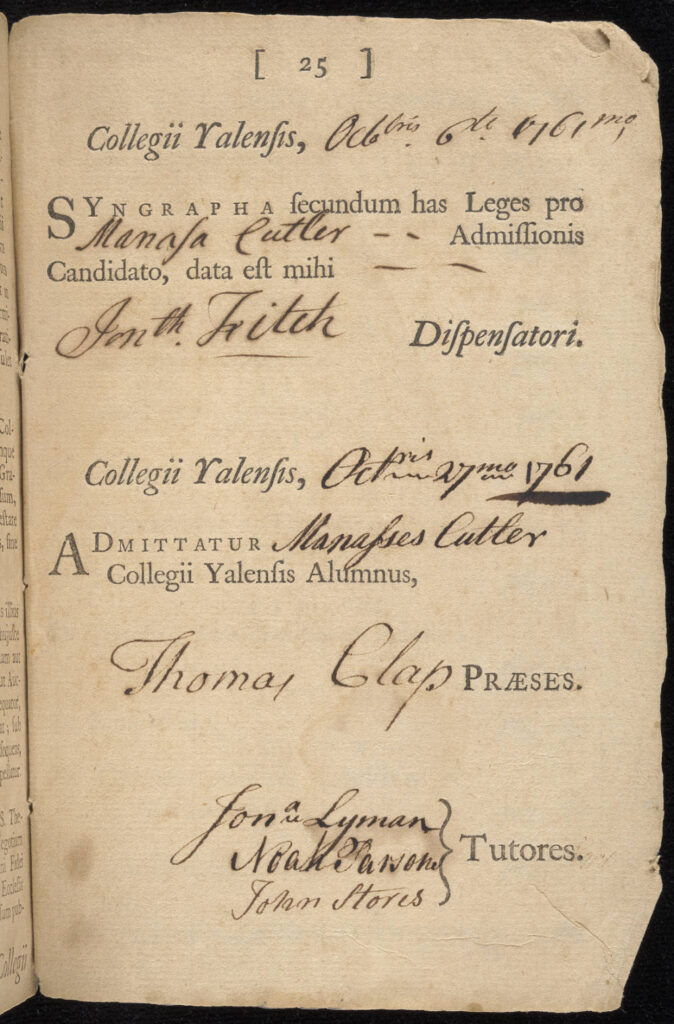
Manasseh Cutler Yale College admittance notice, 1761.
During my research I truly realized the importance of archive accessibility. The phrase commonly touted by high school history teachers is true: studying the past helps us understand the present and plan for the future. Archives document times of revolution, be they cultural or political. Living in a time where the world is rapidly changing, public access to history is important now more than ever. However, as with almost everything, access to information is a privilege.
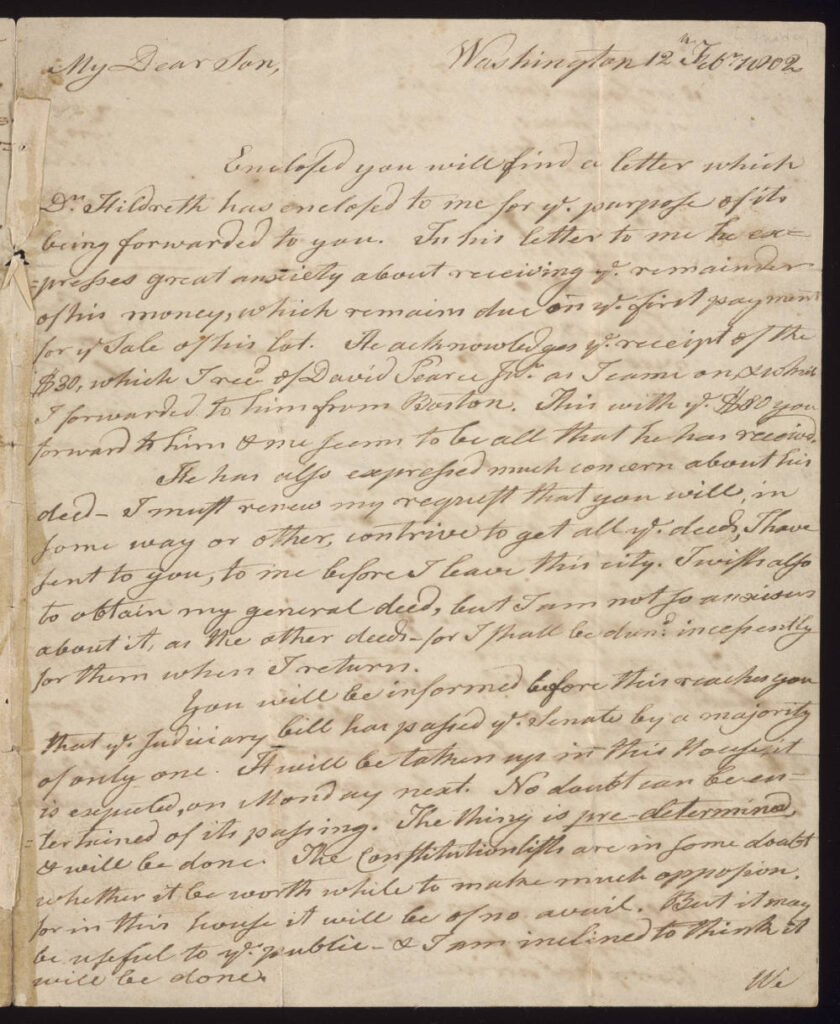
Personally, before this semester I had no idea how much of the archives are digitized and accessible online. While researching Yale’s curriculum, I found some of my best sources in the digital archives of other universities and institutions. Unfortunately, unless you know where to look, these resources are difficult to find and access. Furthermore, the ability to use and search databases is a skill one must learn, and one which may not be taught in every school.
Because of this, archivists and historians become a valuable resource to the public. While transcribing one of Cutler’s diaries, I attempted to find some context to the many names he references. This task proved arduous, trying to figure out if, for example, Samuel Whipple, Dr. Whipple, and John Whipple were all the same person or at least related (spoiler alert: Samuel and John are probably not relatives). I also struggled with the proper spellings of names. It occurred to me that Cutler probably didn’t see some of his acquaintances’ names spelled out, and was basing his spelling off of how the names sounded. For example, I struggled to find a record of who he could be referencing as “Dr. Killum”. However, there was a “Dr. Kilham” in the area at that time.
All in all, this semester has taught me that archives are a valuable public resource. The work of an archivist is forever behind-the-scenes, but without them our history would be lost. Though they may often be hidden in basements and windowless rooms, one can hardly blame the eighteenth-century manuscript if it’s become a bit agoraphobic over the years!
Collection Links
- James Bertolino papers collection description
- Manasseh Cutler papers collection description
- Manasseh Cutler papers digitized items